
Get Answers
Introduction to BPH Diagnosis
Benign Prostatic Hyperplasia (BPH) is a common condition affecting men as they age, characterized by the enlargement of the prostate gland. This can cause urinary symptoms such as difficulty in starting urination, a weak urine stream, and frequent urination, especially at night. Diagnosing BPH is crucial for effective management and treatment.
Initial Evaluation
The diagnosis of BPH typically begins with a comprehensive evaluation by a healthcare professional. A General Practitioner (GP) will conduct an initial assessment based on the patient's symptoms, medical history, and a physical examination. During the consultation, the GP will ask about urinary symptoms and their impact on daily life. The GP may also inquire about any other health conditions and medications that might affect urinary function.
Urinary Symptom Questionnaire
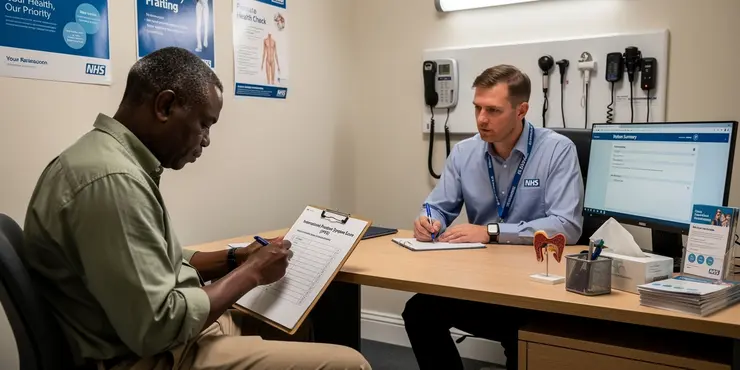
A commonly used tool for assessing the severity of BPH symptoms is the International Prostate Symptom Score (IPSS) questionnaire. This survey includes questions about urinary symptoms and their severity, providing a score that helps guide the diagnosis and treatment planning. The IPSS is a valuable tool in understanding the patient's perspective on their condition.
Physical Examination
The physical examination often includes a digital rectal examination (DRE), where the doctor palpates the prostate through the rectal wall to assess its size, shape, and consistency. Though this may be slightly uncomfortable, it is a quick procedure that provides useful information about the prostate gland.
Urinalysis
A urinalysis may be performed to rule out other conditions that can cause similar symptoms. This test involves analyzing a urine sample for signs of infection, blood, or other abnormalities. Identifying infections or other urinary tract issues can help ensure that the correct diagnosis is made.
Blood Tests
Blood tests, including a Prostate Specific Antigen (PSA) test, may be conducted to help assess prostate health. Elevated PSA levels can indicate BPH or other prostate conditions, such as prostate cancer. However, PSA levels can be influenced by various factors, so elevated levels do not automatically diagnose BPH.
Imaging and Additional Tests
In some cases, further tests may be needed, such as urodynamic studies, which assess how well the bladder and urethra store and release urine. Ultrasound imaging can also provide detailed information about the prostate size and help in evaluating the severity of BPH. A bladder ultrasound might be conducted to measure post-void residual urine, indicating how completely the bladder is emptying.
Conclusion
Diagnosing BPH involves a combination of patient history, symptom assessment, physical examination, and laboratory tests. These diagnostic steps are crucial for distinguishing BPH from other conditions with similar symptoms and for developing an effective treatment plan. Timely diagnosis and management can significantly improve quality of life for those affected by BPH in the UK.
Introduction to BPH Diagnosis
BPH stands for Benign Prostatic Hyperplasia. It is a condition that many men get as they get older. It means the prostate gland gets bigger. This can make it hard to pee. Men might find it hard to start peeing, have a weak pee stream, or need to pee a lot, especially at night. It is important to find out if someone has BPH so doctors can help treat it.
Initial Evaluation
To find out if someone has BPH, a doctor will check them. A doctor, like a General Practitioner (GP), will talk to the person and ask questions about pee problems and look at their medical history. The doctor will ask how these problems affect the person's daily life. The doctor might also ask about other health problems and medicines that might make it hard to pee.
Urinary Symptom Questionnaire
Doctors often use a special quiz to understand pee problems. It is called the International Prostate Symptom Score (IPSS). The quiz asks questions about the pee problems and how bad they are. The answers help doctors decide what to do next. It helps doctors understand how the person feels about their pee problems.
Physical Examination
The doctor might do a check called a digital rectal examination (DRE). The doctor will gently feel the prostate through the rectum to see how big it is. This check might feel a little uncomfortable, but it is quick and gives important information about the prostate.
Urinalysis
The doctor might do a pee test called a urinalysis. This test checks for other problems that can make it hard to pee, like infections. The pee sample is checked for signs of infection or other things that could be wrong. This helps make sure the doctor knows what the real problem is.
Blood Tests
Sometimes, blood tests are done to check on the prostate. One important blood test is called the Prostate Specific Antigen (PSA) test. If PSA levels are high, it might mean there is something wrong with the prostate, like BPH or even prostate cancer. But many things can change PSA levels, so high levels do not always mean there is a problem.
Imaging and Additional Tests
Sometimes more tests are needed. These can include urodynamic studies, which show how well the bladder and tube that carries pee work. An ultrasound might be done, which uses sound waves to take pictures of the prostate and see how big it is. An ultrasound of the bladder can show if the bladder is emptying all the way.
Conclusion
Finding out if someone has BPH involves talking to the person, checking their pee problems, doing a physical check, and doing tests. These steps help doctors find out what is wrong so they can help the person feel better. If BPH is found and treated early, it can make the person’s life much better.
Frequently Asked Questions
BPH diagnosis is the process of evaluating symptoms, exam findings, and test results to determine whether an enlarged prostate is causing urinary problems.
Common symptoms that can lead to a BPH diagnosis include frequent urination, weak urine stream, hesitancy, dribbling, nighttime urination, and a feeling of incomplete bladder emptying.
BPH diagnosis usually starts with a medical history and a discussion of urinary symptoms, their severity, how long they have been present, and how they affect daily life.
A digital rectal exam may be used in BPH diagnosis to assess prostate size, shape, and texture and to look for findings that may suggest another condition.
Urinalysis is commonly used in BPH diagnosis to check for blood, infection, glucose, or other abnormalities that could explain urinary symptoms.
A prostate-specific antigen test may be used in BPH diagnosis to help assess prostate health and to consider other conditions, though it does not diagnose BPH by itself.
A symptom score helps with BPH diagnosis by measuring how severe the urinary symptoms are and how much they affect quality of life.
A bladder scan can help BPH diagnosis by measuring how much urine remains in the bladder after urination, which may suggest obstruction or poor emptying.
Uroflowmetry in BPH diagnosis measures the rate of urine flow and can help show whether urine is passing slowly because of prostate obstruction.
Imaging may be used in BPH diagnosis when symptoms are severe, the exam is unclear, complications are suspected, or another urinary problem needs to be ruled out.
BPH diagnosis can overlap with prostate cancer symptoms because both may cause urinary changes, but they are different conditions and may require additional testing to distinguish them.
Yes, a urinary tract infection can mimic or worsen symptoms, so BPH diagnosis often includes testing to rule out infection before confirming BPH.
BPH diagnosis is usually based on symptoms and findings, but an enlarged prostate may sometimes be discovered during an exam or test before symptoms become noticeable.
During BPH diagnosis, a patient should expect questions about urine frequency, urgency, nighttime urination, stream strength, bladder emptying, medications, and any pain or blood in the urine.
Some medications, including decongestants, antihistamines, and certain antidepressants, can worsen urinary symptoms and may affect BPH diagnosis.
A urologist may be involved in BPH diagnosis when symptoms are significant, tests are unclear, complications are present, or more detailed evaluation is needed.
Severe urinary retention in BPH diagnosis may be identified by inability to urinate, abdominal discomfort, a bladder scan showing a large residual volume, or emergency evaluation.
During BPH diagnosis, doctors look for complications such as bladder stones, repeated infections, urinary retention, kidney problems, and bladder damage.
BPH diagnosis can sometimes be completed in one visit, but more time may be needed if blood tests, urine tests, imaging, or specialist evaluation are required.
Before BPH diagnosis testing, a patient should provide a full medication list, describe urinary symptoms accurately, follow any test instructions, and tell the doctor about prior urinary or prostate problems.

Ergsy Search Results
This website offers general information and is not a substitute for professional advice.
Always seek guidance from qualified professionals.
If you have any medical concerns or need urgent help, contact a healthcare professional or emergency services immediately.
Some of this content was generated with AI assistance. We've done our best to keep it accurate, helpful, and human-friendly.
- Ergsy carefully checks the information in the videos we provide here.
- Videos shown by Youtube after a video has completed, have NOT been reviewed by ERGSY.
- To view, click the arrow in centre of video.
- Most of the videos you find here will have subtitles and/or closed captions available.
- You may need to turn these on, and choose your preferred language.
- Go to the video you'd like to watch.
- If closed captions (CC) are available, settings will be visible on the bottom right of the video player.
- To turn on Captions, click settings.
- To turn off Captions, click settings again.