
Get Answers
What is an abscess?
An abscess is a painful pocket of pus that forms when the body tries to fight an infection. It can happen in different parts of the body and often causes swelling, redness, and warmth.
Some abscesses are small and may improve with treatment. Others can become larger, more painful, and may need drainage by a healthcare professional.
Common types of abscesses
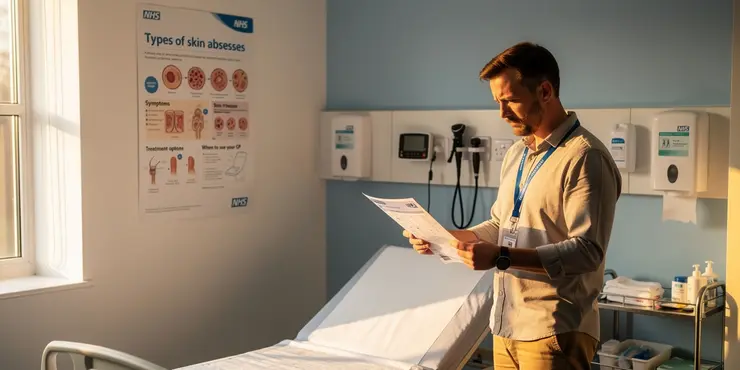
There are several different types of abscesses, depending on where they develop. Skin abscesses are among the most common and may appear as boils or infected lumps under the skin.
Dental abscesses form around a tooth or in the gums. They often cause toothache, swelling, and sensitivity to hot or cold food and drink.
Internal abscesses
Abscesses can also form inside the body, where they are not always easy to see. Examples include abdominal abscesses, which may develop after an infection, injury, or surgery.
Brain abscesses and liver abscesses are less common but more serious. These usually need urgent medical assessment because they can cause severe symptoms and complications.
Why abscesses happen
Most abscesses are caused by bacteria entering the body through a cut, blocked gland, infected tooth, or other damaged tissue. The immune system sends white blood cells to fight the infection, and pus builds up as part of this process.
Some people are more likely to develop abscesses than others. A weakened immune system, poor dental health, diabetes, or certain skin conditions can increase the risk.
When to get help
You should speak to a GP, dentist, or NHS 111 if you think you have an abscess, especially if it is painful or getting bigger. Do not squeeze or try to burst it yourself, as this can spread the infection.
Seek urgent medical help if you have a high temperature, feel very unwell, or notice swelling in the face, around the eye, or in the mouth. These signs can mean the infection is serious and needs prompt treatment.
Frequently Asked Questions
Yes, there are several types of abscesses based on their location and cause.
A skin abscess is a localized collection of pus under the skin, often caused by a bacterial infection.
A dental abscess is a collection of pus in or around a tooth caused by bacterial infection.
Yes, abscesses can develop internally, such as in organs like the liver, lungs, or brain.
A perianal abscess is an accumulation of pus near the anus, often linked to infection of anal glands.
Yes, a breast abscess occurs when an infection leads to a pus-filled swelling in the breast tissue.
A spinal epidural abscess is a rare but serious infection between the outer covering of the spinal cord and the bones of the spine.
A brain abscess is a collection of pus within the brain tissue caused by infection.
Yes, abscesses can be caused by bacteria, fungi, or parasites, depending on the type and location.
A Bartholin's abscess affects the Bartholin's glands, located on either side of the vaginal opening.
Yes, a lung or pulmonary abscess develops due to infection and tissue destruction in the lungs.
A liver abscess is a pus-filled cavity in the liver, often due to bacterial, fungal, or parasitic infection.
A tooth root abscess is an infection at the root of a tooth, usually caused by tooth decay and bacterial invasion.
A psoas abscess is an infection with pus accumulation in the psoas muscle, which runs from the lower spine to the thigh.
A subcutaneous abscess develops just under the skin, often presenting as a painful, swollen lump.
Yes, pilonidal abscesses form near the tailbone and are often associated with ingrown hairs.
Yes, postoperative abscesses can form at or near surgical sites due to infection.
An ovarian abscess is a pus-filled pocket that develops on or around an ovary, often as a complication of pelvic inflammatory disease.
Yes, oral abscesses can occur in the gums or inside the cheeks due to infections.
No, treatment depends on the type, location, and severity of the abscess. Some need drainage and antibiotics, while others may require different approaches.
Knowing the type helps healthcare providers choose the most effective treatment and address potential complications.

Ergsy Search Results
This website offers general information and is not a substitute for professional advice.
Always seek guidance from qualified professionals.
If you have any medical concerns or need urgent help, contact a healthcare professional or emergency services immediately.
Some of this content was generated with AI assistance. We've done our best to keep it accurate, helpful, and human-friendly.
- Ergsy carefully checks the information in the videos we provide here.
- Videos shown by Youtube after a video has completed, have NOT been reviewed by ERGSY.
- To view, click the arrow in centre of video.
- Most of the videos you find here will have subtitles and/or closed captions available.
- You may need to turn these on, and choose your preferred language.
- Go to the video you'd like to watch.
- If closed captions (CC) are available, settings will be visible on the bottom right of the video player.
- To turn on Captions, click settings.
- To turn off Captions, click settings again.