
Get Answers
Introduction to Bitcoin Mining
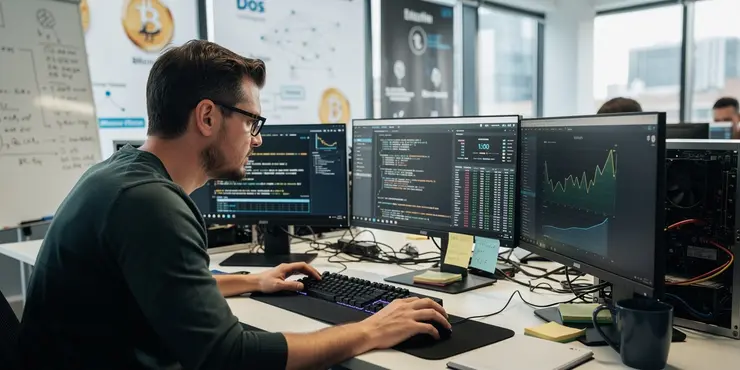
Bitcoin mining is a crucial component of the Bitcoin network, serving both as a way to secure the network and as the method for introducing new bitcoins into circulation. In the context of Bitcoin, mining involves solving complex computational puzzles to validate transactions and add them to the blockchain, which is the public ledger that records all Bitcoin transactions.
How Bitcoin Mining Works
Bitcoin mining requires computational power to solve cryptographic puzzles known as "proof of work." Miners use specialized hardware, often called ASICs (Application-Specific Integrated Circuits), to perform these calculations. When a miner successfully solves a puzzle, they get the right to add a new block of transactions to the blockchain. This process confirms the transactions, making it an integral part of maintaining the integrity and security of the Bitcoin network.
Rewards for Bitcoin Miners
Miners are incentivized to secure the network through rewards. Initially, these rewards consisted of 50 bitcoins per block, but this amount is halved approximately every four years in an event known as a "halving." As of now, the reward is 6.25 bitcoins per block. Besides block rewards, miners also earn transaction fees paid by users to have their transactions included in the blockchain. As the block reward decreases, these fees become a more significant part of miners' compensation.
Environmental Concerns and Energy Usage
One of the major critiques of Bitcoin mining is its environmental impact. The energy-intensive nature of proof of work means substantial electricity consumption, leading to concerns about carbon emissions, especially if the mining operations rely on non-renewable energy sources. The industry is gradually moving towards more sustainable practices, with a greater focus on using renewable energy and improving the efficiency of mining hardware.
The Role of Mining in the Bitcoin Network
Beyond securing the network and issuing new bitcoins, mining plays a vital role in decentralization. It ensures that no single entity can control the blockchain, thus maintaining the decentralized ethos of Bitcoin. By participating in the mining process, individuals and organizations help protect the network from attacks and ensure that transactions are processed accurately and timely.
Conclusion
Bitcoin mining is an essential process that keeps the Bitcoin network secure, transparent, and decentralized. While it faces challenges, particularly related to energy consumption, ongoing advancements and a push towards renewable energies offer a pathway to making Bitcoin mining more sustainable. Understanding mining is key to comprehending how Bitcoin functions as a digital currency and decentralized network.
Introduction to Bitcoin Mining
Bitcoin mining is an important part of Bitcoin. It helps keep Bitcoin safe and creates new bitcoins. Miners solve hard puzzles to check and approve Bitcoin transactions. These transactions are then added to the blockchain, which is a record of all Bitcoin happenings.
How Bitcoin Mining Works
To do Bitcoin mining, you need special computers. These computers solve difficult problems called "proof of work." When a miner solves a problem, they can add new transactions to the blockchain. This keeps Bitcoin safe and makes sure all transactions are correct.
Rewards for Bitcoin Miners
Miners get rewards for helping the Bitcoin network. At first, miners earned 50 bitcoins for each block. But this amount goes down by half every four years. Now, miners get 6.25 bitcoins for each block. Miners also earn small fees from people who want their transactions to be processed.
Environmental Concerns and Energy Usage
Bitcoin mining uses a lot of electricity, which can harm the environment. This is because many mining operations use non-renewable energy sources. However, the industry is trying to be more environmentally friendly by using renewable energy and making mining hardware more efficient.
The Role of Mining in the Bitcoin Network
Mining helps keep Bitcoin decentralized, meaning no one person or group can control it. This is important for the security and fairness of the Bitcoin network. By mining, people and organizations help protect the network and make sure transactions are done correctly.
Conclusion
Bitcoin mining is a key process that keeps Bitcoin safe and fair. It has some challenges, such as the high energy use, but people are working on making it better for the environment. Knowing about mining helps us understand how Bitcoin works as a digital currency and a decentralized network.
Frequently Asked Questions
Bitcoin mining is the process of verifying and adding transaction records to the public ledger called the blockchain. It involves solving complex mathematical problems.
Bitcoin mining ensures the security of the network, prevents double-spending, and regulates the issuance of new bitcoins by requiring effort or work to earn rewards.
Bitcoin miners use powerful computers to solve cryptographic puzzles. When they solve a puzzle, they get the chance to add a block to the blockchain and receive a reward in bitcoins.
Initially, Bitcoin mining could be done on personal computers using CPUs. Today, it requires specialized hardware called ASICs (Application-Specific Integrated Circuits) due to increased difficulty.
A Bitcoin block is a data structure that stores a list of verified Bitcoin transactions and other important data like a timestamp and a reference to the previous block.
Block time is the average time it takes to add a new block to the blockchain. For Bitcoin, this is approximately 10 minutes.
Bitcoin miners receive a reward in bitcoins for solving cryptographic puzzles and validating blocks. The amount halves approximately every four years in an event known as the 'halving.'
Bitcoin halving is an event that reduces the mining reward by 50%. It occurs approximately every four years or after every 210,000 blocks mined.
Bitcoin difficulty is a measure of how hard it is to find a new block. It adjusts approximately every two weeks based on the amount of computational power on the network.
Bitcoin mining is energy-intensive because it involves carrying out billions of calculations per second, consuming a significant amount of electricity.
Yes, anyone with the necessary hardware, software, and access to electricity can attempt to mine Bitcoin, but it has become highly competitive.
A Bitcoin mining pool is a group of miners who combine their computational resources to improve their chances of solving blocks and earning rewards, which are shared among participants.
Bitcoin mining profitability depends on several factors, including the cost of electricity, the price of Bitcoin, mining difficulty, and the efficiency of the mining hardware used.
Miners bundle transactions into blocks and solve complex cryptographic puzzles to validate them. This process ensures that the transactions are legitimate and adds them to the blockchain.
The main environmental concern is the high energy consumption associated with mining, which can lead to a significant carbon footprint, especially if the electricity is generated from non-renewable sources.
Mining secures the Bitcoin network by making it computationally expensive to alter transaction history. The energy and resources involved deter potential attacks and ensure integrity.
Once all 21 million bitcoins are mined, miners will no longer receive block rewards but will earn transaction fees for processing transactions.
A nonce is a 32-bit (4-byte) field in a Bitcoin block header that miners adjust to try and produce a hash less than or equal to the current target of the network.
Bitcoin mining has evolved from CPU and GPU mining in the early days to FPGA (Field Programmable Gate Array) mining, and now predominantly ASIC-based mining due to increased difficulty.
Cloud mining is a service that allows individuals to rent mining hardware hosted by a provider. Users can mine cryptocurrencies without managing hardware but must be cautious of potential scams.
Bitcoin mining is when people check and add new transactions to a big list everyone can see, called the blockchain. They do this by solving hard math problems.
Bitcoin mining is like a game. It keeps the network safe, stops people from spending the same bitcoin twice, and controls how new bitcoins are made. People have to do hard work to earn rewards.
Bitcoin miners use strong computers to solve hard puzzles. When they solve a puzzle, they can add a block to the blockchain. Then, they get a reward in bitcoins.
If you find this hard to read, you can use tools like text-to-speech, which reads text out loud. You can also ask someone to help you understand it.
At first, you could use a regular computer to mine Bitcoin. It used the computer's brain, called a CPU. Now, Bitcoin mining is harder and needs special machines called ASICs. These machines are made just for mining Bitcoin.
A Bitcoin block is like a box. It keeps a group of checked Bitcoin payments and other important info. This info includes the time when it was made and a link to the block before it.
Block time is how long it takes to add a new block to the blockchain. For Bitcoin, this takes about 10 minutes.
Bitcoin miners get bitcoins when they solve puzzles on the computer. These puzzles help check if blocks are good. Every four years, the amount of bitcoins they get goes down by half. This is called the 'halving.'
Bitcoin halving is when the reward for mining gets cut in half. It happens about every four years or after 210,000 blocks are mined.
Bitcoin difficulty explains how tough it is to find a new block of Bitcoin. This changes about every two weeks. The change depends on how many computers are trying to solve the problem.
Bitcoin mining uses a lot of energy. This is because it needs to do billions of calculations every second, which uses a lot of electricity.
Yes, you can try to mine Bitcoin. You need the right computer, programs, and electricity. But remember, it's a tough competition.
A Bitcoin mining pool is a team of people who work together to find Bitcoin. They share their computer power to have a better chance of winning Bitcoin. When they win, they share the Bitcoin with everyone in the team.
Making money by mining Bitcoin depends on a few things. These include how much you pay for electricity, the price of Bitcoin, how hard it is to mine, and how good your mining computer is.
Miners put many transactions together in a group called a block. They solve hard puzzles to check these transactions are real. When they finish, they add the block to a big chain called the blockchain.
The big worry for the environment is that mining uses a lot of energy. This can be very bad for the planet. It is even worse if the electricity comes from sources that cannot be replaced, like coal or oil.
Mining keeps Bitcoin safe by making it hard and costly to change past transactions. Using lots of energy and resources stops bad people from attacking and keeps everything honest and fair.
To understand this better, you can:
- Watch simple videos about Bitcoin and mining.
- Use apps that explain things with pictures and easy words.
When people finish making all the 21 million bitcoins, miners won't get new bitcoins as a reward anymore. Instead, they will get money from transaction fees for helping to move bitcoins around.
A nonce is a special number in a Bitcoin block that helps miners. Miners change this number to find a winning code. This code must be smaller than the target set by the network.
To understand better, you can use pictures and videos about Bitcoin mining. Try using programs that read text out loud.
Bitcoin mining has changed a lot over time. It used to be done with regular computer parts like CPUs and GPUs. Then people used special parts called FPGAs. Now, most Bitcoin mining is done with very special machines called ASICs because mining is much harder now.
Here are some tips to help understand this:
- Think of mining as digging for treasure, but on a computer.
- CPUs and GPUs are like normal tools, while FPGAs and ASICs are like super-powered tools.
- Use pictures or videos to see how mining works. This can make it easier to understand.
Cloud mining is like renting a special computer to get digital money, called cryptocurrency. You pay a company to do the work for you. Be careful because some offers might not be real.

Ergsy Search Results
This website offers general information and is not a substitute for professional advice.
Always seek guidance from qualified professionals.
If you have any medical concerns or need urgent help, contact a healthcare professional or emergency services immediately.
Some of this content was generated with AI assistance. We've done our best to keep it accurate, helpful, and human-friendly.
- Ergsy carefully checks the information in the videos we provide here.
- Videos shown by Youtube after a video has completed, have NOT been reviewed by ERGSY.
- To view, click the arrow in centre of video.
- Most of the videos you find here will have subtitles and/or closed captions available.
- You may need to turn these on, and choose your preferred language.
- Go to the video you'd like to watch.
- If closed captions (CC) are available, settings will be visible on the bottom right of the video player.
- To turn on Captions, click settings.
- To turn off Captions, click settings again.