
Get Answers
What is a Mammogram?
A mammogram is a specialised X-ray test designed to detect early signs of breast cancer. The process involves using low-dose X-rays to create images of the breast tissue, helping to identify abnormal growths or changes. Mammograms are a crucial diagnostic tool in the early detection and treatment planning of breast cancer.
Purpose of Mammograms
The primary purpose of a mammogram is to screen for breast cancer in women, offering the possibility of detecting tumors that cannot be felt. They can also help diagnose breast problems in women who have lump or other symptoms, or those who have had an abnormal screening mammogram. Regular screening is recommended as a preventive measure because it can identify cancers early, often before they spread, which can make treatment more effective.
Types of Mammograms
There are two main types of mammograms: screening mammograms and diagnostic mammograms. Screening mammograms are routine checks to look for breast cancer in women who have no apparent symptoms. Typically, multiple X-ray images of each breast are taken from different angles. Diagnostic mammograms, on the other hand, are used to investigate suspicious breast changes, such as a new breast lump, breast pain, an unusual skin appearance, nipple thickening or discharge, or following a screening mammogram that's returned results requiring further investigation.
The Mammography Process
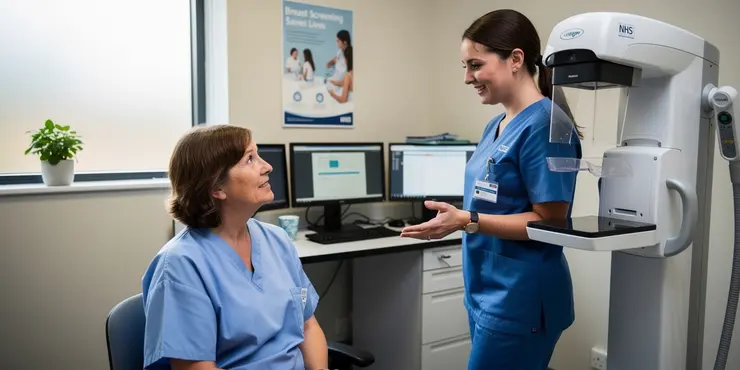
During a mammogram, a radiographer will position a woman's breast on a flat plate and press another plate firmly against it from above. The plates flatten the breast, holding it still while the X-ray is taken. This compression is necessary to get the clearest picture with the least amount of radiation possible. The entire procedure usually takes about 20 minutes, although the compression only lasts for a few seconds.
Who Should Have a Mammogram?
In the UK, women aged 50 to 70 are invited for breast cancer screening every three years as part of the NHS Breast Screening Programme. Women are first invited for screening between their 50th and 53rd birthday. While routine screening is not offered to women under 50 due to the lower incidence in this group, those with a higher risk due to a family history of breast cancer may be invited for screening earlier. Women over 70 can also request continuing screening every three years.
Benefits and Limitations
The main benefit of regular mammograms is their ability to detect breast cancer at an early stage, which significantly increases treatment options and improves survival rates. However, they are not perfect. False positives, where non-cancerous abnormalities are mistaken for cancer, can occur, leading to unnecessary anxiety and additional tests. Conversely, false negatives, where cancer is not detected, though less common, can occur as well.
Conclusion
Mammograms are an important part of cancer prevention and care for women. By participating in regular screening and being aware of changes in their bodies, women can empower themselves with the knowledge that they are taking proactive steps in managing their breast health.
What is a Mammogram?
A mammogram is a special kind of X-ray. It checks for early signs of breast cancer. The mammogram uses low-dose X-rays to take pictures of the breast. These pictures can show unusual growths or changes. Mammograms help doctors find breast cancer early.
Purpose of Mammograms
The main goal of a mammogram is to look for breast cancer in women. It can find tumors that are too small to feel. Mammograms also help when a woman has a lump or other breast problem. Regular mammograms are important because they can find cancer early. Early detection makes treatment more effective.
Types of Mammograms
There are two types of mammograms: screening and diagnostic. Screening mammograms are regular checks for women who feel fine. They take several pictures from different angles. Diagnostic mammograms are used when there are breast changes. This includes a new lump, pain, or nipple changes. It is also used after a screening mammogram if more detail is needed.
The Mammography Process
When you have a mammogram, a technician will help you. They place your breast on a flat plate and press another plate on top. This flattens your breast, so they get a clear picture. The X-ray only takes a few seconds, but the whole visit is about 20 minutes.
Who Should Have a Mammogram?
In the UK, women aged 50 to 70 get breast cancer checks every three years. This is part of a program to catch cancer early. Women get their first invite between ages 50 and 53. Women younger than 50 usually don't get routine checks because cancer is less common then. But if you have a family history of breast cancer, you might start earlier. Women over 70 can ask for checks every three years.
Benefits and Limitations
Mammograms are good because they can find breast cancer early. This gives more options for treatment and better chances of getting well. But sometimes mammograms can make mistakes. They might show a problem when there isn't any or miss a cancer. These are called false positives and false negatives.
Conclusion
Mammograms are important for keeping women healthy. Getting regular checks and knowing changes in your body helps. It's a way to take charge of your breast health.
Frequently Asked Questions
A mammogram is an X-ray image of the breast that is used to screen for breast cancer and other abnormalities.
Mammograms are important because they can detect breast cancer early, often before any symptoms appear, which can lead to earlier treatment and better outcomes.
Most health organizations recommend that women start getting mammograms at age 40, but it can vary based on individual risk factors.
Women over 40 are generally advised to have a mammogram every 1-2 years, but frequency can vary based on personal and family medical history.
During a mammogram, your breast is compressed between two plates and X-ray images are taken to examine any changes or abnormalities.
Some women may feel discomfort or slight pain during the compression, but it generally lasts only a few seconds.
A mammogram typically takes about 20 minutes, with the actual breast compression lasting only a few seconds for each image.
Yes, mammograms are safe. They use a low dose of radiation, which is considered safe and the benefits typically outweigh the risks.
While rare, men can get mammograms if there is a suspicion of breast cancer or other breast issues.
On the day of the exam, avoid using deodorants, perfumes, or powders, as these can interfere with the results.
A diagnostic mammogram is a more detailed mammogram used to further investigate abnormal findings from a screening mammogram or physical exam.
The results can show normal tissue, benign conditions, or signs that need further investigation, such as suspicious areas that could indicate cancer.
Mammograms are very effective but not perfect. They can miss some cancers or result in false positives that require further testing.
Mammograms have limitations such as false positives, false negatives, and difficulty in detecting cancers in dense breast tissue.
3D mammography, or tomosynthesis, is an advanced technology that creates a more detailed 3D image of the breast, improving detection of abnormalities.
Mammograms involve radiation, but the dose is very low and considered safe, with benefits outweighing the risks.
Mammograms are generally avoided during pregnancy unless absolutely necessary. Alternative imaging methods may be recommended.
If an abnormality is found, further evaluation with additional imaging, such as ultrasound or biopsy, may be recommended.
Alternatives like breast MRI and ultrasound can be used, especially for women at high risk or with dense breast tissue, but they are not replacements for regular mammograms.
You can schedule a mammogram through your healthcare provider or contact a mammography center directly, ensuring they accept your insurance.
A mammogram is a special picture of the inside of the breast. It helps doctors look for signs of breast cancer or other problems.
Mammograms are important because they help find breast cancer early. This is often before you feel anything is wrong. Finding cancer early means treatment can start sooner and can work better.
Most health experts say women should start getting breast x-rays, called mammograms, when they turn 40 years old. But this age might be different for some people. It depends on their health and family history.
Women over 40 should usually have a breast check called a mammogram every 1 to 2 years. But how often you need one can change if you or your family have had health issues before.
When you have a mammogram, your breast is gently pressed between two plates. Then, an X-ray takes a picture of your breast to check for any changes or problems.
Some women might feel a little bit of pain when they press down, but it usually only lasts for a few seconds.
A mammogram is a special picture of your breast. It usually takes about 20 minutes. But pressing on your breast for the picture only lasts a few seconds each time.
Here are some tips that might help:
- Bring someone with you for support.
- Wear a top that's easy to take off.
- Try to stay calm and breathe slowly.
Yes, mammograms are safe. They use a very small amount of radiation. This is safe, and the good things about getting a mammogram are more important than any risks.
It is not common, but men can have a mammogram if doctors think there might be breast cancer or other problems with their breast.
On the day of the test, do not use deodorants, perfumes, or powders. They can mess up the test results.
A diagnostic mammogram is a special kind of picture taken of the breast. It helps doctors look closely if something unusual shows up on a regular check-up or exam.
The test results can show three things:
1. Normal tissue, which means everything looks healthy.
2. Benign conditions, which are not cancer and are usually not serious.
3. Signs that need more checking. These might be areas that look strange and could be cancer.
Mammograms are good at finding cancer, but they're not perfect. Sometimes they miss cancers or say something is wrong when it isn't. This means more tests are needed.
Mammograms are tests to check breasts for cancer. Sometimes, they make mistakes. They might say there is cancer when there isn’t (this is a false positive). Or they might say everything is fine when there is cancer (this is a false negative). It can also be hard to find cancer in breasts that have a lot of thick tissue.
Here are some tips to help understand this information:
- Ask your doctor to explain the test results in simple words.
- Use pictures or videos to learn more.
- Bring a friend or family member to your doctor visit to help you remember what the doctor says.
- Write down any questions you have before going to the doctor.
3D mammography, also called tomosynthesis, is a new kind of test that makes a clearer picture of the breast. It helps doctors find anything unusual more easily.
Mammograms use a tiny bit of X-ray. This is safe, and it helps doctors a lot more than it can hurt you.
Doctors don't usually do mammograms when someone is pregnant unless they really have to. They might suggest using other types of pictures instead.
If something looks different or not right, doctors might need to check more. They could use more pictures, like with sound waves (called an ultrasound) or take a small piece to look at it closer (called a biopsy).
You can use breast MRI and ultrasound too. These are special pictures of the inside of your body. They help doctors see different things than a regular mammogram. These are good for women who might get breast cancer more easily or have thicker breast tissue. But remember, they do not take the place of regular mammograms.
You can make an appointment to get a mammogram by talking to your doctor. You can also call a place that does mammograms. Make sure they take your insurance before you go.

Ergsy Search Results
This website offers general information and is not a substitute for professional advice.
Always seek guidance from qualified professionals.
If you have any medical concerns or need urgent help, contact a healthcare professional or emergency services immediately.
Some of this content was generated with AI assistance. We've done our best to keep it accurate, helpful, and human-friendly.
- Ergsy carefully checks the information in the videos we provide here.
- Videos shown by Youtube after a video has completed, have NOT been reviewed by ERGSY.
- To view, click the arrow in centre of video.
- Most of the videos you find here will have subtitles and/or closed captions available.
- You may need to turn these on, and choose your preferred language.
- Go to the video you'd like to watch.
- If closed captions (CC) are available, settings will be visible on the bottom right of the video player.
- To turn on Captions, click settings.
- To turn off Captions, click settings again.