
Get Answers
Introduction to Mammograms
A mammogram is a vital tool in the early detection and diagnosis of breast cancer. It uses low-dose X-rays to create detailed images of breast tissue and is a key process in women's health care. In the UK, regular mammogram screenings are offered to women aged 50 to 70 every three years, although the exact age range can vary slightly across regions.
The Mammogram Procedure
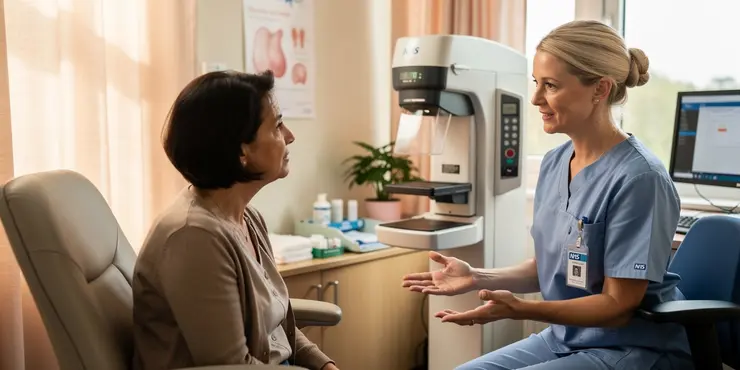
When you attend a mammogram appointment, you will first be asked some general health questions by a healthcare professional. You will then be taken to a private room with the mammography machine. The procedure is usually carried out by a female radiographer, who will guide you on how to position yourself.
During the mammogram, each breast is placed between two plates on the machine. These plates compress the breast tissue to spread it out and provide a clearer view of any abnormalities. While this compression can cause some discomfort, it is crucial for achieving accurate results. Each breast is typically compressed twice, from top to bottom and from side to side, resulting in four images in total.
Duration and Safety
The entire mammogram process usually takes about 20 minutes in total, though the actual compression only lasts a few seconds per image. Mammograms use very low doses of radiation, making them a safe procedure. The benefits of early cancer detection far outweigh the minimal risks associated with radiation exposure.
After the Mammogram
Once the mammogram is complete, the images are examined by a radiologist, a specialist in interpreting medical images. You will not usually receive your results immediately but will be contacted within a few weeks. The results may be sent to you directly or to your GP.
If any abnormalities are detected, further tests will be arranged. This may include additional mammograms, an ultrasound, or a biopsy to examine the tissue more closely. It is important to note that being called back for further testing does not automatically indicate cancer.
Importance of Mammograms
Mammograms are essential for early detection of breast cancer, which can significantly improve treatment success rates. By detecting cancer early, before it can be felt or cause symptoms, mammograms play a crucial role in reducing breast cancer mortality.
Conclusion
Regular mammograms are a proactive step in maintaining breast health. By participating in screenings, women significantly increase their chances of identifying any issues early on, when they are most treatable. If you have concerns about mammograms or breast cancer, it is recommended that you speak with your GP or a healthcare professional.
Introduction to Mammograms
A mammogram is a special test to help find signs of breast cancer early. It uses a machine that takes pictures of the inside of your breasts. In the UK, women aged 50 to 70 can have a mammogram every three years to check their breast health.
The Mammogram Procedure
When you go for a mammogram, a healthcare worker will ask you some health questions. Then you will go to a private room with the mammogram machine. A woman who runs the machine, called a radiographer, will help you get in the right position.
For the test, each breast goes between two plates. These plates press your breast to make a clear picture. This might feel a bit uncomfortable, but it helps get good pictures. Each breast is pressed twice in different ways, giving four pictures altogether.
Duration and Safety
The whole mammogram takes about 20 minutes. But the pressing part is just a few seconds for each picture. The test uses very little radiation, so it is safe. Finding cancer early is much more important than the tiny risk from the radiation.
After the Mammogram
When the test is done, a doctor who looks at medical pictures, called a radiologist, will check the results. You will not get the results right away. They will send them to you or your doctor in a few weeks.
If something unusual is found, you might need more tests, like another mammogram, an ultrasound, or a biopsy. This helps to look at the breast tissue closely. Remember, needing more tests does not mean you have cancer.
Importance of Mammograms
Mammograms are very important for finding breast cancer early. This makes it easier to treat. They help find cancer before you can feel it or have any symptoms, which can save lives.
Conclusion
Having regular mammograms is a smart way to take care of your breast health. By getting checked, women can find problems early, when they are easier to treat. If you have questions about mammograms or breast cancer, talk to your doctor or a healthcare worker.
Frequently Asked Questions
A mammogram is an X-ray image of the breast used to screen for breast cancer.
During a mammogram, a technician will position your breast on a clear plate and another plate will press down on your breast to flatten the tissue for clear imaging.
Compression is necessary to spread out the breast tissue and minimize the thickness, allowing for a clearer image and reducing the X-ray dose.
Some women may experience discomfort or pain due to the compression of the breast, but it generally lasts only a few seconds.
The entire mammogram procedure usually takes about 20 minutes, with the compression part lasting only a few seconds for each image.
It's best to wear a two-piece outfit so you only need to remove your top. Avoid using deodorant, perfume, or lotions under the arms or on the breasts.
After the mammogram, you'll wait while the technician checks the images for quality. A radiologist will then analyze the images for any signs of abnormalities.
Results are typically available within a few days, but it can sometimes take up to a week depending on your healthcare provider.
Yes, but it's often recommended to schedule your mammogram for one week after your menstrual period begins when breasts are less tender.
Yes, mammograms are considered safe. They use low-dose X-rays, and the benefits of early detection of breast cancer generally outweigh the small risk.
While mammograms are the best screening tool available, they do not detect all breast cancers. Some may not show up or are difficult to see on a mammogram.
The recommended age to start regular mammograms varies. Some guidelines suggest starting at 40, while others recommend starting at 50. Discuss with your doctor your personal risk factors.
The frequency of mammograms depends on individual risk factors and guidelines. Many women are advised to have a mammogram every 1-2 years.
Yes, you can request a 3D mammogram, also known as breast tomosynthesis. It provides a more detailed view of the breast tissue.
If you have breast implants, inform the technician beforehand. Special techniques are used to ensure a clear view of the breast tissue.
Yes, while rare, men can have mammograms, especially if they have symptoms like a breast lump or a family history of breast cancer.
If your mammogram results are abnormal, follow up with your healthcare provider. Additional testing, like ultrasound or biopsy, may be recommended.
No special preparation is needed, but avoid using deodorants or lotions on the day of your mammogram as they can interfere with the images.
Yes, mammograms can detect other conditions such as cysts and benign tumors.
While mammograms are the standard screening tool, other tests such as breast ultrasound or MRI may be used in specific situations or for certain individuals.
A mammogram is a special picture of the breast. It is taken with an X-ray machine to check for signs of breast cancer.
When you have a mammogram, a helper will help you put your breast on a clear plate. Another plate will press down on your breast. This helps take a clear picture of the inside of your breast.
Pressing the breast helps spread out the tissue. This makes it easier to see clear pictures and means less X-ray is needed.
Some women might feel uncomfortable or have pain when their breast is squeezed. But it usually lasts only a few seconds.
The whole mammogram test usually takes about 20 minutes. The part where your breast is pressed only lasts a few seconds for each picture.
Wear clothes with a top and bottom. This way, you just take off the top part. Don’t use deodorant, perfume, or lotions on your underarms or breasts.
After your breast X-ray, you will wait. The person taking the pictures will check to see if they are clear. Then, a special doctor will look at the pictures to see if there is anything unusual.
You usually get your results in a few days. But sometimes, it can take up to a week. It depends on your doctor or nurse. You can ask them if you have questions.
Yes, it is best to get your breast check-up one week after your period starts. This is because your breasts are not as sore.
Yes, mammograms are safe. They use a tiny bit of X-ray. Finding breast cancer early is very important, and the small risk is worth it.
Mammograms are a good way to find breast problems. But sometimes, they don't find everything. Some problems might not show up in the pictures.
When you should start getting mammograms can be different for everyone. Some doctors say to start at age 40. Some say to start at age 50. Talk to your doctor about what is best for you.
How often you get a mammogram depends on your health. Most women should have one every 1 to 2 years. Talk to your doctor to find out what is best for you.
Yes, you can ask for a 3D mammogram. This is also called breast tomosynthesis. It shows a better picture of the breast tissue.
If you have breast implants, tell the technician first. They use special ways to make sure they can see your breast clearly.
Yes, men can have mammograms too. This is not very common. But if a man finds a lump in his chest or has family members with breast cancer, he might need to have a mammogram.
If your mammogram test shows something unusual, talk to your doctor. You might need more tests, like an ultrasound or biopsy, to check what's going on.
You don't need to do anything special to get ready. But don't put on any deodorant or lotion before your mammogram. These can make it hard to see the pictures clearly.
Yes, a mammogram can show other things like cysts and non-cancer lumps.
Mammograms are the usual test to check for breast problems. Sometimes, doctors use other tests like breast ultrasound or MRI to look closer. They use these other tests in special situations or for some people.

Ergsy Search Results
This website offers general information and is not a substitute for professional advice.
Always seek guidance from qualified professionals.
If you have any medical concerns or need urgent help, contact a healthcare professional or emergency services immediately.
Some of this content was generated with AI assistance. We've done our best to keep it accurate, helpful, and human-friendly.
- Ergsy carefully checks the information in the videos we provide here.
- Videos shown by Youtube after a video has completed, have NOT been reviewed by ERGSY.
- To view, click the arrow in centre of video.
- Most of the videos you find here will have subtitles and/or closed captions available.
- You may need to turn these on, and choose your preferred language.
- Go to the video you'd like to watch.
- If closed captions (CC) are available, settings will be visible on the bottom right of the video player.
- To turn on Captions, click settings.
- To turn off Captions, click settings again.