
Speak To An Expert
Get clear, personalised advice for your situation.
Jot down a few questions to make the most of your conversation.
What is a Mammogram?
A mammogram is a specialised medical imaging test used to examine the breast tissue for the early detection and diagnosis of breast diseases, particularly breast cancer. In the UK, mammograms are a crucial part of the national screening program, which aims to identify breast cancer at an early stage when treatment is more likely to be successful.
How Does it Work?
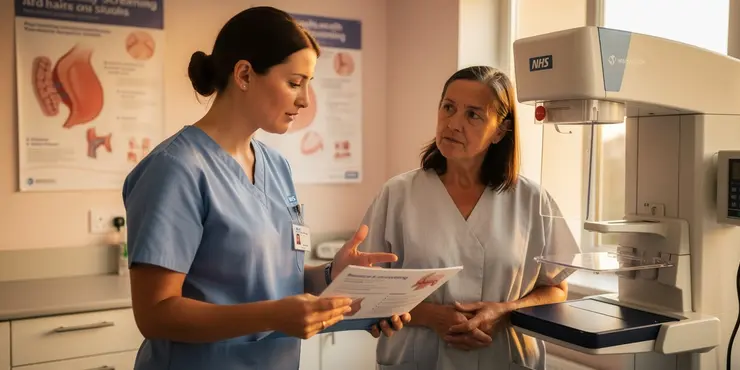
A mammogram uses low-dose X-rays to create detailed images of the breast. During the procedure, each breast is compressed between two plates to flatten and spread the tissue. This compression is important as it provides the radiologist with a clearer view by reducing overlapping structures that could obscure small abnormalities.
Types of Mammograms
There are two main types of mammograms: screening mammograms and diagnostic mammograms. Screening mammograms are routine tests offered to women as a part of NHS Breast Screening Programme, typically every three years for women aged 50 to 71. Diagnostic mammograms, on the other hand, are used when there is a specific problem, such as a lump, or if an abnormality was spotted during a screening mammogram.
Benefits of Mammograms
Mammograms significantly increase the chance of detecting breast cancer early, often before symptoms develop, which can allow for more treatment options and increase the likelihood of successful treatment. Studies have shown that regular mammography screening can reduce breast cancer mortality by helping to catch the disease early.
Preparing for a Mammogram
To prepare for a mammogram, it is advised to avoid using deodorants, antiperspirants, perfumes, powders, or ointments on the day of the exam, as these can appear as white spots on the X-ray. Wearing a two-piece outfit can also make the process more comfortable, as you'll need to undress from the waist up for the procedure.
What to Expect During the Procedure
The mammogram itself is relatively quick, usually taking about 20 minutes. While compression might cause some discomfort or pressure, the technologist will work quickly to minimise any discomfort you may feel. After the images are taken, they are examined by a radiologist for any signs of abnormalities.
Possible Risks
Though mammograms involve exposure to low levels of radiation, the risk is minimal compared to the benefits. The procedure is considered safe, and the NHS Breast Screening Programme ensures that the benefits outweigh the risks. Any concerns should be discussed with your doctor.
Conclusion
Mammograms are an essential tool in the fight against breast cancer. By participating in regular screening, women can significantly increase their chances of early detection and successful treatment. For those in the UK, taking advantage of the NHS Breast Screening Programme is a vital step towards maintaining breast health.
What is a Mammogram?
A mammogram is a special test to look at the breasts. It helps doctors find diseases like breast cancer early. In the UK, women often get mammograms to check for breast cancer before they feel unwell. Finding cancer early makes it easier to treat.
How Does it Work?
A mammogram uses small doses of X-rays to take pictures of the breasts. During the test, the breast is pressed between two plates. This makes the tissue flat so the doctor can see it better. This helps find any small problems.
Types of Mammograms
There are two kinds of mammograms: screening and diagnostic. Screening mammograms are regular checks, usually every three years, for women aged 50 to 71. Diagnostic mammograms happen if there is a problem, like a lump.
Benefits of Mammograms
Mammograms help find breast cancer early, even before any symptoms. This means there are more ways to treat it, and treatment is more likely to work. Regular checks can lower the chance of dying from breast cancer.
Preparing for a Mammogram
On the day of the mammogram, do not use products like deodorant or perfume. They can look like white spots on the X-ray. Wear a top and bottom outfit so you can easily undress from the waist up.
What to Expect During the Procedure
The mammogram takes about 20 minutes. The plates might press on the breast, which can feel uncomfortable. The staff will try to make it quick. A doctor will look at the pictures to find any problems.
Possible Risks
Mammograms use a small amount of radiation, but it is safe. The benefits are much bigger than the risks. If you are worried, talk to your doctor about it.
Conclusion
Mammograms are important for finding breast cancer early. Regular screening can help women get treatment earlier and improve their chances of staying healthy. In the UK, the NHS Breast Screening Programme is a good way to take care of your breast health.
Frequently Asked Questions
A mammogram is an X-ray picture of the breast used to screen for breast cancer.
Mammograms are important because they can detect breast cancer early, often before it can be felt, which increases the chances of successful treatment.
Guidelines vary, but many recommend women start getting mammograms at age 40 to 50 and continue annually or biennially.
This depends on age, risk factors, and medical guidelines, but typically every 1-2 years is recommended for women over 50.
During a mammogram, your breast will be compressed between two plates to spread the tissue apart and get clear images.
Some women may feel discomfort or pressure, but the procedure is usually quick, and the pain is temporary.
The entire mammogram process usually takes about 20 minutes.
You should avoid wearing deodorant, perfume, or powder on the day of the exam as these can affect the images.
Yes, men can get mammograms, especially if they have symptoms or a family history of breast cancer.
If a mammogram shows an abnormal result, further tests such as additional imaging or a biopsy may be needed.
Yes, they are considered safe. The level of radiation is low and the benefits outweigh the risks.
It's important to inform your doctor, but mammograms can be done if necessary, with precautions to protect the baby.
You can schedule a mammogram through your doctor or directly with a specialized imaging center.
Many insurance plans cover mammograms, but it's best to check with your provider for specifics.
A screening mammogram is routine for those without symptoms, while a diagnostic mammogram investigates specific concerns.
Yes, dense tissue can make it harder to see tumors on a mammogram, so additional tests might be recommended.
Mammograms may not detect all cancers and can sometimes give false positives or negatives.
Wear a two-piece outfit since you will need to remove your top and bra during the exam.
While mammograms are good for detecting cancer, they might not detect all breast conditions.
Results are usually sent to your doctor, who will then discuss them with you. You may also receive a letter with the results.
A mammogram is a special picture taken with X-rays to check for breast cancer.
Mammograms are important. They help find breast cancer early. This is often before you can feel it. Finding breast cancer early helps doctors treat it better.
Different places have different rules, but lots of them say women should start having a breast check, called a mammogram, between age 40 and 50. They should do this once a year or every two years.
How often you need a check-up depends on how old you are, your health, and what doctors say. But, it is usually good for women over 50 years old to have a check-up every 1-2 years.
During a mammogram, your breast will be gently squeezed between two flat surfaces. This helps to spread out the tissue so the pictures are clearer.
Some women might feel a bit of discomfort or pressure, but it doesn't last long. The procedure is usually quick, and any pain goes away soon.
The mammogram test usually takes about 20 minutes.
On the day of the test, do not use deodorant, perfume, or powder. These things can change the pictures from your test.
Yes, men can have a mammogram. This is a special picture of the inside of the body.
Men might need a mammogram if they feel something is not right in their breast or if someone in their family had breast cancer.
If you want help reading, try using a ruler to guide you or ask someone to read with you.
If a mammogram shows something unusual, the doctor might need to do more tests. This could be taking more pictures or doing a biopsy. A biopsy means taking a small sample to check it more closely.
Yes, they are safe to use. The amount of radiation is very small. The good things they do are more important than any risks.
Tell your doctor. You can still have a mammogram if needed. Doctors will keep your baby safe while doing it.
You can make an appointment for a breast X-ray, called a mammogram. Ask your doctor to help, or you can call a special center that takes these X-rays.
Many health plans pay for mammograms. It's a good idea to ask your health plan to find out more.
A screening mammogram is a regular check-up for people who don’t have any signs of breast problems. A diagnostic mammogram is used when the doctor wants to look closely at a specific problem.
Yes, if the tissue is thick, it can be harder to see lumps in a breast X-ray. So, doctors might suggest doing more tests to check.
Mammograms are pictures of the inside of the breast to check for cancer. Sometimes, they might not find cancer even if it is there. Other times, they might say there is cancer when there isn't.
Wear clothes with a top and bottom, like a shirt and pants. This is because you will need to take off your shirt and bra when you have the check-up.
Mammograms are good at finding cancer, but they might miss some other breast problems.
Your doctor usually gets your test results. They will talk to you about them. You might also get a letter with your results.

Ergsy Search Results
This website offers general information and is not a substitute for professional advice.
Always seek guidance from qualified professionals.
If you have any medical concerns or need urgent help, contact a healthcare professional or emergency services immediately.
Some of this content was generated with AI assistance. We've done our best to keep it accurate, helpful, and human-friendly.
- Ergsy carefully checks the information in the videos we provide here.
- Videos shown by Youtube after a video has completed, have NOT been reviewed by ERGSY.
- To view, click the arrow in centre of video.
- Most of the videos you find here will have subtitles and/or closed captions available.
- You may need to turn these on, and choose your preferred language.
- Go to the video you'd like to watch.
- If closed captions (CC) are available, settings will be visible on the bottom right of the video player.
- To turn on Captions, click settings.
- To turn off Captions, click settings again.