
Get Answers
Introduction to Registering a Death in the UK
Registering a death in the UK is a legal requirement that must be completed within certain timeframes. This process involves providing several important documents. Understanding which documents are needed can help facilitate a smoother registration process.
Generally, you must register the death within five days, although exceptions can be granted. This timeframe includes weekends and bank holidays, so acting promptly is imperative.
Documents Required from Hospitals or Medical Professionals
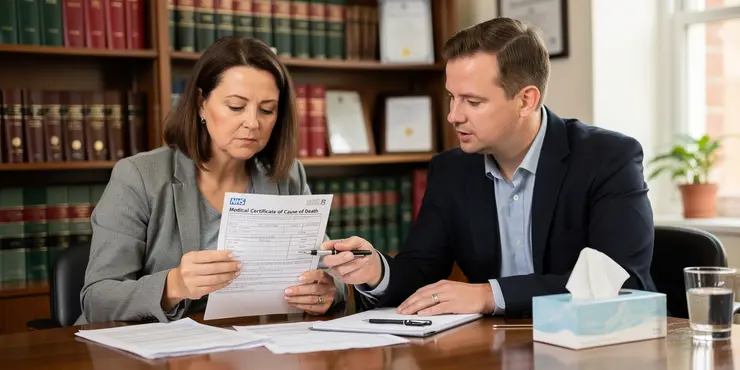
The first document you will need is the Medical Certificate of Cause of Death (MCCD). This certificate is usually provided by a doctor or hospital where the death occurred. It specifies the cause of death, a crucial detail for registration purposes.
If the death was reported to a coroner, you may need additional documents. Coroners might issue separate paperwork or certificates, especially if a post-mortem examination was conducted.
Personal Identification and Proof of Details
When registering a death, bringing identification for the deceased is helpful. This could include a passport, birth certificate, driving licence, or NHS medical card. However, it's not legally required to have identification.
Providing details of the deceased, such as their date of birth, last address, and occupation, is necessary. These details can usually be confirmed by other forms of documentation you may have.
Additional Documents for Special Circumstances
Some cases may involve special circumstances requiring extra documents. For example, if the deceased was receiving a pension or benefits, paperwork related to these can be necessary. This helps in informing relevant agencies about the passing.
If the deceased had a will or estate arrangements, these documents might not be required for registration but are important for later legal processes. Keeping them organized is advised for future reference.
Final Steps in Registration
Once you have collected all necessary documents, take them to a local register office. You can get assistance and book appointments if required. Bringing all needed paperwork will help the registration process go smoothly.
After registration, you'll receive a Death Certificate, which is integral for handling estate matters and notifying institutions. Make sure to request additional copies, as they may be needed for various legal or financial affairs.
Frequently Asked Questions
The first document required is the Medical Certificate of Cause of Death issued by a doctor.
Yes, an identification document such as a passport, ID card, or driver's license of the deceased is needed.
While not always mandatory, a birth certificate can be helpful in confirming personal details of the deceased.
Yes, you may need to provide a document such as a marriage certificate, if applicable, to prove your relationship to the deceased.
Yes, the deceased's Social Security number is often required to ensure accurate record-keeping.
A statement or receipt from the funeral home responsible for the deceased's burial or cremation may be required.
No, full medical records are usually not required, just the medical certificate stating the cause of death.
You may need to provide alternate forms of identification and possibly an affidavit declaring the circumstances.
No, a will is not needed for the death registration process, but it may be required later for estate matters.
A marriage certificate is not usually required for death registration, but it can help verify personal details.
An autopsy report is not required for registering a death unless it is specifically requested by the authorities.
Proof of the deceased's last known address may be needed, such as a utility bill or lease agreement.
An affidavit may be a sworn statement confirming details about the deceased when standard documents are unavailable.
A police report is only required if the death occurred under unusual or suspicious circumstances.
Yes, you need to provide your own form of identification, such as a driver's license or passport.
If the death occurred abroad, local death registration documents would be needed, along with translation if necessary.
While not always required, a citizenship document can be useful in certain legal jurisdictions.
A blank death registration form may need to be completed and submitted with the required documents.
A coroner's report might be needed if the death was investigated to confirm the cause and circumstances of death.
There may be a fee for official copies of the death certificate, but the registration itself is typically free.

Ergsy Search Results
This website offers general information and is not a substitute for professional advice.
Always seek guidance from qualified professionals.
If you have any medical concerns or need urgent help, contact a healthcare professional or emergency services immediately.
Some of this content was generated with AI assistance. We've done our best to keep it accurate, helpful, and human-friendly.
- Ergsy carefully checks the information in the videos we provide here.
- Videos shown by Youtube after a video has completed, have NOT been reviewed by ERGSY.
- To view, click the arrow in centre of video.
- Most of the videos you find here will have subtitles and/or closed captions available.
- You may need to turn these on, and choose your preferred language.
- Go to the video you'd like to watch.
- If closed captions (CC) are available, settings will be visible on the bottom right of the video player.
- To turn on Captions, click settings.
- To turn off Captions, click settings again.