
Speak To An Expert
Get clear, personalised advice for your situation.
Jot down a few questions to make the most of your conversation.
Understanding the Terminology
In the UK, the terms "cemetery" and "churchyard" are sometimes used interchangeably, but they refer to distinct places. A cemetery is typically a large burial ground that is not directly associated with a church.
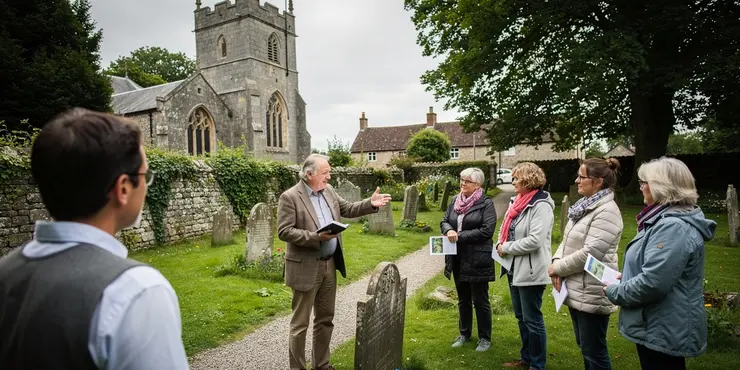
A churchyard, however, is a burial ground that surrounds or is attached to a church. Historically, many churchyards have been in use for hundreds of years and are closely tied to the local church and its congregation.
Location and Ownership
Cemeteries are usually larger areas established by local councils or private companies. They are often found on the outskirts of towns and cities, providing space to serve larger communities.
Churchyards are on land that belongs to a specific church. This makes them more common in rural villages and smaller communities, often located at the geographical center of these places.
Religious Affiliation
Churchyards are typically affiliated with the religious practices of the church they surround. This means they might have specific denominational rules for burials.
Cemeteries are generally non-denominational and can accommodate different religious beliefs. This inclusivity allows them to serve diverse populations.
Historical Significance
Churchyards often have significant historical and cultural value. They may house graves of notable historical figures or even ancient burial sites.
Many churchyards feature headstones and monuments that are hundreds of years old, reflecting the local heritage and history. They are a window into the past for genealogists and historians.
Maintenance and Upkeep
Cemeteries are usually maintained by local authorities or private entities responsible for their upkeep. This includes landscaping, path maintenance, and overall site management.
The maintenance of churchyards is often the responsibility of the church itself. This can sometimes lead to differences in their appearance, with churchyards having a more organic or traditional feel.
Modern Trends
With increasing urbanization, many modern cemeteries are designed to accommodate larger populations and provide future expansion. This has led to more planned and landscaped environments.
Churchyards, due to their limited space and historical status, often remain as they have been for generations. This retention of character makes them unique and cherished community spaces.
Frequently Asked Questions
A cemetery is a designated area of land specifically used for the burial of the dead, and it is not necessarily associated with any particular church or religious institution.
A churchyard is a burial ground that is located on the grounds of a church. It is traditionally associated with the religious institution it surrounds.
Cemeteries can be located independently and do not need to be adjacent to a church, whereas churchyards are specifically situated around a church.
Yes, cemeteries are often secular and open to individuals from various religious backgrounds.
Yes, churchyards are typically affiliated with the religion of the church they surround, often making them limited to members of that religious community.
Historically, churchyards were the most common burial sites, particularly in Christian communities, where churchyards served religious purposes as part of the church's property.
There may be legal distinctions regarding who can be buried and regulations that are specific to religious grounds such as churchyards versus more secular cemeteries.
Yes, cemeteries often offer a range of burial options, including traditional in-ground burials, mausoleums, columbariums, and other secular memorial practices.
In modern times, it is less common for new churches to have traditional churchyards, though many historic churches still maintain them.
Cultural practices can vary greatly; cemeteries may incorporate secular rituals, while churchyards adhere to religious traditions specific to the church's community.
Cemeteries are usually maintained by organizations or municipalities that ensure the grounds are kept orderly and accessible to the public.
The maintenance of churchyards is usually the responsibility of the church or the religious institution with which it is associated.
Churchyards often have older, more ornate headstones due to their historical nature, while cemeteries may feature more modern and varied designs.
Burials in churchyards are often regulated by the church, following specific religious guidelines and ecclesiastical law.
Yes, while many cemeteries are secular, some are associated with particular religious communities or operated by specific religious organizations.
Yes, many churchyards are considered historical sites with cultural landmarks, including ancient stones and notable burials.
Yes, churchyards often have restrictions on monument styles to maintain architectural consistency and adhere to religious or historical guidelines.
Churchyards might have more restricted access, linked to church service hours, while cemeteries generally have broader public visiting hours.
Cemeteries may include considerations for green burials, landscaping, and the ecological impact of maintenance activities.
Some churchyards may adopt green burial practices, but options can be limited by religious customs and available space.

Ergsy Search Results
This website offers general information and is not a substitute for professional advice.
Always seek guidance from qualified professionals.
If you have any medical concerns or need urgent help, contact a healthcare professional or emergency services immediately.
Some of this content was generated with AI assistance. We've done our best to keep it accurate, helpful, and human-friendly.
- Ergsy carefully checks the information in the videos we provide here.
- Videos shown by Youtube after a video has completed, have NOT been reviewed by ERGSY.
- To view, click the arrow in centre of video.
- Most of the videos you find here will have subtitles and/or closed captions available.
- You may need to turn these on, and choose your preferred language.
- Go to the video you'd like to watch.
- If closed captions (CC) are available, settings will be visible on the bottom right of the video player.
- To turn on Captions, click settings.
- To turn off Captions, click settings again.