
Get Answers
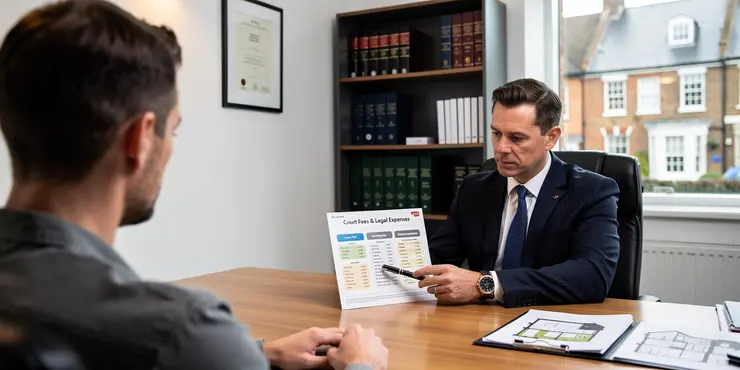
Court Fees
In property litigation, one of the initial costs you will encounter are court fees. These fees vary depending on the type of claim you are making and the value of the property involved. For example, filing a claim in the County Court or High Court requires an initial fee, which is typically proportional to the claim value. For small claims, this fee is relatively modest, but for larger claims, it can be significant. Additional fees may be incurred if the case progresses to hearings or trials, often increasing in line with the complexity and duration of the proceedings.
Legal Fees
Legal representation is another significant cost factor in property litigation. Solicitors charge for their time and expertise, which can range from providing basic advice to handling the case through court proceedings. Barristers might also be engaged for advocacy in court, adding to the costs. Typically, legal fees are charged either as an hourly rate or a fixed fee, depending on the complexity of the case and the arrangements made. It's important to discuss and understand fee structures with your legal representative from the outset, including any potential for additional costs if the case becomes protracted or more complex than initially anticipated.
Expert Witness Fees
In property litigation cases, expert witnesses are often required to provide professional opinions or technical assessments. These experts might be surveyors, valuers, or other specialists whose input is critical to presenting a strong case. Hiring these experts involves additional fees, which cover their time to prepare reports, participate in meetings, and, if necessary, attend court to give evidence. The cost will depend on the expert’s qualifications, the level of detail required in their reports, and the number of hours they commit to your case.
Disbursements
Disbursements are costs incurred by your legal team on your behalf, such as photocopying, postage, and travel expenses. While these costs are generally much smaller than legal or court fees, they can add up over time, especially in long-running cases. It’s wise to keep an eye on these expenditures and ensure you receive detailed accounts periodically, so you understand where your money is being spent.
Potential Cost Orders
A unique aspect of litigation costs is the risk of being ordered to pay the other side's costs if you lose. In the UK legal system, the losing party is often required to cover a significant portion of the winning party's legal costs. This is known as a ‘costs order’. Understanding this risk is essential when deciding to pursue litigation, particularly in property disputes where costs can escalate quickly.
Alternative Dispute Resolution Costs
Sometimes, parties in a property dispute may opt for alternative dispute resolution (ADR) methods, such as mediation or arbitration, to avoid the higher costs associated with court proceedings. While ADR can be less expensive, it still involves costs, including fees for mediators or arbitrators, and legal fees for preparing and attending ADR sessions. These costs should be considered when assessing overall litigation expenses.
Court Fees
When you go to court about property, you will have to pay court fees. These fees change based on what you are claiming and how much the property is worth. For example, if you file a claim in the County Court or High Court, you pay a starting fee. This fee usually depends on how much money is involved in the claim. If the claim is small, the fee is small. If the claim is big, the fee can be high. You may also have more fees if the case goes to hearings or trials.
Legal Fees
You need to pay legal fees when you have a lawyer help you with a property case. Lawyers charge money for their time and knowledge. They can give you advice or help you in court. You might also need a special lawyer called a barrister to speak for you in court. Legal fees can be charged by the hour or as a fixed amount. Fixed means it is the same no matter how long it takes. Make sure to ask your lawyer about all the fees and if they could go up.
Expert Witness Fees
Sometimes, you need an expert to help in a property case. This could be someone like a surveyor who knows a lot about property. They give their expert opinion to help your case. You have to pay these experts for their time to write reports, go to meetings, and maybe go to court. The cost depends on how much work they do and how experienced they are.
Disbursements
Disbursements are small costs your legal team pays for you, like printing or travel. These costs are not as big as court or legal fees, but they can add up over time. It's a good idea to keep track of these costs so you know how much you are spending.
Potential Cost Orders
In the UK, if you lose a case, you might have to pay for the other side's legal costs. This is called a ‘costs order’. This means you pay for some of their legal fees. It's important to know about this risk if you decide to go to court for a property case, as costs can grow quickly.
Alternative Dispute Resolution Costs
Instead of going to court, you might choose another way to solve the problem, like mediation or arbitration. These are called alternative dispute resolution (ADR) methods. ADR can be cheaper than court, but it still costs money. You have to pay fees for mediators or arbitrators and also pay legal fees for getting ready. Think about these costs when deciding how to handle the dispute.
Frequently Asked Questions
Property litigation costs are the legal and related expenses incurred when resolving a property dispute through negotiation, mediation, arbitration, or court proceedings. They can include solicitor fees, barrister fees, court fees, expert reports, valuation fees, and document preparation costs.
Responsibility for property litigation costs depends on the outcome of the case, the conduct of the parties, and any agreement or court order. In many cases, the losing party may be ordered to pay some or all of the other side’s costs, but the court can allocate costs differently based on fairness and case-specific factors.
Property litigation costs are usually calculated based on hourly rates, fixed fees, or stage-based pricing, plus disbursements such as court fees and expert charges. The total cost depends on the complexity of the property issue, the amount of evidence, the number of hearings, and how long the dispute continues.
Property litigation costs often increase when the dispute is highly complex, heavily contested, or requires multiple experts, inspections, or hearings. Delays, amended pleadings, extensive disclosure, and poor communication between parties can also raise the overall cost significantly.
Yes, property litigation costs can sometimes be recovered from the other party if a court orders costs in your favor or if a settlement agreement provides for it. However, recovery is often only partial, and the amount awarded may not cover every legal expense incurred.
Typical solicitor fees in property litigation costs may include advising on the claim, drafting letters and pleadings, reviewing evidence, negotiating settlement, attending conferences, and preparing for court. The exact amount varies based on the solicitor’s experience, location, and the amount of work required.
Court fees in property litigation costs may include filing fees, hearing fees, application fees, and fees for obtaining copies of court documents. These fees vary depending on the court, the type of application, and the procedural steps required in the case.
Yes, expert witnesses can significantly affect property litigation costs because their reports and testimony often require substantial fees. Common experts in property disputes include surveyors, valuers, engineers, and boundary specialists, and their involvement can materially increase the overall budget.
Yes, mediation can reduce property litigation costs by helping the parties reach a settlement without proceeding through a full trial. It can shorten the dispute, limit the number of hearings, and reduce the need for extensive evidence and expert reports.
Fixed property litigation costs are agreed in advance for specific work or stages, while hourly property litigation costs are billed according to the time spent by the legal team. Fixed fees offer more predictability, while hourly billing can reflect the true complexity of the dispute but may be harder to forecast.
Whether property litigation costs are tax deductible depends on the purpose of the dispute and the applicable tax rules in your jurisdiction. Some costs may be deductible in business-related property matters, while personal or private disputes are often treated differently, so professional tax advice is important.
Yes, some legal expenses insurance policies may cover property litigation costs if the dispute falls within the policy terms. Home insurance, title insurance, or separate legal cover may also help, but coverage usually depends on exclusions, limits, and when the dispute began.
A party can estimate property litigation costs by asking a lawyer for a budget based on the likely stages of the case, anticipated expert evidence, and possible hearings. Reviewing similar past disputes and identifying the key risks can also help produce a more realistic estimate.
If property litigation costs exceed the budget, the legal team should usually inform the client and explain the reasons for the increase. The client may need to approve further spending, narrow the issues, or consider settlement to avoid continued escalation of costs.
Yes, property litigation costs are often handled differently in settlement because the parties can negotiate who pays what as part of the agreement. At trial, the court usually has the power to decide costs based on the result and the parties’ conduct during the litigation.
Disbursements in property litigation costs are third-party expenses paid on behalf of the client, such as court fees, expert report fees, title searches, land registry copies, and travel expenses. They are separate from the lawyer’s professional fees but still form part of the overall litigation cost.
Yes, property litigation costs can sometimes be capped by agreement with the legal team or by court order in certain types of proceedings. A cap can help limit financial exposure, but it may not cover all possible work if the dispute becomes more complex than expected.
Proportionality rules affect property litigation costs by requiring the spend to be reasonable compared with the value, importance, and complexity of the dispute. Even if work was necessary, a court may reduce recoverable costs if they are judged excessive in relation to the property issue.
Hidden property litigation costs can include time spent gathering documents, management time, lost income, travel, copying, valuation refreshes, and post-judgment enforcement expenses. These indirect costs can be significant even when the main legal bill appears manageable.
Parties can control property litigation costs by narrowing the issues, exchanging information early, considering mediation, using proportional expert evidence, and keeping communication efficient. Regular budget reviews and clear instructions to the legal team also help prevent unnecessary expense.

Ergsy Search Results
This website offers general information and is not a substitute for professional advice.
Always seek guidance from qualified professionals.
If you have any medical concerns or need urgent help, contact a healthcare professional or emergency services immediately.
Some of this content was generated with AI assistance. We've done our best to keep it accurate, helpful, and human-friendly.
- Ergsy carefully checks the information in the videos we provide here.
- Videos shown by Youtube after a video has completed, have NOT been reviewed by ERGSY.
- To view, click the arrow in centre of video.
- Most of the videos you find here will have subtitles and/or closed captions available.
- You may need to turn these on, and choose your preferred language.
- Go to the video you'd like to watch.
- If closed captions (CC) are available, settings will be visible on the bottom right of the video player.
- To turn on Captions, click settings.
- To turn off Captions, click settings again.