
Get Answers
Understanding Property Boundaries
Property boundaries can often lead to disputes among neighbors. In the UK, property boundaries are typically set out in the title deeds or title register of a property. These documents can be obtained from HM Land Registry. It is essential to refer to these documents to understand the precise boundaries of your property. If a neighbor builds a fence on your property, it may infringe upon your property rights.
Action Steps When a Fence Encroaches
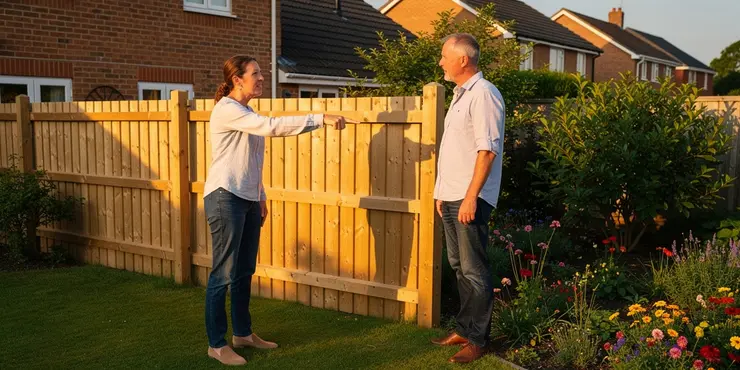
If you discover that a neighbor has built a fence on your property, the first step is to have a calm and friendly conversation with them. It might be an honest mistake, and they may not be aware of the correct boundary lines. Discuss your findings and attempt to resolve the issue amicably. If the boundary is not clear, you might suggest getting a professional surveyor to assess the property lines accurately.
Legal Implications
If discussing the matter with your neighbor does not resolve the issue, and you believe your property rights have been infringed, you may need to consider legal action. In the UK, boundary disputes can be dealt with through the local county court. However, pursuing legal action should be a last resort, as it can be costly and time-consuming. It is advisable to seek legal advice from a solicitor experienced in property law before proceeding.
Professional Mediation
Sometimes, engaging a professional mediator can be a beneficial step in resolving boundary disputes. Mediators are trained to help parties reach a mutually agreeable solution without the need for court intervention. Mediation can be a more cost-effective and less adversarial option than litigation. The Royal Institution of Chartered Surveyors (RICS) provides a boundary dispute mediation service specifically for these types of issues.
Preventing Future Disputes
Once the issue is resolved, it is wise to take steps to prevent future disputes. This might include clearly marking the boundary line with permanent markers or updating your property’s title register to reflect any agreed changes. Consistently maintaining open communication with neighbors about property boundaries can also help prevent misunderstandings from arising.
Conclusion
Dealing with a fence encroachment on your property can be a challenge. However, by understanding your property rights, attempting amicable resolution strategies, and seeking professional advice if necessary, you can address the issue effectively. Always strive to maintain good relations with your neighbors to promote a harmonious living environment. Remember, the goal is to resolve the situation amicably while ensuring your property rights are respected.
Understanding Property Boundaries
Property boundaries show where your land ends and your neighbor’s land begins. In the UK, these boundaries are written in special documents called title deeds or title register. You can get these documents from HM Land Registry. Checking these documents helps you know exactly where your property boundaries are. If a neighbor builds a fence on your land, it isn't allowed because it crosses into your space.
Action Steps When a Fence Comes onto Your Land
If you see a neighbor’s fence is on your land, talk to them nicely first. They might not know about the real boundary line. Explain what you have found and try to fix the problem together. If you’re not sure about the boundary, you can suggest hiring a professional surveyor. They can measure and find the true line for you.
Legal Steps
If talking to your neighbor doesn’t work, you might need legal help. In the UK, you can go to the local county court if you think your property has been wrongly used. But going to court should be your last choice because it can cost a lot and take a long time. It is smart to get advice from a lawyer who knows about property law before doing more.
Using a Mediator
Sometimes, a mediator can help to solve the problem. Mediators are trained people who help both sides agree without going to court. Mediation can cost less and be friendlier than going to court. The Royal Institution of Chartered Surveyors (RICS) offers mediation services for boundary issues like this.
Stopping Future Problems
After solving the fence problem, it’s a good idea to stop future issues. You can mark the boundaries with signs or update the title register with any changes. Keep talking with your neighbors about boundaries to avoid problems down the line.
Conclusion
Handling a fence on your land can be tricky. But by knowing your rights and trying to resolve things nicely or getting expert help, you can sort it out. It’s important to keep a good relationship with your neighbors for a peaceful neighborhood. The goal is to solve the problem fairly and make sure your rights are secure.
Frequently Asked Questions
First, verify the property line by checking your property survey or deed. Then, talk to your neighbor about the encroachment to try to resolve the issue amicably.
Review your property's deed or survey. If necessary, hire a professional surveyor to establish legal boundaries.
Building a fence on your property without permission is usually considered an encroachment and is not legal without your consent.
Before removing the fence, you should consult with an attorney or local authorities to understand your legal rights and obligations.
You may be able to file a claim for trespass or seek a court order for the removal of the fence. Consult with a property attorney for guidance.
Communicate openly with your neighbor and propose mutually agreeable solutions, such as repositioning the fence or adjusting property boundaries if possible.
Adverse possession laws allow someone to claim ownership of land under certain conditions. If a fence remains unchallenged for many years, it could lead to a claim.
Yes, encroachments like a neighbor's fence can impact your property's value or make it harder to sell, especially if not resolved.
Yes, a professional surveyor can provide a precise determination of property lines, which could be crucial to resolving the dispute.
Collect copies of your property's deed, survey maps, photos of the fence, and any communication with your neighbor regarding the issue.
Yes, local zoning laws and ordinances often dictate the placement, height, and type of fences allowed. Check with your local authorities.
Yes, mediation can be a cost-effective way to reach a compromise without going to court.
While a verbal agreement is better than none, a written and signed agreement is more enforceable. Always document any agreements in writing.
Ignoring the issue could lead to complications, such as losing rights to the disputed land through adverse possession.
A title company can provide insight into existing property boundaries and possible encroachments documented during previous transactions.
An HOA may have rules and regulations that impact fence placement and can mediate disputes or enforce compliance.
Clearly communicate property boundaries and any plans to build a fence in advance. Consider documenting agreements formally.
Consulting a property lawyer is advisable to understand your legal rights and responsibilities, especially if the dispute escalates.
Be polite and factual, presenting any evidence you have, and express your desire to resolve the issue amicably.
You have the right to seek compensation for damages. Document the damage and request your neighbor to cover repair costs. Legal action may be necessary if they refuse.
First, check where your property's edge is by looking at your property map or deed. Then, have a friendly talk with your neighbor about the problem to try and fix it nicely.
Look at the papers or map that show what land you own. If you need help, you can ask a special person called a surveyor to find out where your land starts and ends.
Building a fence on your land without asking is usually not allowed. It is against the rules if you did not say it was okay.
Before you take down the fence, talk to a lawyer or someone in your local government. They can help you understand what the rules are and what you need to do.
If someone puts a fence on your land, you have choices. You can ask a lawyer about going to court. They can help you get the fence taken down.
Talk to your neighbor and try to find a solution you both like. You could move the fence or change where the property line is, if you can.
Adverse possession laws let people take land if they follow certain rules. If a fence stays in one spot for a long time and no one argues, the person might get the land.
Yes, if your neighbor's fence goes onto your land, it can make your property worth less money and harder to sell. It's important to fix the problem.
Yes, a surveyor can help find the exact lines of the property. This can solve any arguments about the land.
Get copies of your home's deed (a paper that says you own it), maps of the property, pictures of the fence, and any letters or messages you have shared with your neighbor about the problem.
Yes, there are rules about where you can put fences and how tall they can be. These rules are made by the people in charge of your town or city. Make sure to ask them what is okay before you build a fence.
Yes, mediation is a way to solve problems without going to court. It can save you money.
It's good to talk and agree about something, but writing it down and having everyone sign it is even better. Always write down what you agree to do.
If you ignore the problem, it could get worse. You might even lose your land. This is called "adverse possession."
A title company can help you understand where the edges of a property are. They can also tell you if there are any problems with neighbors using the property that were found in the past.
Your neighborhood might have a group of people who make rules. These rules can tell you where to build a fence. This group can also help if people disagree about fences or if someone breaks the rules.
Talk clearly and early about where the edges of your land are. If you want to build a fence, let others know before you start. It might be a good idea to write down any plans you agree on.
It is a good idea to talk to a property lawyer. They can help you understand what you can and cannot do with your property. This is really important if there is a big argument about the property.
Always be nice and tell the truth. Share any proof you have. Say you want to fix the problem in a friendly way.
You can ask for money to fix things if they get broken. Take pictures or write down what happened. Ask your neighbor to pay for fixing it. If they say no, you might need to talk to a lawyer for help.

Ergsy Search Results
This website offers general information and is not a substitute for professional advice.
Always seek guidance from qualified professionals.
If you have any medical concerns or need urgent help, contact a healthcare professional or emergency services immediately.
Some of this content was generated with AI assistance. We've done our best to keep it accurate, helpful, and human-friendly.
- Ergsy carefully checks the information in the videos we provide here.
- Videos shown by Youtube after a video has completed, have NOT been reviewed by ERGSY.
- To view, click the arrow in centre of video.
- Most of the videos you find here will have subtitles and/or closed captions available.
- You may need to turn these on, and choose your preferred language.
- Go to the video you'd like to watch.
- If closed captions (CC) are available, settings will be visible on the bottom right of the video player.
- To turn on Captions, click settings.
- To turn off Captions, click settings again.