
Find Help
More Items From Ergsy search
-
What are generic medecines?
Relevance: 100%
-
Are homeopathic medicines safe?
Relevance: 58%
-
Is there a generic version of Ozempic?
Relevance: 57%
-
How are homeopathic medicines made?
Relevance: 55%
-
Do homeopathic medicines contain any active ingredients?
Relevance: 51%
-
How is ketamine used in veterinary medicine?
Relevance: 47%
-
Medicines of the heart
Relevance: 47%
-
How does homeopathy differ from conventional medicine?
Relevance: 44%
-
How long has Botox been used in medicine?
Relevance: 44%
-
Why has the price of Mounjaro increased, and are there cheaper alternatives?
Relevance: 24%
-
What is Homeopathy and Homeopathic Medecine?
Relevance: 23%
-
What is drug manufacturing?
Relevance: 22%
-
Is it necessary to stop conventional treatment when starting homeopathy?
Relevance: 21%
-
Can homeopathy treat all medical conditions?
Relevance: 20%
-
Who founded homeopathy?
Relevance: 19%
-
Is homeopathy widely used in the UK?
Relevance: 18%
-
Is a prescription required for Paillon treatment?
Relevance: 18%
-
Is Omeprazole available over the counter?
Relevance: 18%
-
What is Ozempic?
Relevance: 18%
-
How does Mounjaro work?
Relevance: 18%
-
Are there any legal uses for ketamine?
Relevance: 17%
-
Are there any scientific studies supporting homeopathy?
Relevance: 16%
-
What is the principle of 'like cures like'?
Relevance: 15%
-
What are some common conditions treated with homeopathy?
Relevance: 15%
-
Is Ketamine a Class B drug?
Relevance: 15%
-
Is a prescription required for Wegovy tablets?
Relevance: 15%
-
Are marijuana-related offences still considered drug crimes?
Relevance: 14%
-
Can I get Mounjaro on the NHS?
Relevance: 14%
-
Can Wegovy tablets be used for children?
Relevance: 14%
-
Dealing with Common Childhood Illnesses
Relevance: 14%
-
Can I use Ibuprofen for menstrual pain?
Relevance: 14%
-
What is Wegovy?
Relevance: 14%
-
Are there cheaper alternatives to Mounjaro?
Relevance: 14%
-
Is packaging important in identifying fake weight loss drugs?
Relevance: 14%
-
How can I find a qualified homeopath in the UK?
Relevance: 13%
-
What should I do if I experience severe side effects from Wegovy?
Relevance: 13%
-
What is the classification of ketamine?
Relevance: 13%
-
Phishing Scams EXPOSED Don't Fall Victim to These Tricks!
Relevance: 13%
-
Can I get Botulism from Botox Treatments?
Relevance: 12%
-
How does ketamine work?
Relevance: 12%
What Are Generic Medicines?
Generic medicines are drugs marketed without a brand name. They are bioequivalent to branded medicines, meaning they work in the same way and provide the same clinical benefit. In the UK, they must meet rigorous standards set by regulatory authorities like the Medicines and Healthcare products Regulatory Agency (MHRA).
These medicines become available after the patent protection of a branded drug expires. They can be produced by different manufacturers, provided they meet the required safety and efficacy standards.
Benefits of Generic Medicines
Generic medicines offer significant cost savings for patients and the NHS. These medications are usually priced lower than their branded counterparts, making healthcare more affordable.
By lowering drug costs, generics contribute to reduced healthcare expenditure. This allows the NHS to allocate budget resources more efficiently.
Generics also increase market competition, which can lead to innovation and more options for patients.
Ensuring Quality and Safety
In the UK, generic medicines undergo rigorous testing to ensure they are as safe and effective as the original branded products. The MHRA assesses whether a generic drug is equivalent to the branded version by evaluating its quality, safety, and efficacy.
Manufacturers must demonstrate that their generic products have the same active ingredients, strength, and dosage form as the branded drugs. This ensures patients receive the same therapeutic effect.
Common Misconceptions
Some people mistakenly believe that generic medicines are inferior to branded drugs. However, generics contain the identical active ingredients and meet the same quality standards.
Another misconception is that generics differ in strength or dosage. In reality, they are required to have the same dosage and strength to be considered bioequivalent.
Availability and Access
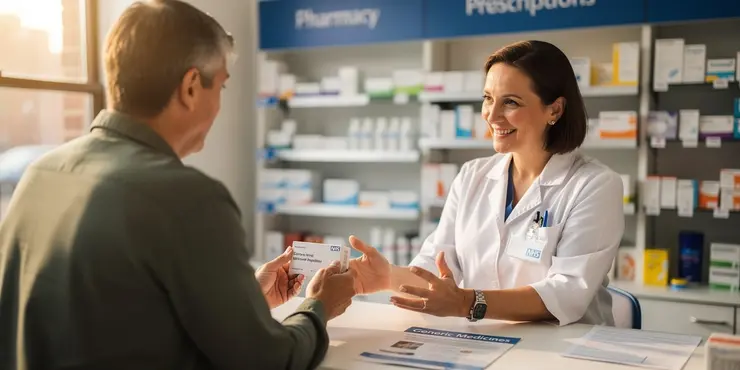
Generic medicines are widely available in pharmacies across the UK. Prescriptions can often be filled with generics unless a branded drug is specifically required.
The widespread availability of generics ensures that patients have access to necessary medications, regardless of budget constraints. This aligns with the NHS's goal of providing accessible healthcare to everyone.
Conclusion
Generic medicines play an essential role in the UK healthcare system. They provide an affordable alternative to branded drugs while delivering the same clinical benefits.
Patients can trust that these medicines are safe, effective, and rigorously tested. By choosing generics, patients help maintain a sustainable and cost-effective healthcare system.
What Are Generic Medicines?
Generic medicines are drugs that do not have a brand name. They work the same way as brand-name drugs and give the same health benefits. In the UK, they must pass strict tests to make sure they are safe and work well. These tests are done by a group called the Medicines and Healthcare products Regulatory Agency (MHRA).
Generic medicines can be made after the special rights (patent) of a brand-name medicine end. Many different companies can make them, as long as they follow the safety and quality rules.
Benefits of Generic Medicines
Generic medicines save a lot of money for patients and the NHS. They are usually cheaper than brand-name medicines. This makes it easier for people to get the medicine they need.
Because they cost less, generics help the NHS save money too. This means the NHS can use its money to help more people.
Generics also help make more competition in the medicine market. This can lead to new ideas and more choices for patients.
Ensuring Quality and Safety
In the UK, generic medicines go through strong testing to make sure they are just as safe and effective as brand-name medicines. The MHRA checks if a generic drug works the same as the brand-name one by looking at its quality, safety, and how well it works.
Companies must show that their generic drugs have the same important ingredients, strength, and form as the brand-name ones. This makes sure that patients get the same health benefits.
Common Misconceptions
Some people think that generic medicines are not as good as brand-name drugs. But generics have the same important ingredients and follow the same quality rules.
Another wrong idea is that generics are weaker or different in dosage. Actually, they must have the same strength and dosage to be called equivalent.
Availability and Access
Generic medicines can be found in many pharmacies in the UK. Most of the time, you can get a generic medicine with a prescription, unless the brand-name drug is needed.
The fact that generics are easy to find means more people can get the medicine they need, no matter how much money they have. This helps the NHS provide healthcare to everyone.
Conclusion
Generic medicines are very important in the UK healthcare system. They are a cheaper choice than brand-name drugs and work just as well.
Patients can feel sure that these medicines are safe, effective, and tested thoroughly. By choosing generics, patients help support a healthcare system that is affordable and useful for everyone.
Tools that might help with understanding include: reading out loud, using a finger to follow along, or asking someone to explain difficult words.
Frequently Asked Questions
What are generic medicines?
Generic medicines are drugs that are similar to brand-name drugs in dosage form, strength, route of administration, quality, and performance characteristics, but usually sold at a lower price.
How do generic medicines differ from brand-name drugs?
The main difference is that generic medicines are typically sold at lower prices, but they contain the same active ingredients and have the same therapeutic effect as brand-name drugs.
Are generic medicines as effective as brand-name drugs?
Yes, generic medicines must meet rigorous standards set by health authorities and are considered just as effective and safe as brand-name drugs.
Why are generic medicines cheaper than brand-name drugs?
Generic medicines are cheaper because manufacturers do not have the same development costs and usually spend less on marketing and advertising as brand-name drug companies.
Can any drug be made into a generic medicine?
Once a drug's patent expires, other companies can apply to produce and sell generic versions of the drug.
How does the approval process differ between generic and brand-name medicines?
Generic drugs go through a simplified approval process that demonstrates pharmaceutical equivalence and bioequivalence to the brand-name counterpart.
Do generic medicines have the same inactive ingredients as brand-name drugs?
Generic medicines may have different inactive ingredients, but they must still meet the same safety and efficacy standards.
Can I switch from a brand-name drug to a generic medicine?
Yes, most people can switch to a generic medicine, but it is advisable to consult with a healthcare provider first.
How can I be sure a generic medicine is safe?
Generic medicines are subject to regulatory oversight by agencies like the FDA, ensuring they are both safe and effective.
Do all brand-name drugs have a generic equivalent?
Not all brand-name drugs have a generic equivalent immediately available, especially if the drug is still under patent protection.
Can generic medicines produce different side effects?
Since generic medicines have the same active ingredients, side effects should be similar, although reactions can vary based on inactive ingredients or individual response.
How are generic medicine names determined?
Generic names are usually based on the chemical name of the drug in a standardized format recognized globally.
What is bioequivalence in the context of generic medicines?
Bioequivalence means the generic medicine works in the body in the same way and provides the same clinical benefit as the brand-name medicine.
Why are patents important for brand-name drugs?
Patents protect the investment of the pharmaceutical company in the drug's research and development by giving them exclusive rights to market the drug for a limited time.
Can a healthcare provider prescribe a generic medicine instead of a brand-name drug?
Yes, healthcare providers can prescribe generic medicines, and often do so to reduce costs for patients.
Are there situations when a generic drug is not recommended?
In rare cases, a patient might not tolerate a generic drug's inactive ingredients or may respond differently, and a healthcare provider may recommend staying with a brand-name drug.
How do I know if a drug is a generic medicine?
The drug packaging will specify it as a generic, and it will usually be labeled with the drug's chemical or generic name.
How long does it take for a generic drug to become available?
A generic drug typically becomes available after the patent on the brand-name drug expires, which can be around 20 years from the date of patent filing.
Can a pharmacy switch my prescription to a generic without telling me?
It depends on the jurisdiction, but often pharmacies have policies to inform patients and seek their consent before substituting a prescribed brand-name drug with a generic.
What happens if a patient experiences issues with a generic medicine?
The patient should contact their healthcare provider to discuss the symptoms. The provider may recommend switching back to a brand-name drug or another therapeutic equivalent.
What are generic medicines?
Generic medicines are copies of brand-name drugs. They have the same ingredients and work the same way. But they usually cost less money. You can use them just like brand-name drugs.
Tips:
- Ask your doctor if a generic medicine is available. It can save you money.
- Use pictures or drawings to remember what your medicines look like.
Generic medicines are drugs that are like brand-name drugs. They have the same form, strength, and way to take them. They work the same, but they usually cost less.
What is the difference between generic medicines and brand-name drugs?
Some medicines have special names. These are called brand-name drugs. Other medicines are the same but have different names. These are called generic medicines.
Here are some things you can remember:
- Both types of medicine do the same job. They help you get better.
- Generic medicines usually cost less money.
- Both have been tested and are safe to use.
If you find it hard to understand, you can:
- Ask your doctor or nurse to explain.
- Use pictures or drawings to help you remember.
- Write down what you learn in simple words.
Generic medicines cost less money than brand-name medicines. But they work the same way because they have the same important ingredients inside.
Do generic medicines work as well as brand-name drugs?
Yes, generic medicines have to follow strict rules set by health experts. They work just as well and are safe like brand-name medicines.
Why do generic medicines cost less than brand-name drugs?
Generic medicines are copies of brand-name drugs. They have the same ingredients and work the same way. But they are cheaper. Here's why:
- Generic medicines don't need big, expensive tests. The brand-name company already did that.
- It costs less to make generic medicines.
- Many companies make generics, so they compete to have the best price.
If you want help understanding medicines, you can:
- Ask a doctor or pharmacist.
- Use health information websites.
Generic medicines cost less money. This is because the companies that make them do not have to spend lots of money to invent the medicine. They also spend less money on telling people about it with ads.
Can we turn any medicine into a generic one?
Some medicines can become generic. This means they cost less and have the same effect. But not all medicines can do this.
Makers of new medicines get a special time where only they can sell it. This is called a patent. After this time, other companies can make the medicine too. This is when it becomes a generic medicine.
To learn more, you can:
- Ask a doctor or pharmacist questions about medicines.
- Use apps or tools that explain things simply.
When a drug's special protection time ends, other companies can ask to make and sell versions of the drug that are the same but not the original brand.
What is different about how new and old medicines are checked?
Here is how new and old medicines are checked before you can use them.
Brand-Name Medicines: These are new medicines. They go through many tests to make sure they are safe and work well. The people making them must show they are new and special.
Generic Medicines: These are copies of old medicines. They are checked to make sure they are the same as the old ones. They must be safe and work the same way.
If you find reading hard, you can:
- Ask someone to explain the steps.
- Use pictures to understand better.
- Listen to the information if there is an audio version.
- Read slowly and ask questions if you need help.
Generic drugs go through a simpler process to get approved. This process shows that they are the same as brand-name drugs and work in the same way.
Do generic medicines have the same inactive ingredients as brand-name drugs?
Do generic medicines and brand-name medicines have the same extra stuff inside?
Medicines have two kinds of stuff inside them:
- Active Ingredients: These help you get better.
- Inactive Ingredients: These help make the medicine, like color or shape.
Generic and brand-name medicines have the same active ingredients. But their inactive ingredients might be different.
If you have allergies or need special help, ask your doctor or pharmacist about any extra stuff in medicines.
To help understand medicines, you can:
- Ask a doctor or pharmacist questions.
- Use pictures or simple words to learn more.
- Look at labels on the medicine box.
Generic medicines can have different extra ingredients. But they still have to be just as safe and work just as well.
Can I change from a brand-name medicine to a generic one?
Yes, you can usually change from a brand-name medicine to a generic one. A generic medicine is the same as the brand-name but usually costs less.
If you want to switch, talk to your doctor or pharmacist. They can help you make the right choice for your health.
Tips to help you:
- Ask your doctor if a generic option is available.
- Use an app or a friend to remind you to take your medicine.
- Read labels or ask for help to understand the medicine information.
Yes, most people can change to a different kind of medicine called a generic medicine. But it's a good idea to talk to a doctor or nurse first.
How do I know a generic medicine is safe?
There are groups of people who check that medicine is safe and works well. These groups make sure that all medicines are good to use.
Do all brand-name drugs have a cheaper version?
Drug companies make brand-name drugs. These are the first versions and can be expensive.
A generic drug is a cheaper version of the brand-name drug. It works the same way but costs less money.
But not all brand-name drugs have a generic version. Some drugs do, but others don't.
If you need help, ask your doctor or pharmacist if there is a cheaper version of your medicine.
You can also use apps or websites to check if there is a generic version available.
Not all brand-name drugs have a copy called a "generic" drug right away. This happens if the brand-name drug is still protected by a special rule called a "patent." This rule stops others from making the same drug for a while.
Do generic medicines cause different side effects?
Generic medicines have the same important parts as brand-name ones, so side effects should be the same. But sometimes, people might react differently because of other ingredients in the medicine or their own bodies.
How do medicines get their names?
Generic names are the names of drugs. They are based on the chemical name of the drug. People all over the world use these names.
What does bioequivalence mean for generic medicines?
Generic medicines are copies of brand medicines.
Bioequivalence means the copy works the same way in the body as the brand medicine.
This makes sure the generic medicine is safe and does the same job.
If you need help reading, try using a ruler or your finger under the words.
Reading with a friend or listening to the text read out loud can also help.
Bioequivalence means that a generic medicine and a brand-name medicine work the same way in your body. They both help you in the same way.
Why are patents important for brand-name drugs?
A patent is a special paper. It says only one company can make a drug for some time. This helps the company because it can sell the drug without others copying it. Selling the drug can make money to pay for research.
When the patent ends, other companies can make the drug too. This makes the drug cheaper.
Helpful tip: Use pictures or videos to understand more. Talk with a grown-up or teacher if you have questions.
Patents help the drug company keep their work safe. They stop others from selling the drug for some time. This way, the company can earn back the money it spent on making the drug.
Can a doctor give you a medicine that is not a brand name?
Yes, a doctor can give you a medicine that is not a brand name. This kind of medicine is called a "generic medicine." It works the same way as the brand-name medicine.
If you have questions, you can:
- Ask your doctor or nurse.
- Look at the medicine package for information.
- Use a tool like a pill reminder app to help you take your medicine.
Yes, doctors can give you medicine that costs less. These are called "generic medicines," and they work the same as other medicines. Doctors give them to help save you money.
When should you not use a generic drug?
Sometimes, generic drugs are not the best choice. Talk to your doctor if:
- You have allergies.
- You take different medicines.
- The generic drug doesn't seem to work as well for you.
It’s important to ask your doctor or pharmacist for advice. They can help you decide what is best for you.
Using a pill organizer or setting reminders can help you take your medicine correctly.
Sometimes, a person might have problems with a generic medicine. This can happen because of what is in the medicine that does not help you feel better, like colors or fillers. These parts are called inactive ingredients. If this happens, your doctor might say it is better to use the brand-name medicine instead.
How can I tell if a medicine is a generic one?
If you want to know if a medicine is generic, here are some simple steps:
- Look at the name: Generic medicines have the same active ingredients as brand-name medicines but often have different names.
- Ask the pharmacist: A pharmacist can help you know if a medicine is generic.
- Check the box or bottle: Sometimes, it says "generic" on the label.
Helpful tool: You can also use online resources to check if a medicine is generic.
The medicine box will show the simple name of the medicine. This is the name of the main ingredient inside.
When can you get a copy of a medicine?
A new version of a medicine called a "generic drug" can be made after the protection on the original version ends. This is usually about 20 years after the original was invented.
Can the pharmacy change my medicine to a generic without telling me?
When you go to the pharmacy, they might give you a generic medicine instead of the brand name medicine your doctor wrote. A generic medicine is the same as the brand name but might look different and often costs less.
The pharmacy usually tells you if they change to a generic. You can ask the pharmacist if you are not sure.
Here are some tips:
- Ask the pharmacist or the doctor about your medicines.
- Check the label on the medicine bottle.
- If you have questions, you can call your doctor.
It can be different in each place. Most times, pharmacies tell people and ask for their okay before they switch a brand-name medicine for a copy one.
What if a person has problems with a generic medicine?
If someone feels sick or has problems after taking a generic medicine, they should tell a doctor or a nurse. They can also tell a grown-up they trust.
People can use pictures or simple words to help explain how they feel. Writing down their feelings or drawing pictures can also help.
If you don't feel well, talk to your doctor or nurse. They can help you feel better. They might say to use a brand-name medicine or a different one that works the same.

Useful Links
This website offers general information and is not a substitute for professional advice.
Always seek guidance from qualified professionals.
If you have any medical concerns or need urgent help, contact a healthcare professional or emergency services immediately.
Some of this content was generated with AI assistance. We’ve done our best to keep it accurate, helpful, and human-friendly.
- Ergsy carfully checks the information in the videos we provide here.
- Videos shown by Youtube after a video has completed, have NOT been reviewed by ERGSY.
- To view, click the arrow in centre of video.
- Most of the videos you find here will have subtitles and/or closed captions available.
- You may need to turn these on, and choose your preferred language.
- Go to the video you'd like to watch.
- If closed captions (CC) are available, settings will be visible on the bottom right of the video player.
- To turn on Captions, click settings .
- To turn off Captions, click settings again.
More Items From Ergsy search
-
What are generic medecines?
Relevance: 100%
-
Are homeopathic medicines safe?
Relevance: 58%
-
Is there a generic version of Ozempic?
Relevance: 57%
-
How are homeopathic medicines made?
Relevance: 55%
-
Do homeopathic medicines contain any active ingredients?
Relevance: 51%
-
How is ketamine used in veterinary medicine?
Relevance: 47%
-
Medicines of the heart
Relevance: 47%
-
How does homeopathy differ from conventional medicine?
Relevance: 44%
-
How long has Botox been used in medicine?
Relevance: 44%
-
Why has the price of Mounjaro increased, and are there cheaper alternatives?
Relevance: 24%
-
What is Homeopathy and Homeopathic Medecine?
Relevance: 23%
-
What is drug manufacturing?
Relevance: 22%
-
Is it necessary to stop conventional treatment when starting homeopathy?
Relevance: 21%
-
Can homeopathy treat all medical conditions?
Relevance: 20%
-
Who founded homeopathy?
Relevance: 19%
-
Is homeopathy widely used in the UK?
Relevance: 18%
-
Is a prescription required for Paillon treatment?
Relevance: 18%
-
Is Omeprazole available over the counter?
Relevance: 18%
-
What is Ozempic?
Relevance: 18%
-
How does Mounjaro work?
Relevance: 18%
-
Are there any legal uses for ketamine?
Relevance: 17%
-
Are there any scientific studies supporting homeopathy?
Relevance: 16%
-
What is the principle of 'like cures like'?
Relevance: 15%
-
What are some common conditions treated with homeopathy?
Relevance: 15%
-
Is Ketamine a Class B drug?
Relevance: 15%
-
Is a prescription required for Wegovy tablets?
Relevance: 15%
-
Are marijuana-related offences still considered drug crimes?
Relevance: 14%
-
Can I get Mounjaro on the NHS?
Relevance: 14%
-
Can Wegovy tablets be used for children?
Relevance: 14%
-
Dealing with Common Childhood Illnesses
Relevance: 14%
-
Can I use Ibuprofen for menstrual pain?
Relevance: 14%
-
What is Wegovy?
Relevance: 14%
-
Are there cheaper alternatives to Mounjaro?
Relevance: 14%
-
Is packaging important in identifying fake weight loss drugs?
Relevance: 14%
-
How can I find a qualified homeopath in the UK?
Relevance: 13%
-
What should I do if I experience severe side effects from Wegovy?
Relevance: 13%
-
What is the classification of ketamine?
Relevance: 13%
-
Phishing Scams EXPOSED Don't Fall Victim to These Tricks!
Relevance: 13%
-
Can I get Botulism from Botox Treatments?
Relevance: 12%
-
How does ketamine work?
Relevance: 12%


