
Get Answers
Understanding HMRC Penalties
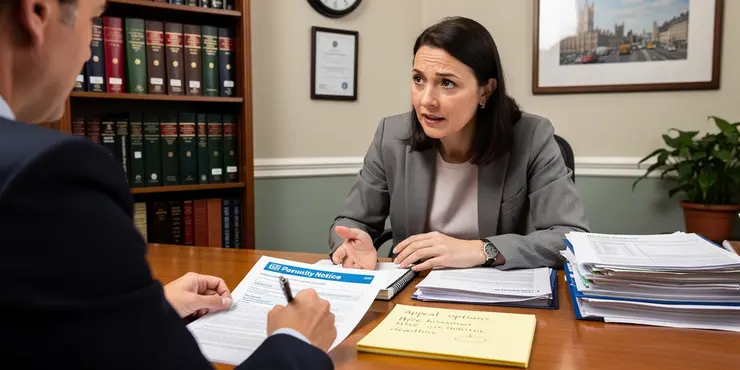
Receiving a penalty notice from HMRC can be concerning. These penalties often arise from issues such as late payments or incorrect tax returns. Knowing the reason for the penalty is the first step in deciding whether to challenge it.
HMRC typically issues penalties for various tax obligations, including VAT, self-assessment returns, and PAYE submissions. Each type of penalty has specific criteria and processes associated with it.
Reasons to Appeal a Penalty
There are valid reasons to consider an appeal. If you believe there has been a genuine error, an appeal might be warranted. This could include situations where you provided information on time, but it was not processed correctly.
You can also appeal if you think the penalty is too high. If you had a reasonable excuse for the delay or error, such as illness or bereavement, this might be considered. It's important to have evidence to support your claim.
The Appeals Process
The first step in the appeals process is to formally notify HMRC. You usually have 30 days from the date of the penalty notice to do this. Using the appropriate form or online service is crucial to ensure your appeal is considered.
In your appeal, clearly state why you disagree with the penalty. Provide any evidence or documentation that supports your case. This can include correspondence, records, or any other relevant information.
What to Expect After an Appeal
Once you submit your appeal, HMRC will review it. They may contact you for additional information if needed. The time taken to reach a decision can vary depending on the complexity of the case.
If HMRC accepts your appeal, the penalty may be reduced or cancelled. If rejected, they will explain why and inform you of any further options. You can then consider appealing to a tax tribunal if you still disagree.
Getting Help with Your Appeal
If the process seems overwhelming, consider seeking help from a tax advisor or accountant. Professionals can provide guidance and may represent you if necessary. They understand the nuances of tax law and can help strengthen your appeal.
It's also possible to receive free advice from charities or organisations that specialise in tax. These services can offer insights and support to help you navigate the appeals process effectively.
Frequently Asked Questions
An HMRC penalty is a financial charge imposed by HM Revenue and Customs for various reasons such as late payment, incorrect tax returns, or failing to register for a tax or notify a liability.
Yes, you can appeal against most HMRC penalties if you believe the penalty is incorrect or unfair.
You can usually appeal a penalty if you have a reasonable excuse for the failure or error. The penalty notice will provide information on whether it can be appealed and how to do so.
Typically, you must appeal an HMRC penalty within 30 days of the date on the penalty notice.
You can appeal by writing to HMRC explaining why you believe the penalty is incorrect. Some penalties allow you to appeal online through your HMRC account.
Your appeal should include your tax reference number, the penalty reference, the amount of the penalty, and a detailed explanation of why you believe the penalty is wrong.
A reasonable excuse is a situation outside your control that prevented you from meeting a tax obligation, such as a serious illness, a natural disaster, or a failure of HMRC's systems.
HMRC will review your appeal and decide whether to cancel the penalty, reduce it, or uphold it. They will inform you of their decision in writing.
Yes, if your appeal is rejected, you can request an independent review or take your case to a tax tribunal.
An independent review is conducted by a different HMRC team, separate from the one that made the original decision, to assess your case impartially.
You can request an independent review within 30 days of receiving HMRC's decision letter by writing to HMRC asking for the review.
If you disagree with the independent review outcome, you can apply to have your case heard by a First-tier Tax Tribunal, where an independent judge will make a decision.
Typically, there is no fee for appealing HMRC penalties related to income tax or VAT to a First-tier Tribunal, but check for specific circumstances or other types of cases.
Yes, you can, but if your appeal is successful, HMRC will refund any penalties paid with interest.
Inform HMRC if your circumstances change, as this might affect your ability to pay or your case for an appeal.
Yes, you can appoint a representative such as a tax adviser or accountant to handle your appeal, but make sure HMRC is informed of their involvement.
You can explain your disagreement in your appeal, providing evidence and legal reasoning if applicable, or seek professional advice for deeper legal interpretation.
The timeframe can vary, but HMRC generally aims to handle appeals within 45 days. More complex cases may take longer.
You should submit your appeal within the deadline even if some documents are missing, adding that additional documents will follow.
If you agree with the penalty, you should arrange payment by the due date specified in the penalty notice to avoid further interest and penalties.

Ergsy Search Results
This website offers general information and is not a substitute for professional advice.
Always seek guidance from qualified professionals.
If you have any medical concerns or need urgent help, contact a healthcare professional or emergency services immediately.
Some of this content was generated with AI assistance. We've done our best to keep it accurate, helpful, and human-friendly.
- Ergsy carefully checks the information in the videos we provide here.
- Videos shown by Youtube after a video has completed, have NOT been reviewed by ERGSY.
- To view, click the arrow in centre of video.
- Most of the videos you find here will have subtitles and/or closed captions available.
- You may need to turn these on, and choose your preferred language.
- Go to the video you'd like to watch.
- If closed captions (CC) are available, settings will be visible on the bottom right of the video player.
- To turn on Captions, click settings.
- To turn off Captions, click settings again.