
Speak To An Expert
Get clear, personalised advice for your situation.
Jot down a few questions to make the most of your conversation.
Understanding Salt and High Blood Pressure
Salt can have a significant impact on blood pressure levels. Consuming too much salt makes the body retain water. This extra water puts pressure on blood vessels, leading to increased blood pressure.
High blood pressure, or hypertension, is a major risk factor for heart disease and stroke. It's essential for individuals with hypertension to manage their salt intake carefully.
Recommended Salt Intake
The NHS recommends that adults consume no more than 6 grams of salt per day. This is equivalent to about one teaspoon of salt. This general guideline applies equally to those with high blood pressure.
For individuals with hypertension, reducing salt intake to 3 to 4 grams per day may provide additional health benefits. Lowering salt consumption can significantly reduce blood pressure levels.
Strategies to Reduce Salt Intake
One effective strategy is to cook more meals at home using fresh ingredients. Processed foods often contain high levels of salt, so avoiding them can help reduce daily intake.
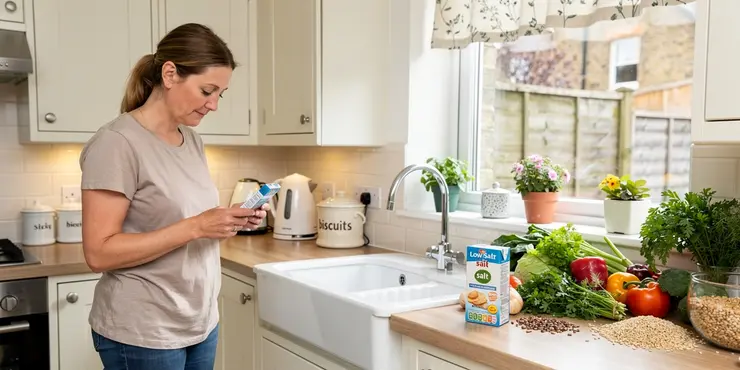
Reading food labels carefully allows you to identify low-salt options. Opt for products with less than 0.3 grams of salt per 100 grams.
Gradually reducing salt use in your cooking can help your taste buds adjust over time. You can enhance flavours with herbs and spices rather than relying on salt.
Monitoring Progress and Health
Regularly checking your blood pressure at home can help you track the effects of reducing salt. Maintaining a record of your readings allows you to see improvements over time.
It's also wise to consult your GP or a dietitian for personalised advice. They can help create a tailored dietary plan that addresses your specific health needs.
Conclusion
Managing salt intake is crucial for those with high blood pressure. By following recommended guidelines, you can positively influence your health outcomes.
With the right strategies, it is possible to lower your blood pressure and reduce the risk of heart-related issues. Evolving your dietary habits is a step towards a healthier lifestyle.
Frequently Asked Questions
The American Heart Association recommends that people with high blood pressure should consume no more than 1,500 milligrams of sodium per day.
Excessive salt intake can raise blood pressure levels, leading to increased risk of heart disease and stroke. Reducing salt can help manage and lower blood pressure.
You can monitor your salt intake by reading food labels, cooking meals at home, using fresh ingredients, and avoiding processed and packaged foods.
Yes, look for terms like sodium, Na, monosodium glutamate (MSG), baking soda, and baking powder, as they all contribute to total sodium intake.
Instead of salted butter, use unsalted varieties. Choose low-sodium broth and stock, and use herbs and spices instead of salt for seasoning.
Yes, you can use herbs, spices, citrus juices, and vinegar to add flavor without adding extra sodium.
Common symptoms include bloating, swelling, and a rise in blood pressure. Long-term overconsumption can contribute to heart disease and kidney issues.
Salt is used as a preservative and to enhance flavor, which is why processed foods often contain high levels of sodium.
Request your meal be made with less salt, opt for dishes with more fruits and vegetables, and avoid items with sauces and breading.
People with hypertension are more sensitive to the blood pressure-raising effects of sodium, making it critical to reduce intake.
Nutritionally, they contain comparable amounts of sodium by weight. It's more about the quantity than the type of salt.
While water can help flush out excess sodium, it won't significantly lower blood pressure caused by a high-salt diet.
Natural foods, like fruits and vegetables, are low in sodium and provide essential nutrients that contribute to heart health.
Regular physical activity can help lower blood pressure and improve heart health, complementing the benefits of reducing salt intake.
Yes, it can reduce the risk of stroke, heart failure, osteoporosis, and kidney disease, and promote overall heart health.
Improvements in blood pressure can be observed within weeks of reducing sodium intake, though individual results vary.
Watch for hidden sources like bread, sauces, deli meats, and snacks which can contribute significant sodium amounts.
Look for items labeled as "low sodium" (140 mg or less per serving) and check the %DV; 5% or less is low, while 20% or more is high.
Yes, potassium-rich foods like bananas, potatoes, and spinach can help balance sodium levels and lower blood pressure.
Some salt substitutes contain potassium chloride, which may not be suitable for people with certain health conditions. It's best to consult a doctor before use.

Ergsy Search Results
This website offers general information and is not a substitute for professional advice.
Always seek guidance from qualified professionals.
If you have any medical concerns or need urgent help, contact a healthcare professional or emergency services immediately.
Some of this content was generated with AI assistance. We've done our best to keep it accurate, helpful, and human-friendly.
- Ergsy carefully checks the information in the videos we provide here.
- Videos shown by Youtube after a video has completed, have NOT been reviewed by ERGSY.
- To view, click the arrow in centre of video.
- Most of the videos you find here will have subtitles and/or closed captions available.
- You may need to turn these on, and choose your preferred language.
- Go to the video you'd like to watch.
- If closed captions (CC) are available, settings will be visible on the bottom right of the video player.
- To turn on Captions, click settings.
- To turn off Captions, click settings again.