
Get Answers
Check Online Reviews and Ratings
Start by researching online reviews of the energy suppliers you are considering. Websites such as Trustpilot and Google Reviews offer customer reviews and ratings. These platforms provide insights into customers' experiences with different suppliers.
Compare ratings across various platforms to get a balanced view. Look for consistent patterns in the feedback to identify strengths or red flags. Remember, occasional negative reviews are normal, but frequent complaints may indicate a problem.
Consult Industry Watchdogs
Refer to consumer protection organizations like Which? and Citizens Advice for expert evaluations. These organizations often publish reports and rankings of energy suppliers in the UK. They consider factors such as customer service, pricing, and complaint handling.
Check if the supplier is part of industry schemes like the Energy Ombudsman. Membership in these organizations can indicate a commitment to resolving customer issues and maintaining high standards.
Verify Licensing and Accreditation
Ensure that the energy supplier is licensed by Ofgem, the UK's energy regulator. A valid license signifies compliance with industry standards and regulations. You can find a list of licensed suppliers on the Ofgem website.
Consider whether the supplier is a member of any trade associations, such as the Renewable Energy Guarantees of Origin scheme. Such affiliations can indicate a commitment to sustainable practices and ethical operations.
Assess Customer Service Quality
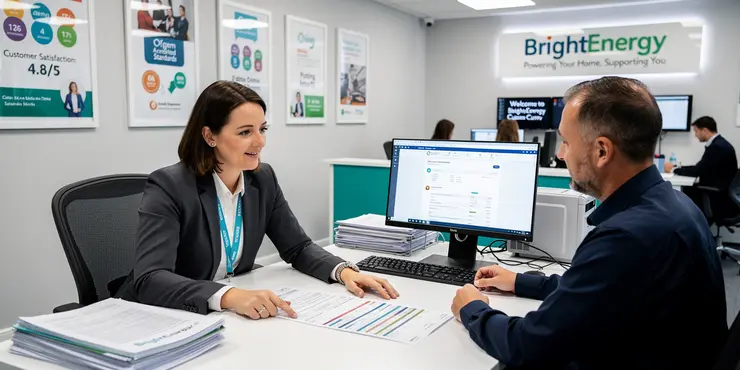
Test the supplier's customer service by contacting them with queries. Evaluate their responsiveness and willingness to help. Good customer service is essential for resolving issues efficiently.
Ask existing customers about their experiences with the supplier's service. Their insights can provide valuable firsthand information about the supplier's reliability and support.
Compare Prices and Contract Terms
Obtain quotes from multiple suppliers to compare prices. Be sure to review the terms and conditions of the contracts offered. Transparency in pricing and terms is a hallmark of a reputable supplier.
Beware of hidden fees or unclear terms that could lead to unexpected costs. A reputable supplier will provide clear, straightforward pricing information and contract terms.
Explore Environmental Credentials
If sustainability is important to you, investigate the supplier's environmental practices. Look for renewable energy options or initiatives that promote sustainability. Many suppliers now offer green energy tariffs as part of their offerings.
Check reports and certifications that validate the supplier's environmental claims. A commitment to environmentally friendly practices can enhance the supplier's reputation and align with your values.
Frequently Asked Questions
Check customer reviews and ratings on platforms like Trustpilot and the Better Business Bureau. Also, look for any regulatory actions against the supplier.
Yes, you can check with governmental regulatory bodies like the U.S. Energy Information Administration or equivalent bodies in other countries for official records.
Platforms such as Trustpilot, Yelp, and the Better Business Bureau provide customer reviews and ratings of energy suppliers.
Yes, check the supplier's social media pages for customer feedback, reviews, and the manner in which they engage with customers.
They can offer personal experiences and recommendations that can be valuable when assessing an energy supplier's reputation.
Yes, industry certifications can indicate a commitment to quality and standards. Check if suppliers have relevant certifications or accreditations.
Focus on feedback regarding response times, issue resolution, professionalism, and customer satisfaction.
While competitive pricing is important, very low prices might hint at compromised service quality. Use price comparisons alongside other indicators.
Suppliers with a longer history are generally more experienced and have established credibility over time.
Transparent suppliers openly share contract terms, pricing details, and policies, which is a sign of reliability.
Yes, frequent name changes can indicate attempts to escape a poor reputation or legal issues.
Regulatory penalties can indicate compliance issues or unethical practices, which negatively affect reputation.
A financially stable supplier is less likely to face disruptions in service, indicating reliability.
Request business licenses, certifications, and records of any awards or recognitions received.
Yes, regulatory bodies often maintain complaint records and compliance statuses for energy suppliers.
Yes, high customer retention rates often reflect satisfactory service and trust.
Suppliers focused on sustainability and green energy may have a better reputation among environmentally-conscious consumers.
Indeed, consumer advocacy groups often publish reviews and ratings based on service quality and consumer protection.
Contact consumer protection agencies or legal advisors for advice on resolving disputes or issues with energy suppliers.
Very important. Clear and fair contract terms indicate a reputable supplier that values transparent business practices.

Ergsy Search Results
This website offers general information and is not a substitute for professional advice.
Always seek guidance from qualified professionals.
If you have any medical concerns or need urgent help, contact a healthcare professional or emergency services immediately.
Some of this content was generated with AI assistance. We've done our best to keep it accurate, helpful, and human-friendly.
- Ergsy carefully checks the information in the videos we provide here.
- Videos shown by Youtube after a video has completed, have NOT been reviewed by ERGSY.
- To view, click the arrow in centre of video.
- Most of the videos you find here will have subtitles and/or closed captions available.
- You may need to turn these on, and choose your preferred language.
- Go to the video you'd like to watch.
- If closed captions (CC) are available, settings will be visible on the bottom right of the video player.
- To turn on Captions, click settings.
- To turn off Captions, click settings again.