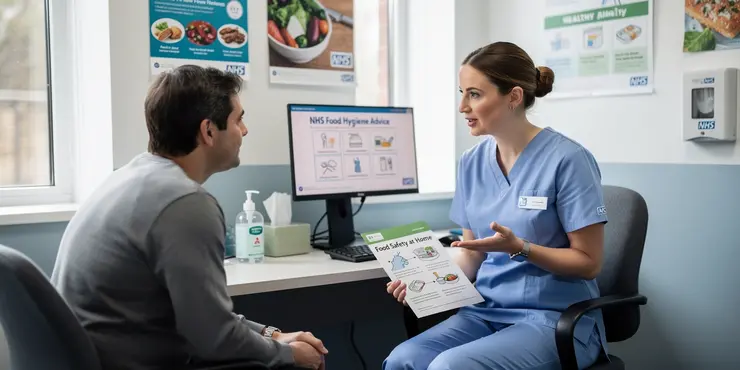

Speak To An Expert
Get clear, personalised advice for your situation.
Jot down a few questions to make the most of your conversation.
Understanding E.coli and Lettuce
E.coli, or Escherichia coli, is a type of bacteria found in the environment, foods, and intestines of people and animals. While most strains are harmless, others can cause severe food poisoning. Lettuce, especially when consumed raw, has occasionally been linked to outbreaks of E.coli. This is due to its cultivation methods and the ease with which the bacteria can spread.
How E.coli Contaminates Lettuce
Lettuce becomes contaminated with E.coli primarily through contact with fecal matter. This contamination can occur during the growing phase if the fields are irrigated with contaminated water or fertilised with improperly composted manure. It can also happen at the handling and packing stages if hygiene practices are not maintained. As lettuce is typically consumed raw, any bacteria present during harvesting are not killed by cooking, allowing E.coli to survive up to the point of ingestion.
History of Outbreaks
Over the years, there have been multiple E.coli outbreaks linked to leafy greens, including lettuce, affecting many countries, including the UK. These outbreaks often result in various symptoms, ranging from mild abdominal discomfort to severe kidney failure, in some cases. Due to its vast distribution network, a single contamination event can result in widespread illness across different regions.
Prevention and Safety Measures
While it can be alarming to hear about E.coli contamination, there are steps you can take to minimise the risk. Purchasing lettuce from reputable sources ensures better quality control and adherence to safety standards. Thoroughly washing lettuce under running water can also help remove some of the bacteria, although it does not guarantee complete safety. For those particularly concerned, opting for cooked greens or those marked as 'triple-washed' and ready to eat can offer additional peace of mind.
Regulations and Assurance in the UK
The UK Food Standards Agency (FSA) works diligently to monitor and regulate food safety standards to protect public health. Manufacturers and retailers are encouraged to adhere to strict agricultural practices and hygiene protocols that minimise contamination risk. In the event of an outbreak, prompt measures such as product recalls and public alerts are implemented to contain and address the issue effectively.
Conclusion
While there is a possibility of contracting E.coli from lettuce, being informed and cautious can greatly reduce this risk. Maintaining awareness of current recalls and safety advisories, practising good food hygiene, and making informed purchasing decisions contribute significantly to food safety. By understanding the risks and prevention methods, consumers can enjoy lettuce as a healthy part of their diet with confidence.
What is E.coli and Why is Lettuce Involved?
E.coli is a kind of germ. It is found in dirt, food, and inside people and animals. Most E.coli germs do not make us sick. But some can cause bad stomach aches. Sometimes, E.coli gets on lettuce. This is because of how lettuce is grown, and how germs can spread easily.
How Does Lettuce Get E.coli?
Lettuce gets E.coli from contact with poop. This can happen if dirty water is used to water the plants. It can also happen if dirty manure (animal poop) is used to help plants grow. If the people packing the lettuce do not keep things clean, germs can spread too. Since we often eat lettuce raw, germs are not killed by cooking.
History of Lettuce and E.coli
Many times, E.coli has spread through leafy green vegetables like lettuce. This has happened in many countries, including the UK. People get sick with symptoms like belly pain, and sometimes it is more serious, affecting the kidneys. Because lettuce is sent everywhere, one bad batch can make many people sick in different places.
How to Stay Safe
Hearing about E.coli can be scary, but there are things you can do to be safer. Buy lettuce from places you trust. Wash lettuce well under running water. This helps remove some of the germs. You can choose lettuce that is cooked or says 'triple-washed' on the package for extra safety.
UK Safety Rules
In the UK, the Food Standards Agency (FSA) makes sure food is safe. They set rules for growing and handling food to keep it clean. If there is a problem with E.coli, they will tell the public and take products off shelves to keep people safe.
Be Informed and Careful
You might get E.coli from lettuce, but being careful helps a lot. Check news for any product recalls and practice good food hygiene at home. Making smart choices when buying and preparing food can help you eat lettuce safely.
Frequently Asked Questions
E. coli is a type of bacteria found in the environment, foods, and intestines of people and animals. Some strains can cause illness.
Yes, lettuce can become contaminated with E. coli if it comes into contact with feces from humans or animals.
Lettuce can become contaminated through exposure to contaminated water or soil, improper handling, or cross-contamination during processing.
Romaine lettuce has been linked to several E. coli outbreaks, but any type of leafy greens can be at risk.
Symptoms can include severe stomach cramps, diarrhea (often bloody), and vomiting. Some cases can lead to more severe complications.
Wash lettuce thoroughly, avoid pre-packaged salads if there's a warning, and ensure good sanitation when handling food.
Monitor for symptoms. If you experience severe symptoms such as diarrhea, especially if it's bloody, contact a healthcare provider.
Most E. coli infections resolve on their own, but some severe cases require hospitalization and supportive care.
Both organic and conventional lettuces can be susceptible to E. coli contamination if exposed to the bacteria.
Yes, cooking lettuce at sufficiently high temperatures can kill E. coli, but lettuce is typically consumed raw.
Yes, E. coli can spread via the fecal-oral route, especially if proper hygiene is not practiced.
Yes, there have been several outbreaks linked to romaine lettuce over the past few years.
Testing can be performed by sampling the produce and culturing it in a lab to detect the presence of E. coli.
Washing can reduce but may not completely eliminate E. coli from contaminated produce.
Symptoms range from mild to severe, and not everyone infected will exhibit symptoms.
Symptoms of E. coli infection typically appear within 3 to 4 days after exposure.
Avoiding romaine can reduce risk during outbreaks, but E. coli can be present in other leafy greens as well.
Young children, the elderly, and individuals with weakened immune systems are at higher risk.
Refrigeration does not kill E. coli but can slow bacterial growth.
Agencies like the CDC and the FDA monitor and investigate outbreaks of E. coli related to food.
E. coli is a kind of germ. It lives in places like soil, food, and inside the tummies of people and animals. Some types can make you sick.
Yes, lettuce can get germs if it touches poop from people or animals.
Lettuce can get germs on it in a few ways. It can get dirty from bad water or soil. If people don't handle it right, it can also get dirty. Sometimes, when it's being cut and packed, it can get germs from other things.
Romaine lettuce has been linked to some E. coli outbreaks. But any kind of leafy greens can be at risk too.
People can feel very bad in their tummy, need the toilet a lot, and sometimes be sick. Sometimes, it can get more serious.
Wash the lettuce really well. If the salad package has a warning, don’t use it. Keep everything clean when making food.
Watch your body for signs of feeling sick. If you have bad tummy problems like runny poop, or if there is blood in it, tell your doctor right away.
Most E. coli infections get better on their own.
But sometimes, if it is very bad, people need to go to the hospital for help.
Bacteria called E. coli can get into lettuce. This can happen to both organic and non-organic (also called conventional) lettuce.
Cooking lettuce can make E. coli germs go away if it's cooked at high heat. But most people eat lettuce raw.
Yes, E. coli can spread when germs from poop get into the mouth. This happens if people do not wash their hands well.
Yes, there have been times when people got sick from romaine lettuce.
You can test the food by taking a small piece and checking it in a lab to see if it has E. coli germs.
Washing fruits and veggies can help get rid of some E. coli germs. But it might not get rid of all of them.
Signs of the sickness can be mild or very bad. Not everyone who is sick will show signs.
If you get sick from E. coli, you usually start feeling bad 3 to 4 days after you catch it.
Staying away from romaine lettuce can help keep you safe when there are E. coli outbreaks. But remember, E. coli can also be found in other kinds of leafy greens.
Young children, older people, and people who get sick easily are more likely to get ill.
The fridge does not kill E. coli, but it makes the germs grow slower.
Groups like the CDC and the FDA watch and look into E. coli outbreaks that come from food.

Ergsy Search Results
This website offers general information and is not a substitute for professional advice.
Always seek guidance from qualified professionals.
If you have any medical concerns or need urgent help, contact a healthcare professional or emergency services immediately.
Some of this content was generated with AI assistance. We've done our best to keep it accurate, helpful, and human-friendly.
- Ergsy carefully checks the information in the videos we provide here.
- Videos shown by Youtube after a video has completed, have NOT been reviewed by ERGSY.
- To view, click the arrow in centre of video.
- Most of the videos you find here will have subtitles and/or closed captions available.
- You may need to turn these on, and choose your preferred language.
- Go to the video you'd like to watch.
- If closed captions (CC) are available, settings will be visible on the bottom right of the video player.
- To turn on Captions, click settings.
- To turn off Captions, click settings again.