
Get Answers
Understanding the Importance of Defibrillators
Defibrillators are critical lifesaving devices that provide necessary medical intervention during cardiac emergencies. They are crucial in treating sudden cardiac arrest (SCA), a condition where the heart suddenly stops beating, leading to a cessation of blood flow to the brain and other vital organs. In the UK, approximately 60,000 cases of SCA occur annually outside of hospitals, highlighting the need for widespread defibrillator availability.
How Defibrillators Work
Defibrillators work by delivering a dose of electrical energy to the heart, aiming to restore a normal rhythm. This device is designed to analyze the heart’s rhythm and determine whether a shock is needed. In many cases, the immediate use of a defibrillator can significantly increase the victim's chance of survival. For every minute without defibrillation, the probability of survival decreases by about 10%. Therefore, quick access to defibrillators is essential.
Types of Defibrillators
There are two main types of defibrillators: Automated External Defibrillators (AEDs) and Manual Defibrillators. AEDs are commonly found in public places and are designed to be used by laypersons. They are user-friendly and provide step-by-step audio and visual instructions, making them accessible to those without medical training. Manual defibrillators, on the other hand, are typically found in hospitals and used by trained healthcare professionals, offering more control and requiring medical expertise to operate.
Public Access and UK Initiatives
The UK has undertaken numerous initiatives to improve defibrillator accessibility, especially in public areas such as airports, train stations, schools, and sports venues. This widespread availability is crucial as it ensures immediate assistance can be provided until emergency medical services arrive. The "Defibrillators in Public Places" initiative is part of the broader effort to enhance community resilience against cardiac emergencies by increasing AED numbers across the country.
Community Training and Awareness
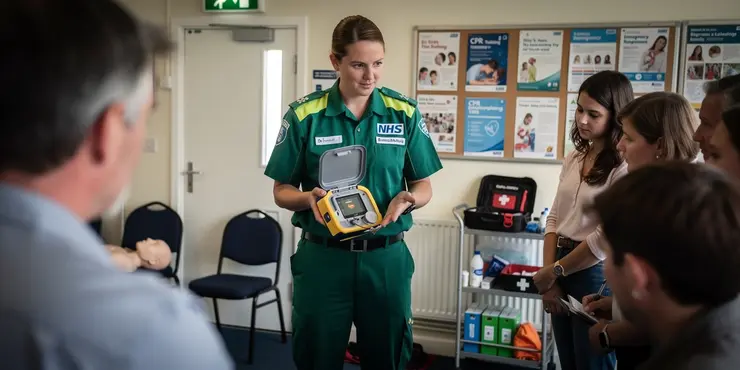
Educating the public on how to use defibrillators effectively is equally important. Many UK organizations offer training courses to familiarize people with the operation of AEDs, alongside cardiopulmonary resuscitation (CPR) training. An informed and trained community can significantly increase the survival rates from sudden cardiac arrest, as bystander intervention plays a crucial role in the chain of survival.
Conclusion
Defibrillators are indispensable in the fight against sudden cardiac arrest, with their ability to quickly restore heart rhythm and dramatically improve survival chances. Their importance is underscored by the UK’s commitment to making them broadly accessible and ensuring that the public is educated on their use. Increasing the number of defibrillators in public spaces, coupled with widespread training, is pivotal in saving lives and enhancing the overall emergency response infrastructure.
Understanding the Importance of Defibrillators
Defibrillators are important machines that help save lives when someone’s heart stops suddenly. This is called sudden cardiac arrest (SCA), and it can stop blood from flowing to the brain and other important parts of the body. About 60,000 people in the UK have SCA outside of hospitals every year. This is why having defibrillators in many places is very important.
How Defibrillators Work
Defibrillators send an electric shock to the heart to help it start beating normally again. These machines check the heart’s rhythm and decide if a shock is needed. Using a defibrillator quickly can greatly help someone survive. Every minute without using it can lower survival chances by about 10%. So, having defibrillators nearby is very important.
Types of Defibrillators
There are two main kinds of defibrillators: Automated External Defibrillators (AEDs) and Manual Defibrillators. AEDs are often in public places and are made for anyone to use. They give easy step-by-step instructions for people who are not doctors. Manual defibrillators are usually in hospitals and used by doctors or nurses who know how to use them.
Public Access and UK Initiatives
The UK is working hard to put more defibrillators in public places like airports, train stations, schools, and sports areas. This is important so they can help right away until doctors or paramedics arrive. The “Defibrillators in Public Places” plan is about making sure there are more AEDs everywhere to help people when someone has a heart emergency.
Community Training and Awareness
Teaching people how to use defibrillators is also very important. Many groups in the UK provide classes to show people how to use AEDs and how to do CPR. When people know how to help in an emergency, it can make a big difference in saving someone’s life.
Conclusion
Defibrillators are very important in helping people when their heart stops suddenly. They can quickly help the heart beat again and can save lives. The UK wants to have more defibrillators in public places and to teach people how to use them. More defibrillators and more training can save more lives and help in emergencies.
Frequently Asked Questions
Defibrillators importance in emergency cardiac care is that they can restore a normal heart rhythm during sudden cardiac arrest, greatly improving the chance of survival when used quickly.
Defibrillators importance is emphasized in public spaces because cardiac arrest can happen anywhere, and having a defibrillator nearby allows immediate treatment before emergency responders arrive.
Defibrillators importance affects survival after cardiac arrest because each minute without defibrillation lowers the chance of survival, so rapid use can make a critical difference.
Workers, visitors, and anyone on-site benefit from defibrillators importance in workplaces because fast access to a defibrillator can save the life of a person suffering sudden cardiac arrest.
Defibrillators importance matters most in community settings such as schools, gyms, airports, stadiums, and shopping centers where large numbers of people gather and emergencies can occur unexpectedly.
Defibrillators importance should be considered during emergency planning whenever there are groups of people, delayed ambulance access, or a higher risk of sudden cardiac arrest.
Defibrillators importance and CPR work together because CPR helps maintain blood flow while the defibrillator attempts to correct a dangerous heart rhythm, improving the odds of recovery.
Defibrillators importance is relevant for schools because students, staff, and visitors may experience a cardiac emergency, and a nearby defibrillator can provide lifesaving treatment before help arrives.
Defibrillators importance is critical during sudden cardiac arrest because many cases are caused by shockable rhythms that can only be corrected effectively with immediate defibrillation.
Defibrillators importance supports faster emergency response by allowing bystanders to act immediately instead of waiting for paramedics, which can significantly reduce the time to treatment.
Defibrillators importance should be part of first aid training because trained people are more confident using the device correctly and can respond quickly in life-threatening situations.
Defibrillators importance depends heavily on bystander action because immediate recognition of cardiac arrest and prompt defibrillator use can dramatically improve survival outcomes.
Defibrillators importance influences placement in buildings by encouraging installation in visible, accessible locations near high-traffic areas so the device can be reached within minutes.
Defibrillators importance is discussed in athletic facilities because intense physical activity can trigger cardiac events, and rapid access to a defibrillator can be lifesaving.
Defibrillators importance plays a central role in saving lives during cardiac emergencies by delivering an electric shock that can restart an effective heartbeat when the heart is in a dangerous rhythm.
Defibrillators importance applies to older adults because they may have a higher risk of heart disease and cardiac arrest, making quick access to a defibrillator especially valuable.
Defibrillators importance is relevant for remote or rural areas because ambulance response times may be longer, so having a defibrillator nearby can bridge the critical gap before medical help arrives.
The public health benefits of defibrillators importance include improved survival rates, greater community preparedness, and reduced deaths from sudden cardiac arrest.
Organizations can improve defibrillators importance in safety policies by installing accessible devices, training staff, maintaining equipment, and creating clear emergency response procedures.
Defibrillators importance is considered a lifesaving investment because the device may be used rarely, but when needed it can mean the difference between life and death in a cardiac emergency.

Ergsy Search Results
This website offers general information and is not a substitute for professional advice.
Always seek guidance from qualified professionals.
If you have any medical concerns or need urgent help, contact a healthcare professional or emergency services immediately.
Some of this content was generated with AI assistance. We've done our best to keep it accurate, helpful, and human-friendly.
- Ergsy carefully checks the information in the videos we provide here.
- Videos shown by Youtube after a video has completed, have NOT been reviewed by ERGSY.
- To view, click the arrow in centre of video.
- Most of the videos you find here will have subtitles and/or closed captions available.
- You may need to turn these on, and choose your preferred language.
- Go to the video you'd like to watch.
- If closed captions (CC) are available, settings will be visible on the bottom right of the video player.
- To turn on Captions, click settings.
- To turn off Captions, click settings again.