
Get Answers
What is a virtual ward?
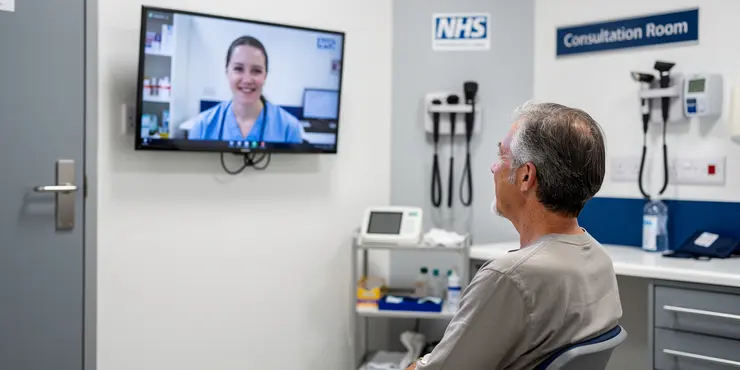
A virtual ward is a way of providing hospital-level care at home, with support from NHS clinicians and digital monitoring tools. It is designed for people who are well enough to stay out of hospital, but still need close observation and regular clinical review.
Patients may be given equipment such as blood pressure monitors, pulse oximeters, or tablets to record symptoms. This allows the care team to check for changes and act quickly if someone gets worse.
People recovering after a hospital stay
One of the main groups who can benefit from a virtual ward is people who are leaving hospital but still need support. This can include patients recovering from surgery, infection, or a flare-up of a long-term condition.
For these patients, a virtual ward can reduce the need to stay in hospital longer than necessary. It can also make recovery feel more comfortable, because healing takes place in the familiar surroundings of home.
People with long-term health conditions
Virtual wards can also help people living with ongoing conditions such as heart failure, COPD, diabetes, or frailty. These patients may need regular checks to make sure their condition is stable and that treatment is working.
When symptoms are monitored from home, problems may be spotted earlier. This can help prevent a minor change from turning into an emergency admission.
Older adults and people with frailty
Older adults, especially those living with frailty, may benefit from a virtual ward if they need extra support but do not require a hospital bed. They can receive careful monitoring while remaining in a setting that may be less stressful than a ward.
Staying at home can also reduce the risk of hospital-related problems, such as confusion, poor sleep, or loss of mobility. For some people, this makes recovery safer and more dignified.
People who need rapid response and reassurance
Virtual wards can be useful for patients who need close follow-up but not constant bedside care. This may suit people who have been assessed as medically stable, but still need a clinician to review their results and symptoms regularly.
It can also reassure family members and carers. Knowing that a professional team is checking in can make it easier to manage care at home with confidence.
Who may not be suitable?
Not everyone is a good fit for a virtual ward. People who need intensive treatment, urgent procedures, or continuous hospital monitoring will still need traditional inpatient care.
Access also depends on the person’s home situation, digital access, and ability to follow the monitoring plan. An NHS team will usually assess whether a virtual ward is the safest option for each patient.
Frequently Asked Questions
Virtual ward eligibility is typically for patients who need hospital-level monitoring or treatment but can be safely cared for at home with remote clinical oversight. Eligibility is usually based on clinical stability, suitable home circumstances, and the ability to use the required monitoring tools or support.
Virtual ward eligibility often includes conditions such as respiratory infections, heart failure, frailty, postoperative recovery, and some chronic disease flare-ups. The exact conditions depend on local services and whether the patient can be monitored safely outside the hospital.
Symptoms that may support virtual ward eligibility include those that require close observation but not immediate inpatient treatment, such as mild to moderate shortness of breath, fever, dehydration risk, pain control needs, or reduced mobility. A clinician must confirm that the symptoms can be managed safely at home.
Virtual ward eligibility can apply to adults and, in some services, children or young people, depending on the program and local healthcare provider. Age alone usually does not decide eligibility; clinical need and safety are the main factors.
Yes, older adults are often eligible for virtual ward eligibility, especially if they need close monitoring after an illness or hospital stay. Frailty, multiple health conditions, and support needs at home are commonly considered during assessment.
Yes, people with chronic illnesses may be eligible for virtual ward eligibility if their condition can be monitored remotely and does not require constant in-hospital care. Common examples include heart failure, COPD, diabetes complications, and other stable but closely watched conditions.
Some patients after surgery are eligible for virtual ward eligibility if they are medically stable and need follow-up observations, wound checks, pain monitoring, or recovery support. The surgery type, risk of complications, and home support will affect the decision.
Pregnant patients may be eligible for virtual ward eligibility in specific cases where remote monitoring is appropriate and safe. Eligibility depends on the pregnancy stage, the reason for monitoring, and whether urgent hospital care might be needed.
Virtual ward eligibility usually requires a safe place to stay, access to a phone or internet if needed, and the ability to follow care instructions. Some services may also require a caregiver, reliable transport, or specific equipment such as a pulse oximeter.
Not always, but internet access can help with virtual ward eligibility when video reviews, app-based monitoring, or digital check-ins are part of the program. Some services can use telephone support and loaned devices instead.
A caregiver is not always required for virtual ward eligibility, but it can improve safety for patients who need help with medication, mobility, or monitoring. Services may require extra support if the patient cannot manage independently.
Safety criteria for virtual ward eligibility usually include whether the patient is stable, whether deterioration can be detected early, and whether rapid hospital access is available if needed. Patients with high risk of sudden worsening may not be suitable.
Some mental health patients may be eligible for virtual ward eligibility if the service is designed to provide remote psychiatric support and the patient is safe to manage at home. Acute risk, severe instability, or need for intensive supervision may exclude eligibility.
Yes, some patients with infections are eligible for virtual ward eligibility if they need ongoing monitoring, treatment, or observation but are stable enough to stay at home. The type of infection and risk of complications will determine suitability.
Yes, patients with mobility problems may be eligible for virtual ward eligibility if their condition can still be managed safely at home with remote support. The team will consider fall risk, access to bathroom and food, and whether a caregiver is available.
Virtual ward eligibility often depends on whether the patient can complete regular monitoring such as temperature, blood pressure, oxygen saturation, weight, or symptom checks. The exact monitoring plan depends on the condition being treated.
Yes, patients who live alone can be eligible for virtual ward eligibility if they are able to self-manage safely and respond to monitoring requests. If there is concern about safety, a clinician may recommend additional support or a different care setting.
Yes, patients with language barriers can be eligible for virtual ward eligibility if communication support, interpreters, or translated instructions are available. The key issue is whether the patient can understand and follow the care plan safely.
A person may not be eligible for virtual ward eligibility if they are too unwell, need continuous inpatient treatment, have unstable vital signs, lack a safe home environment, or cannot reliably complete remote monitoring. Final decisions are made by the clinical team.
Clinicians decide virtual ward eligibility by reviewing the patient’s diagnosis, current stability, risk of deterioration, home support, monitoring needs, and access to emergency care. The goal is to confirm that care at home will be safe and effective.

Ergsy Search Results
This website offers general information and is not a substitute for professional advice.
Always seek guidance from qualified professionals.
If you have any medical concerns or need urgent help, contact a healthcare professional or emergency services immediately.
Some of this content was generated with AI assistance. We've done our best to keep it accurate, helpful, and human-friendly.
- Ergsy carefully checks the information in the videos we provide here.
- Videos shown by Youtube after a video has completed, have NOT been reviewed by ERGSY.
- To view, click the arrow in centre of video.
- Most of the videos you find here will have subtitles and/or closed captions available.
- You may need to turn these on, and choose your preferred language.
- Go to the video you'd like to watch.
- If closed captions (CC) are available, settings will be visible on the bottom right of the video player.
- To turn on Captions, click settings.
- To turn off Captions, click settings again.