
Get Answers
Where to raise a patient safety worry in hospital
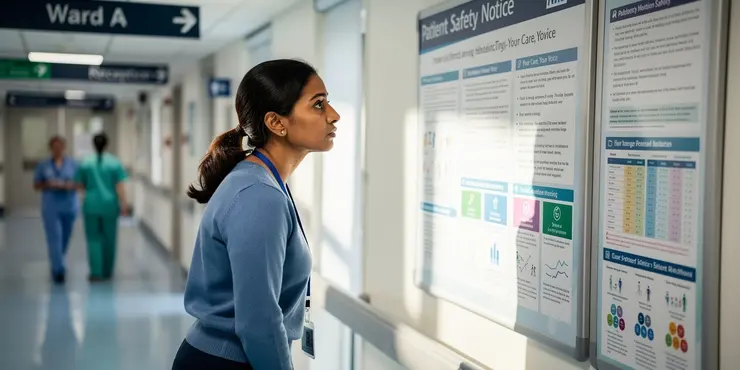
If you are worried about a patient’s safety in a hospital, you should say something as soon as possible. Concerns can include a fall risk, a medicine error, poor hygiene, a missed diagnosis, or staff not responding to changes in condition.
In most cases, the best first step is to tell the nurse in charge of the ward. If the problem is urgent or the patient seems to be getting worse, ask immediately for the senior nurse, ward manager, or the doctor responsible for the patient.
Who else you can speak to inside the hospital
Most hospitals have a Patient Advice and Liaison Service, known as PALS. PALS can help you raise concerns, explain how the hospital works, and pass on worries to the right team.
You can also contact the ward manager, matron, or the site manager if the issue is not being dealt with. If you are unhappy with the response, ask to speak to the duty manager or the hospital’s safeguarding team if the concern involves abuse or neglect.
How to report an immediate safety risk
If there is an immediate danger, make this clear straight away and ask for urgent help. Examples include a patient who is collapsing, severe breathing difficulty, a medication being given wrongly, or equipment not working when it is needed.
Use direct language such as “I am worried this is an emergency” or “I think this patient is unsafe.” If staff do not act quickly enough, ask for the most senior clinician available or use the hospital’s emergency response process.
How to make your concern clear
Try to say exactly what you have seen, when it happened, and who was involved. Short, factual information is often the most useful, especially if staff need to act quickly.
You can ask for the concern to be recorded in the patient’s notes or on the hospital’s incident reporting system. If possible, write down names, times, and what was said, so you have a clear record.
If you are not satisfied with the response
If your concern is not taken seriously, keep going up the chain of responsibility. You can ask to speak to the ward manager, matron, clinical lead, or the hospital’s complaints team.
For a serious issue, you can also contact PALS again and explain that the matter remains unresolved. If you believe a patient has been harmed, the hospital should investigate and tell you what happens next.
Extra support in the UK
Every NHS trust should have a process for raising concerns about patient safety. If needed, you can also contact the Care Quality Commission if you think a hospital is not keeping people safe.
If the patient is a child, an adult with care needs, or someone at risk of abuse, ask about safeguarding support right away. Acting early can help prevent harm and make sure the right people respond quickly.
Frequently Asked Questions
Start with the bedside nurse or the charge nurse on the unit, then ask for the nurse manager, patient relations, or the hospital’s patient safety office if the concern is not resolved quickly.
Report it immediately to the nurse, charge nurse, or the doctor on duty, and if the issue feels urgent or life-threatening, ask for the rapid response team or emergency help right away.
Escalate the concern to the nurse manager, patient advocate, patient relations department, or the hospital’s quality and safety team.
Tell the nurse, pharmacist, or doctor immediately, and then file the concern with patient relations, the unit manager, or the hospital safety reporting system.
Report it to the nurse in charge, infection prevention team, unit manager, or patient safety office so it can be reviewed quickly.
Notify the bedside nurse, charge nurse, or therapist right away, and ask the nurse manager or patient safety team to review the fall-prevention plan.
Speak with the attending doctor, discharge planner, case manager, or patient advocate, and request review by the care team before leaving.
Tell the surgeon, procedure team, charge nurse, or patient relations department immediately, especially if there is a concern about the wrong patient, wrong site, or missing consent.
Ask the nurse, unit clerk, or patient relations department for a qualified interpreter and note the concern to the hospital’s patient safety or equity team if communication failures affect care.
Report it to the charge nurse, nurse manager, or infection prevention team, since these issues should be corrected promptly.
Use the bedside nurse, hospital operator, or patient relations office first; they can direct the concern to the correct safety, clinical, or administrative team.
Ask the hospital whether it has an anonymous incident reporting line, online form, hotline, or patient safety portal, and use that option if available.
Contact the charge nurse, nursing supervisor, house supervisor, or hospital operator, because these contacts are usually available 24 hours a day.
Submit the concern to patient relations, the hospital ombudsman if available, or the quality and safety department, and ask for a written complaint process.
Report it to the charge nurse, nurse manager, patient relations, or human resources if staff behavior is interfering with safe care.
Raise it with the attending physician first if possible, then escalate to the nurse manager, department chief, patient relations, or medical staff office.
Tell the nurse, biomedical engineering, unit manager, or hospital safety office immediately so the equipment can be removed or checked.
Use patient relations, the patient advocate, the compliance hotline, or an anonymous reporting system if available, and say clearly that you are concerned about retaliation.
Contact the hospital’s patient relations or patient safety office by phone, email, or online form, and include dates, names, and what happened.
If the hospital does not address the issue, you can contact the relevant health department, hospital regulator, accreditation body, or licensing board in your area.

Ergsy Search Results
This website offers general information and is not a substitute for professional advice.
Always seek guidance from qualified professionals.
If you have any medical concerns or need urgent help, contact a healthcare professional or emergency services immediately.
Some of this content was generated with AI assistance. We've done our best to keep it accurate, helpful, and human-friendly.
- Ergsy carefully checks the information in the videos we provide here.
- Videos shown by Youtube after a video has completed, have NOT been reviewed by ERGSY.
- To view, click the arrow in centre of video.
- Most of the videos you find here will have subtitles and/or closed captions available.
- You may need to turn these on, and choose your preferred language.
- Go to the video you'd like to watch.
- If closed captions (CC) are available, settings will be visible on the bottom right of the video player.
- To turn on Captions, click settings.
- To turn off Captions, click settings again.