
Get Answers
Where to find reliable Ebola information
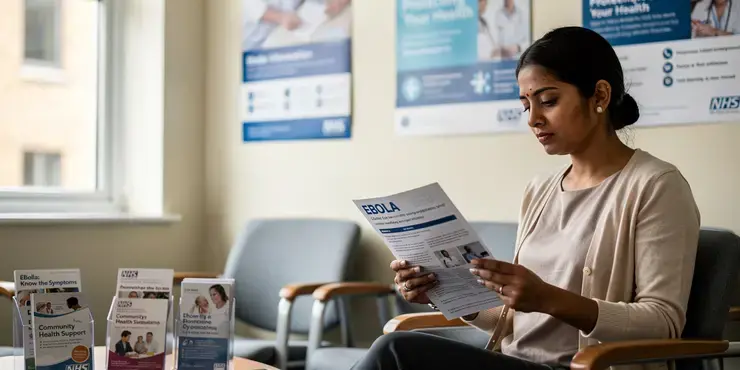
If you think you may have been exposed to Ebola, the most reliable information in the UK comes from the NHS, UK Health Security Agency, and GOV.UK. These sources give up-to-date guidance based on current public health advice.
You should avoid relying on social media posts, forums, or unverified websites. Information about Ebola can change quickly, so it is important to use official sources only.
What to do if you may have been exposed
If you believe you have been exposed to Ebola, contact NHS 111 straight away for advice. If you are already feeling unwell, or have symptoms such as fever, vomiting, diarrhoea, or unexplained bleeding, seek urgent medical help.
Tell the operator about your possible exposure before visiting any healthcare setting. This helps them prepare safely and gives you the right advice on what to do next.
Who to contact in the UK
NHS 111 is often the first point of contact for non-emergency advice. In an emergency, call 999 and explain your concerns clearly.
If you have recently returned from a country with Ebola cases, you may also be contacted by local public health teams. Follow any instructions you are given, including monitoring your temperature and symptoms.
Trusted online sources
The NHS website provides practical guidance on symptoms, when to seek help, and how infection risks are managed. GOV.UK also has public health information for travellers, contacts, and healthcare professionals.
The UK Health Security Agency provides specialist guidance on infectious diseases and updates for outbreaks. If you are looking for travel advice, check the Foreign, Commonwealth & Development Office as well.
What not to do
Do not go directly to a GP surgery, pharmacy, or hospital without phoning first if Ebola exposure is possible. This helps protect other people and ensures you are seen in the right way.
Do not wait for symptoms to become severe before getting advice. Early contact with official services is the safest approach and can help public health teams assess the risk quickly.
Key points to remember
Reliable Ebola advice in the UK should come from official health sources, not rumours or unverified online content. NHS 111, GOV.UK, and the UK Health Security Agency are the best places to start.
If exposure is possible, act quickly, stay calm, and follow professional advice. Getting accurate information early can make a big difference to your safety and the safety of others.
Frequently Asked Questions
If Ebola exposure what to do is suspected, move the person away from others, avoid direct contact with body fluids, and contact local public health authorities or emergency medical services immediately for instructions. Do not wait for symptoms to appear.
For Ebola exposure what to do guidance, contact your local health department, infection control team, or emergency medical services right away. They can determine the level of risk and the safest next steps.
After Ebola exposure what to do, monitor for fever, severe headache, muscle pain, weakness, fatigue, vomiting, diarrhea, abdominal pain, and unexplained bleeding. Symptoms can begin days after exposure, so watch closely and report any changes immediately.
Yes, after Ebola exposure what to do may include isolation or movement restrictions depending on the exposure risk. Follow public health instructions exactly and avoid contact with other people until cleared.
After Ebola exposure what to do usually includes staying away from work, school, and public places until public health officials say it is safe. If you must leave home, follow the exact guidance you were given.
Healthcare workers with Ebola exposure what to do should immediately report the exposure, stop patient contact, and follow occupational health and infection prevention procedures. They may need symptom monitoring, testing, and work restrictions.
If Ebola exposure what to do involved blood or body fluids, wash the exposed skin thoroughly with soap and water and flush mucous membranes with plenty of water. Then seek urgent medical and public health guidance right away.
If Ebola exposure what to do involved a needle stick or sharps injury, wash the area with soap and water immediately and report it as a medical emergency. Prompt evaluation by occupational health or public health officials is necessary.
After Ebola exposure what to do, you should ask a clinician before taking any fever medicine if symptoms develop, because fever can be an important warning sign. Do not self-treat in a way that delays medical evaluation.
Some Ebola exposure what to do situations may be managed at home with strict monitoring if public health officials classify the exposure as low risk. However, any instructions about monitoring, isolation, or testing must be followed exactly.
After Ebola exposure what to do in a home, clean contaminated surfaces only if you are instructed and use appropriate protective equipment if advised. Disinfecting and waste disposal should follow public health or infection control guidance.
Family members should limit close contact, monitor for symptoms if advised, and follow all public health instructions for Ebola exposure what to do. They should also know whom to call if symptoms appear or the exposed person becomes ill.
Testing after Ebola exposure what to do is determined by public health or medical professionals based on the type and timing of exposure and whether symptoms are present. Do not arrange testing on your own without guidance.
After Ebola exposure what to do may include travel restrictions, especially if you are considered at higher risk. Do not travel unless public health officials say it is permitted and safe.
If Ebola exposure what to do happened during travel, contact the nearest health authority or your home health department as soon as possible and provide details about where and when the exposure occurred. Follow instructions about monitoring and possible quarantine.
Monitoring after Ebola exposure what to do is generally based on the incubation period and the assessed risk, often up to 21 days. Public health officials will tell you the exact duration for your situation.
If symptoms start after Ebola exposure what to do, seek emergency medical care immediately and tell staff about the exposure before arriving if possible. Do not use public transportation or sit in crowded waiting areas if you can avoid it.
Yes, after Ebola exposure what to do should include notifying your employer as soon as possible, especially if the exposure affects work duties or requires isolation. Share only the necessary information and follow workplace reporting procedures.
For Ebola exposure what to do cleanup, personal protective equipment may include gloves, gowns, masks, face protection, and other items depending on the contamination risk. Use only equipment and procedures recommended by trained professionals.
Official Ebola exposure what to do instructions come from local or national public health agencies, healthcare providers, and infection control teams. Use these sources rather than general internet advice because recommendations depend on the exposure details.

Ergsy Search Results
This website offers general information and is not a substitute for professional advice.
Always seek guidance from qualified professionals.
If you have any medical concerns or need urgent help, contact a healthcare professional or emergency services immediately.
Some of this content was generated with AI assistance. We've done our best to keep it accurate, helpful, and human-friendly.
- Ergsy carefully checks the information in the videos we provide here.
- Videos shown by Youtube after a video has completed, have NOT been reviewed by ERGSY.
- To view, click the arrow in centre of video.
- Most of the videos you find here will have subtitles and/or closed captions available.
- You may need to turn these on, and choose your preferred language.
- Go to the video you'd like to watch.
- If closed captions (CC) are available, settings will be visible on the bottom right of the video player.
- To turn on Captions, click settings.
- To turn off Captions, click settings again.