
Get Answers
Start with your NHS diabetes team
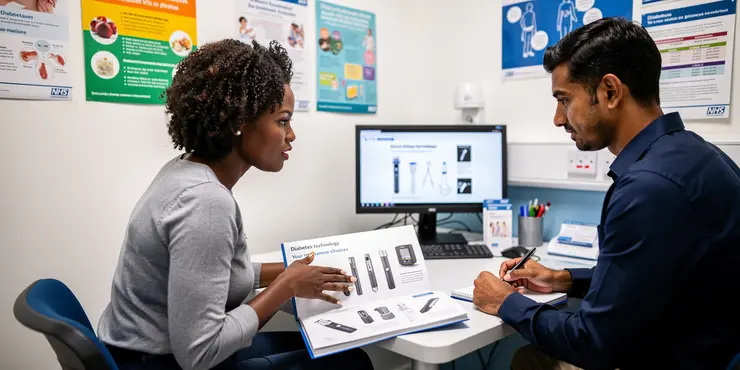
The best place to get official advice is usually your NHS diabetes care team. This may include your diabetes consultant, diabetes specialist nurse, GP, or practice nurse. They can explain whether a device such as a continuous glucose monitor, insulin pump, or hybrid closed-loop system is suitable for you.
Your team will also know the local NHS pathway for assessments and referrals. Eligibility can vary depending on your diabetes type, age, clinical needs, and the services available in your area.
Check NHS guidance and local policies
The NHS website is a reliable source for general information about diabetes technologies. It can help you understand the main options, how they work, and who they may be offered to. This is a useful starting point before speaking to your clinician.
For access decisions, local Integrated Care Boards may have their own policies. These policies can set out which devices are funded in your area and what criteria need to be met. Your diabetes team or GP may be able to direct you to the right local guidance.
Ask about NICE recommendations
The National Institute for Health and Care Excellence, or NICE, produces official guidance on many diabetes technologies. NICE guidance is important because it helps determine which devices should be available on the NHS. It is especially useful if you want to understand the clinical criteria behind access decisions.
Even if a technology is recommended by NICE, you may still need an individual assessment. Your clinician can explain how the guidance applies to your situation and whether there are any local steps to follow.
Use patient support organisations carefully
Charities and diabetes support organisations can offer helpful practical advice about navigating NHS systems. They often explain common eligibility questions in plain language and may point you towards official sources. This can make it easier to prepare for appointments.
However, they should not replace advice from your NHS team. For a decision about eligibility or funding, the most reliable guidance will always come from NHS clinicians and official NHS or NICE sources.
Prepare questions for your appointment
When you speak to your diabetes team, ask which technologies are available to you and why. You can also ask whether you need a referral, what evidence is required, and how long the process usually takes. If you are refused access, ask for the reason in writing.
It may help to bring notes about your current glucose control, hypoglycaemia, treatment routine, and any problems you are having. Clear information can support a more informed discussion about whether a device is appropriate for you.
Frequently Asked Questions
NHS diabetes technologies eligibility access refers to the criteria and process used by the NHS to decide whether someone can receive diabetes technologies such as insulin pumps, continuous glucose monitors, flash glucose monitors, and related devices.
Eligibility for NHS diabetes technologies eligibility access depends on the type of technology, your diabetes type, clinical need, age, local NHS policy, and whether your diabetes team believes the technology would improve safety or glucose control.
You usually apply for NHS diabetes technologies eligibility access through your diabetes specialist team, diabetes nurse, or consultant, who can assess your needs and arrange funding or referral if you meet the criteria.
NHS diabetes technologies eligibility access is most commonly available for people with type 1 diabetes, but some people with other forms of diabetes may also qualify if they have significant clinical need and meet local or national criteria.
Children and young people may qualify for NHS diabetes technologies eligibility access if their clinical team decides the technology is appropriate, safe, and likely to improve diabetes management or reduce risk.
Adults may qualify for NHS diabetes technologies eligibility access when they meet the relevant clinical criteria, which can include poor glucose control, frequent hypoglycaemia, hypoglycaemia unawareness, pregnancy, or other special circumstances.
You may be able to get an insulin pump through NHS diabetes technologies eligibility access if your specialist team believes pump therapy is clinically suitable and you meet the NHS criteria used in your area.
You may be able to get a continuous glucose monitor through NHS diabetes technologies eligibility access if you have a clinical need such as recurrent severe hypoglycaemia, impaired awareness of hypoglycaemia, pregnancy, or difficulty managing glucose safely.
A flash glucose monitor may be available through NHS diabetes technologies eligibility access if you meet the clinical criteria and your diabetes team considers it appropriate for self-management and safety.
Yes, pregnancy can increase eligibility for NHS diabetes technologies eligibility access because tighter glucose control is often needed to reduce risks for both the parent and baby.
Yes, hypoglycaemia unawareness can strongly support NHS diabetes technologies eligibility access because technologies can help detect or prevent dangerous low glucose episodes.
Yes, persistent poor glucose control can support NHS diabetes technologies eligibility access if your diabetes team believes a device would improve outcomes despite good education and standard treatment.
Yes, local NHS rules can affect NHS diabetes technologies eligibility access because some services interpret national guidance differently or have different commissioning arrangements.
Yes, if NHS diabetes technologies eligibility access is refused, you can ask your diabetes team for the reasons, request a review, and use the NHS complaints or appeal process if appropriate.
Often yes, because NHS diabetes technologies eligibility access usually depends on whether you and your care team believe you can use the device safely and benefit from it with appropriate training and follow-up.
Yes, training can affect NHS diabetes technologies eligibility access because many devices require education on use, troubleshooting, data review, and safety precautions.
People with impaired awareness of hypoglycaemia may be prioritised for NHS diabetes technologies eligibility access because technology can reduce risk and improve detection of low blood glucose.
Yes, people who inject insulin may qualify for NHS diabetes technologies eligibility access, especially for glucose monitoring technologies, if they meet the relevant clinical criteria and benefit from the device.
If you are approved for NHS diabetes technologies eligibility access, it may include ongoing supplies such as sensors, transmitters, infusion sets, or other consumables, depending on the device and local NHS arrangement.
You can find the official rules for NHS diabetes technologies eligibility access through NHS guidance, local integrated care board policies, and your diabetes specialist team, who can explain which criteria apply in your area.

Ergsy Search Results
This website offers general information and is not a substitute for professional advice.
Always seek guidance from qualified professionals.
If you have any medical concerns or need urgent help, contact a healthcare professional or emergency services immediately.
Some of this content was generated with AI assistance. We've done our best to keep it accurate, helpful, and human-friendly.
- Ergsy carefully checks the information in the videos we provide here.
- Videos shown by Youtube after a video has completed, have NOT been reviewed by ERGSY.
- To view, click the arrow in centre of video.
- Most of the videos you find here will have subtitles and/or closed captions available.
- You may need to turn these on, and choose your preferred language.
- Go to the video you'd like to watch.
- If closed captions (CC) are available, settings will be visible on the bottom right of the video player.
- To turn on Captions, click settings.
- To turn off Captions, click settings again.