
Get Answers
Introduction to AEDs
An Automated External Defibrillator (AED) is a critical device used to provide an electric shock to the heart during a cardiac arrest. Quick access to an AED can significantly increase the chance of survival in such emergencies. Understanding where AEDs are typically located is vital for both potential users and those who may benefit from prompt assistance. In the UK, AEDs are strategically placed in various locations to enhance accessibility.
Public Spaces
AEDs are commonly found in public areas where large numbers of people gather, increasing the likelihood of quick response in the event of cardiac emergencies. This includes shopping centres, leisure centres, stadiums, and town squares. These areas are chosen due to their high foot traffic, ensuring that an AED is available to assist someone experiencing a cardiac arrest until emergency services arrive.
Transportation Hubs
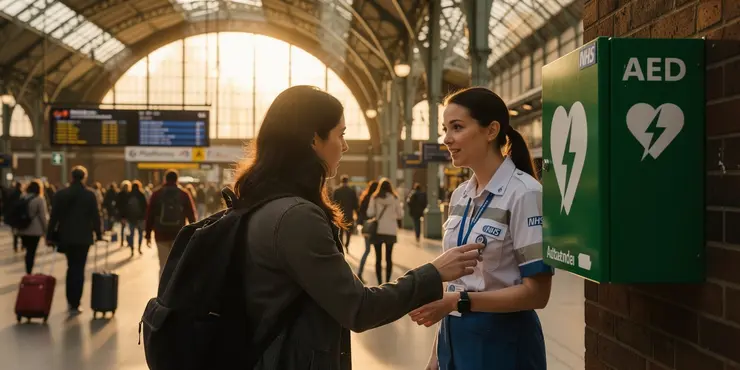
Transport stations and hubs such as airports, train stations, and bus terminals are also equipped with AEDs. These locations handle significant volumes of passengers daily, and having AEDs accessible can be crucial. Major railway stations and airports in the UK have AEDs installed at various strategic points to cater to potential emergencies efficiently. These AEDs are usually located in clear, visible spots often near customer service desks or security points.
Educational Institutions
Schools, colleges, and universities are increasingly installing AEDs on their premises. Educational institutions recognise the importance of being prepared for emergencies and often position AEDs in areas like hallways, sports facilities, and main administrative buildings. Training for staff and students on how to use these devices is becoming more prevalent, emphasizing the importance of early defibrillation.
Workplaces
Many workplaces in the UK, ranging from offices to factories, now have AEDs installed as part of their health and safety protocols. Employers are advised to equip their premises with adequate first aid facilities, including AEDs, particularly if they have large numbers of employees or operate in high-risk environments. These devices are typically installed in central locations such as cafeterias, lobbies, or near main exits.
Community Centres and Clubs
Local community centres, sports clubs, and other recreational facilities are also common places to find AEDs. These locations serve as central gathering points for people of various ages and backgrounds, and having an AED on hand can be lifesaving. In sports clubs, especially those promoting high-energy activities, the likelihood of cardiac episodes can be higher, justifying the need for readily available AEDs.
Conclusion
AEDs are invaluable resources in emergencies and need to be accessible across various public and private spaces. In the UK, their presence in public venues, transport hubs, educational institutions, workplaces, and community centers underlines a commitment to public health and safety. Awareness of their locations and understanding how to use them can make a vital difference in critical situations.
Introduction to AEDs
An Automated External Defibrillator (AED) is a machine that helps the heart to restart during a medical emergency called cardiac arrest. When someone’s heart stops, using an AED fast can help save their life. Knowing where AEDs are kept is important so people can help quickly. In the UK, AEDs are put in places where people can get to them easily.
Public Spaces
AEDs are often in places where lots of people go. You can find them in shopping centres, sports centres, stadiums, and town centres. These places are busy, making it easier to help if someone nearby needs it. Having an AED nearby can help save a life while waiting for an ambulance.
Transportation Hubs
There are AEDs in places where people travel, like airports, train stations, and bus stations. Many people use these places every day, so having AEDs there is important. In big train stations and airports, AEDs are easy to see and are near help desks or security areas.
Educational Institutions
Schools, colleges, and universities are starting to have AEDs too. They know it’s important to be ready for emergencies. AEDs are put in places like hallways, gym areas, and main offices. Teaching staff and students how to use AEDs is also happening more often because quick help can save lives.
Workplaces
Many UK workplaces, from offices to factories, have AEDs. It's part of staying safe at work. Employers are told to have good first aid, including AEDs, especially in places with many workers or where it’s more dangerous. AEDs at work are often found in cafeterias, entrance halls, or near main doors.
Community Centres and Clubs
You can also find AEDs in community centres, sports clubs, and other places where people meet. These places welcome many different people, and having an AED can be very helpful. In sports clubs, where activities can be very active, the need for AEDs can be greater.
Conclusion
AEDs are very important in emergencies and must be easy to find in both public and private places. In the UK, having them in public spaces, travel places, schools, work areas, and community centres shows how much we care about keeping people safe. Knowing where AEDs are and how to use them can save lives in emergencies.
Frequently Asked Questions
AEDs in airports are usually located near security checkpoints, gates, and high-traffic areas, ensuring they are accessible during emergencies.
Yes, AEDs are typically available in large shopping malls, often located near information desks or main entrances.
Most schools, especially high schools and universities, have AEDs located in gyms, near administrative offices, or in other central areas.
AEDs in gyms or fitness centers are commonly placed near the main entrance, front desk, or workout areas.
Yes, many office buildings have AEDs, usually located in common areas such as lobbies, hallways, or near elevators.
Hotels often have AEDs available in lobbies, near reception areas, or in fitness centers.
Some public parks have AEDs, especially those with high visitor numbers or organized sports activities, typically located near sports fields or park offices.
In sports stadiums, AEDs are usually available near seating areas, entrances, or first aid stations.
Most community centers are equipped with AEDs, typically found in lobbies or near gymnasiums and activity rooms.
Hospitals have AEDs as part of their emergency equipment, located strategically throughout the facility.
Some large residential buildings or complexes may have AEDs, typically near the main entrance or in common areas.
Some public transportation systems, like certain trains and buses, may have AEDs on board or at major stations.
Government buildings often have AEDs installed in main lobbies, near security desks, or in public access areas.
In healthcare clinics, AEDs are usually located near reception areas or in medical examination rooms.
Yes, many train stations have AEDs available, often located near ticket counters, platforms, or in waiting areas.
Convention centers typically have AEDs in lobbies, near main entrances, and throughout the exhibit halls.
Amusement parks generally have AEDs in first aid stations, near major attractions, and throughout the park grounds.
Public libraries often have AEDs located near entrances or in central areas for quick access.
Larger restaurant chains or restaurants in busy areas may have AEDs, typically located near the main entrance or kitchen.
Yes, many sports and recreation facilities are equipped with AEDs, usually found near courts, fields, or administrative areas.
Airports have special machines called AEDs to help people in emergencies. These machines are often near places like security checks, gates, and busy areas so people can find them quickly if needed.
Yes, you can usually find AEDs (special machines that help people who are very sick) in big shopping malls. They are often near the information desks or by the main doors.
Many schools have special machines called AEDs. You can find these machines in school gyms, near the main offices, or in places lots of people go. AEDs help when someone has a problem with their heart.
Gyms and fitness centers often have a special machine called an AED. This machine can help people if they have a heart problem.
AEDs are usually put in places where people can get to them easily. You might find them near the main door, the front desk, or where people exercise.
Yes, many office buildings have AEDs. You can usually find them in places where people walk a lot, like lobbies, hallways, or next to elevators.
If you are looking for one, ask someone at the front desk. You can also look for a sign with a heart and a lightning bolt. That's the sign for an AED.
Hotels usually keep AEDs, or special heart-help machines, in places where lots of people can find them. You might see one in the hotel lobby, near the front desk, or in the gym.
Some public parks have special machines called AEDs. These machines can help in emergencies. Parks with lots of visitors or sports games usually have them. You can find AEDs near sports fields or park offices.
In sports stadiums, you can find AEDs (machines to help if someone's heart stops) near places where people sit, at entrances, or at first aid stations.
Most community centers have special machines called AEDs. You can usually find them in places like the entrance area or close to the gym and activity rooms.
Hospitals have special machines called AEDs. They use AEDs in emergencies. You can find them in many places around the hospital.
Some big buildings or groups of homes might have AEDs. You can usually find them near the front door or in places everyone shares.
Some buses and trains might have AEDs. They could also be at big stations.
Government buildings usually have AEDs in main entrance areas, close to security desks, or where the public can easily reach them.
In health clinics, you can usually find AEDs (machines that help if someone’s heart stops) near the front desk or in the rooms where doctors see patients.
Yes, lots of train stations have AEDs. You can find them close to ticket counters, on platforms, or in waiting areas.
Convention centers often have AEDs. You can find them in lobbies, near the main doors, and in the exhibit halls.
Amusement parks usually have AEDs. AEDs can help when someone has a heart problem.
You can find AEDs at first aid places, near big rides, and in other park areas.
Public libraries usually have AEDs near the doors or in the middle of the building. This makes them easy to get to fast.
Big restaurants or restaurants that have lots of people might have AED machines. These machines are usually near the front door or in the kitchen.
Yes, many places where you play sports have a special machine called an AED. You can usually find them near the playing fields or where the offices are.

Ergsy Search Results
This website offers general information and is not a substitute for professional advice.
Always seek guidance from qualified professionals.
If you have any medical concerns or need urgent help, contact a healthcare professional or emergency services immediately.
Some of this content was generated with AI assistance. We've done our best to keep it accurate, helpful, and human-friendly.
- Ergsy carefully checks the information in the videos we provide here.
- Videos shown by Youtube after a video has completed, have NOT been reviewed by ERGSY.
- To view, click the arrow in centre of video.
- Most of the videos you find here will have subtitles and/or closed captions available.
- You may need to turn these on, and choose your preferred language.
- Go to the video you'd like to watch.
- If closed captions (CC) are available, settings will be visible on the bottom right of the video player.
- To turn on Captions, click settings.
- To turn off Captions, click settings again.