
Speak To An Expert
Get clear, personalised advice for your situation.
Jot down a few questions to make the most of your conversation.
Introduction to Cold Sores
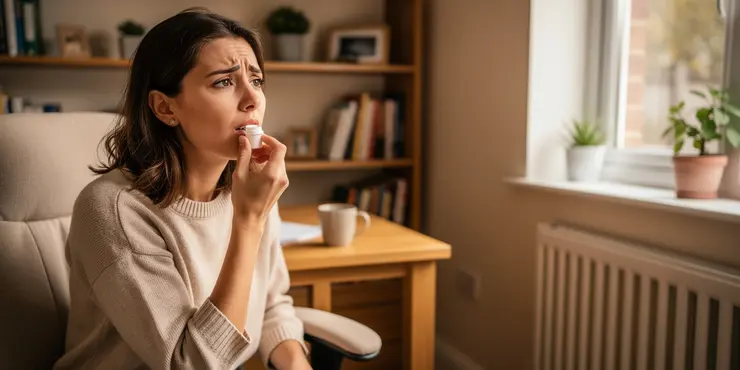
Cold sores, also known as fever blisters, are small, fluid-filled lesions that typically appear on or around the lips. They are caused by the herpes simplex virus (HSV), most commonly by HSV type 1 (HSV-1). Cold sores are contagious and can be spread through close personal contact such as kissing. Understanding the duration of a cold sore outbreak is important for managing this common condition.
Typical Duration of a Cold Sore
Cold sores generally follow a predictable life cycle and can typically be present between 7 to 10 days. The virus goes through several stages that include tingling, blistering, oozing, crusting, and finally healing. Each stage contributes to the total duration of the outbreak, with some variation depending on individual responses, health, and treatment effectiveness.
Stages of a Cold Sore
The development of a cold sore can be divided into five distinct stages. The initial stage is the prodrome phase, characterised by a tingling or itching sensation around the lips, often lasting 1 to 2 days. This is followed by the appearance of small blisters that cluster together, which is the second stage of around 2 to 3 days.
The third stage involves the blisters breaking open and oozing a clear fluid. This stage is often the most painful and highly contagious, generally lasting for 1 to 2 days. The fourth stage is the crusting phase, where blisters dry up and form a scab. This can be evident for around 2 to 3 days, during which the risk of spreading the virus decreases. Finally, the fifth stage is the healing stage, where the scab falls off, and the skin repairs itself, for another 2 to 3 days.
Factors Affecting Cold Sore Duration
Several factors can influence how long cold sores last. A person's immune system plays a significant role, as those with a weakened immune system might experience a longer-time scale for cold sores. Additionally, early intervention with treatments such as antiviral creams or oral medications can potentially shorten the duration of a cold sore outbreak. Stress, fatigue, and exposure to sunlight are known to trigger or prolong cold sore episodes.
Prevention and Management
While there is no cure for the herpes simplex virus, preventing frequent outbreaks and managing symptoms can reduce discomfort. Regular use of sunscreen on the lips can help prevent cold sores triggered by sun exposure. Maintaining a healthy lifestyle with good nutrition, regular exercise, and stress management techniques can support the immune system and reduce the frequency of outbreaks. Over-the-counter cold sore creams or prescription antiviral medications can be useful in managing symptoms and may reduce the severity and duration of an outbreak.
Conclusion
Knowing the expected duration and stages of a cold sore can help individuals manage their outbreaks more effectively. With the right care and treatment, most people find that their cold sores heal within 7 to 10 days. Practising preventive measures and understanding when to seek medical advice can help navigate this common yet often bothersome condition.
Introduction to Cold Sores
Cold sores, also called fever blisters, are small sores that can appear on or around your lips. They are caused by a virus called herpes simplex virus (HSV), usually HSV type 1 (HSV-1). Cold sores are catchy and can spread by kissing or close contact. Knowing how long a cold sore lasts can help you handle it better.
How Long Does a Cold Sore Last?
Cold sores usually last about 7 to 10 days. They go through different stages: tingling, blistering, oozing, crusting, and healing. Each stage takes some time. How long a cold sore lasts can change depending on how healthy you are and how well treatments work.
Stages of a Cold Sore
Cold sores have five stages. The first stage is called the prodrome stage. At this stage, you might feel a tingle or itch near your lips. This lasts 1 to 2 days. Next, small blisters appear. This is the second stage and lasts 2 to 3 days.
In the third stage, blisters break open and a clear fluid comes out. This stage can hurt and spreads the virus easily. It lasts 1 to 2 days. The fourth stage is when blisters dry up and form a scab. This lasts 2 to 3 days. The last stage is the healing stage. The scab falls off, and the skin gets better. This takes another 2 to 3 days.
What Affects How Long Cold Sores Last?
Some things can make cold sores last longer. If you have a weak immune system, cold sores might stick around longer. Using treatments like antiviral creams or medicine early might help cold sores go away quicker. Stress, being very tired, and too much sun can also make cold sores worse.
How to Prevent and Manage Cold Sores
There is no cure for the herpes virus, but you can stop cold sores from coming back often. Use sunscreen on your lips to help prevent cold sores from the sun. Eating well, exercising, and handling stress can make your immune system stronger and reduce cold sore outbreaks. Cold sore creams or antiviral medicines can help make them less painful and shorter.
Conclusion
Knowing how long cold sores last and their stages helps you handle them better. With care and treatment, most cold sores go away in 7 to 10 days. Preventing them and knowing when to see a doctor can help you cope with this common problem.
Frequently Asked Questions
A typical cold sore lasts for about 7 to 10 days.
With proper treatment, some cold sores can heal in as little as 5 days.
Cold sores go through several stages: tingling, blistering, ulcer, crusting, and healing.
While it can happen, if a cold sore lasts more than 10 days, you should consult a healthcare professional.
Stress, illness, and not treating the cold sore can prolong its duration.
Yes, antiviral medications such as acyclovir can shorten the duration if taken early.
Cold sores often recur in the same place, but they can appear elsewhere on or around the lips.
Some home remedies like applying aloe vera or lysine may help, but effectiveness varies.
Cold sores are caused by the herpes simplex virus, and the immune system usually defeats the outbreak in time.
Yes, cold sores are contagious until fully healed, especially when there are open blisters.
Frequent outbreaks can occur, but if they happen often, see a healthcare provider.
Extreme temperatures, like too much sun or cold, can affect healing time.
Yes, stress can weaken the immune system and potentially prolong a cold sore.
Yes, treatments like docosanol can help to reduce healing time.
Good nutrition supports the immune system, potentially aiding a faster recovery.
Sometimes a person can transmit the virus without visible symptoms if it is still active.
Vitamin C and lysine supplements are often recommended to support healing.
It's less common; long-lasting cold sores should be checked by a healthcare provider.
Most treatments are most effective when used at the tingling or blister stage.
The virus remains in your body, so future outbreaks are possible, but frequency varies by individual.
A cold sore usually lasts for about 7 to 10 days.
When you get the right medicine, a cold sore can get better in just 5 days.
Cold sores have different steps. First, you feel a tingle. Then a blister appears. Next, the blister breaks to become a sore. It starts to get a crust. Finally, the sore heals.
If you have a cold sore that does not go away after 10 days, you should talk to a doctor or nurse.
Stress, being sick, and not taking care of the cold sore can make it last longer.
Yes, taking medicine like acyclovir can help you get better faster if you start it early.
Cold sores can come back in the same spot, but they can also show up in different places on or near your lips.
Some things you can do at home might help. You can try putting aloe vera or lysine on the sore. It might work, but sometimes it doesn't help everyone in the same way.
Cold sores are little sores you get on your mouth. They are caused by a virus called herpes simplex. Your body fights off the virus and the cold sores go away after some time.
Yes, you can catch cold sores from someone who has them. This is especially true when there are open blisters.
Sometimes outbreaks happen a lot. If they do, it's a good idea to talk to a doctor.
Very hot or very cold weather can slow down how fast you get better.
Yes, stress can make it harder for your body to fight germs. This can make a cold sore last longer.
Yes, using treatments like docosanol can help make you better faster.
Eating healthy food helps your body stay strong. It can help you get better faster when you are sick.
Sometimes a person can spread the virus even if they do not look sick. This can happen if the virus is still strong in their body.
Vitamin C and lysine tablets can help your body heal and get better.
Cold sores do not usually last a long time. If they do, ask a doctor to look at them.
Treatments work best when you use them early. Try to use them when you feel a tingle or when a blister starts.
The virus stays in your body, so you might get it again. How often it happens is different for each person.

Ergsy Search Results
This website offers general information and is not a substitute for professional advice.
Always seek guidance from qualified professionals.
If you have any medical concerns or need urgent help, contact a healthcare professional or emergency services immediately.
Some of this content was generated with AI assistance. We've done our best to keep it accurate, helpful, and human-friendly.
- Ergsy carefully checks the information in the videos we provide here.
- Videos shown by Youtube after a video has completed, have NOT been reviewed by ERGSY.
- To view, click the arrow in centre of video.
- Most of the videos you find here will have subtitles and/or closed captions available.
- You may need to turn these on, and choose your preferred language.
- Go to the video you'd like to watch.
- If closed captions (CC) are available, settings will be visible on the bottom right of the video player.
- To turn on Captions, click settings.
- To turn off Captions, click settings again.