
Get Answers
Understanding Psoriasis
Psoriasis is a chronic autoimmune condition that primarily affects the skin, causing red, scaly patches. While it can occur at any age, it is most commonly diagnosed in adults. The severity of psoriasis varies greatly and can impact one's quality of life significantly. Understanding when to seek medical advice is crucial for effective management and treatment.
When to Consult a GP
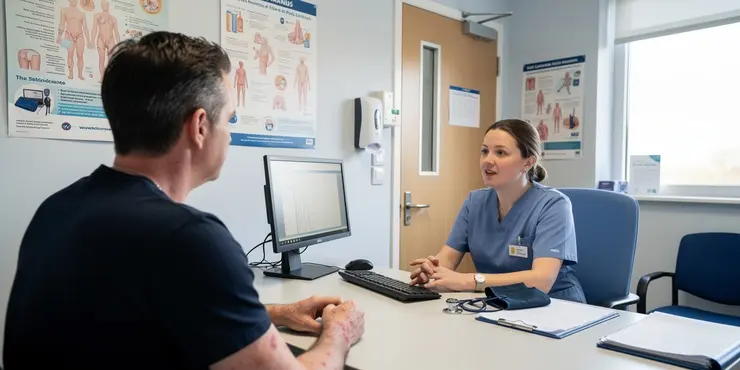
In the UK, the first step if you suspect you have psoriasis is usually to see your General Practitioner (GP). You should consult a GP if you experience persistent skin problems or if your symptoms are having a significant impact on your daily life. Your GP can initially diagnose psoriasis based on the appearance of your skin and your medical history. Early diagnosis and treatment can prevent the condition from worsening and avoid complications.
Signs That Require Medical Attention
It is important to see a doctor if your psoriasis symptoms become severe or if they extend beyond occasional flare-ups. Signs that warrant a doctor's visit include extensive skin involvement, intense itching and burning, discomfort that disrupts sleep, joint pain or swelling (which could indicate psoriatic arthritis), or a significant impact on emotional well-being. These symptoms may require professional management and intervention.
Treatment and Specialist Referral
If your psoriasis is not responding to initial treatments or if it requires more specialised care, your GP may refer you to a dermatologist. Treatments for psoriasis can vary based on severity, ranging from topical treatments and phototherapy to systemic medications. Specialist treatments often require expertise beyond primary care, making referral to a dermatologist a crucial step for complex cases.
Regular Monitoring and Follow-Up
Once you have a confirmed diagnosis of psoriasis, regular monitoring and follow-up appointments are essential. Consistent evaluation by healthcare professionals ensures that your treatment plan is effective and allows for adjustments if your condition changes. Regular visits also provide an opportunity to discuss any concerns or new symptoms you might have.
Managing Overall Health
Psoriasis is often associated with other health conditions known as comorbidities, including cardiovascular disease, metabolic syndrome, and mental health issues. It is important to discuss any additional health concerns with your GP, as a comprehensive approach to your overall health can help manage psoriasis more effectively.
Conclusion
In summary, seeing a doctor for psoriasis is important if symptoms are persistent, severe, or affecting your quality of life. Early and effective management of psoriasis can alleviate symptoms and prevent complications. Regular monitoring, appropriate treatments, and consideration of overall health can help you manage psoriasis effectively. Do not hesitate to seek medical advice to ensure you receive the best care possible.
Understanding Psoriasis
Psoriasis is a skin problem. It makes red, scaly patches on your skin. It happens because the body's defense system turns on itself. Anyone can get psoriasis, but it mostly happens in grown-ups. Psoriasis can be mild or severe. It can make life hard. It is important to know when to go to the doctor for help with psoriasis.
When to See a GP
If you think you have psoriasis, you should go to your General Practitioner (GP) in the UK. Go to the GP if your skin problems last a long time or if they make daily life hard. The GP can tell if you have psoriasis by looking at your skin and asking about your health. Getting help early can stop psoriasis from getting worse.
When to Visit a Doctor
You should see a doctor if your psoriasis gets very bad or happens a lot. Go to the doctor if you have a lot of skin problems, very itchy or burning skin, pain that keeps you awake, pain or swelling in your joints (which might mean psoriatic arthritis), or if it affects your feelings. These problems need help from a doctor.
Treatment and Seeing a Specialist
If treatments do not help your psoriasis or if you need special care, your GP may send you to a skin doctor (dermatologist). Treatments can be creams, light therapy, or strong medicines. A dermatologist knows a lot about these treatments and can help if your psoriasis is hard to treat.
Regular Check-Ups
Once you know you have psoriasis, it is important to have regular check-ups. Your doctor will make sure your treatment works and change it if needed. These visits are a good time to talk about any new problems or worries.
Taking Care of Your Health
Psoriasis can be linked to other health problems like heart disease, diabetes, or feeling very sad. Talk to your GP about your full health to help control psoriasis better. Keeping all areas of your health in check can help with psoriasis.
Conclusion
To sum up, you should see a doctor for psoriasis if it does not go away, if it's very bad, or if it makes life hard. Getting help early can make symptoms better and stop other problems from happening. Regular doctor visits, right treatments, and being healthy can help you manage psoriasis. Always feel free to ask for medical help to get the care you need.
Frequently Asked Questions
If you notice red patches of skin covered with thick, silvery scales or if you experience dry, cracked skin that may bleed, consider seeing a doctor.
If over-the-counter treatments are not effective or if symptoms worsen, it's advisable to see a doctor. Severe cases affecting daily life should be addressed by a healthcare professional.
Yes, psoriasis can be associated with other health conditions such as psoriatic arthritis or cardiovascular disease, so seeing a doctor can help manage overall health.
Yes, joint pain or swelling could indicate psoriatic arthritis, which a doctor should evaluate.
If itching and discomfort are severe or persistent, consulting a doctor can help find effective treatments.
If you experience a sudden worsening of symptoms or signs of infection, seek medical attention promptly.
Yes, if psoriasis is causing emotional distress or affecting mental health, a healthcare provider can offer support and treatment options.
If a child's symptoms are moderate to severe or affecting quality of life, it's important to consult a pediatric dermatologist.
Yes, a doctor can reassess your treatment plan and suggest new therapies if current ones are ineffective.
Lifestyle changes can help manage symptoms, but regular medical guidance is crucial for optimal treatment and management.
Yes, a doctor can confirm the diagnosis and provide appropriate treatment options for guttate psoriasis.
Yes, a family history increases risk, so early consultation can help in managing symptoms effectively.
Home remedies may alleviate mild symptoms, but professional medical advice is important for comprehensive management.
Yes, a doctor can offer safe treatment options to manage psoriasis during pregnancy.
Consult a doctor as they can suggest treatments to help reduce symptoms and improve sleep quality.
Yes, a doctor can help improve skin appearance and prevent symptoms from worsening, which can boost confidence.
Yes, new symptoms should be evaluated, as they may indicate a change in condition or a different skin issue.
Yes, regular evaluations can help track progress, adjust treatments, and monitor for complications.
Dermatologists are specialists in skin conditions, so their expertise is valuable in treating psoriasis.
Yes, nail psoriasis can cause discomfort and may lead to more serious complications if untreated.
If you see red spots on your skin with shiny, silvery layers, or if your skin is very dry and has cracks that bleed, it’s a good idea to visit a doctor.
If medicines from the shop do not help, or if you feel worse, you should go to the doctor. If it is very bad and stops you from doing your daily activities, a doctor can help.
Psoriasis is a skin problem. It can sometimes be linked with other health issues. These can include joint pain, known as psoriatic arthritis. It might also be linked with heart problems.
It is important to see a doctor. A doctor can help you stay healthy.
Here are some tools that can help:
- A calendar or app to keep track of doctor visits.
- A notebook to write down questions for the doctor.
Yes, if your joints hurt or are swollen, it might be a sign of a sickness called psoriatic arthritis. You should go to a doctor to check it out.
If you are itchy or uncomfortable for a long time, seeing a doctor can help you feel better.
If you feel suddenly worse or think you might have an infection, go see a doctor quickly.
If having psoriasis makes you feel upset or sad, a doctor or nurse can help you feel better. They have ways to help and treatment choices for you.
If a child's skin problems are bad or making them unhappy, it's important to see a special skin doctor for kids.
Yes, a doctor can look at your treatment plan again. The doctor can suggest new ways to help if the current ones are not working.
If you find reading hard, you can try using pictures, audio books, or ask someone to read with you. These can make understanding easier.
Changing some things you do every day can help you feel better. But it's very important to see a doctor to know how to take care of yourself the best way.
Yes, a doctor can find out if you have guttate psoriasis. They can also tell you the best ways to treat it.
If people in your family have had this problem, it might be easier for you to get it too. Talk to a doctor early so they can help you feel better.
Simple treatments you can do at home might help if you feel a little unwell. But it's really important to see a doctor to get the best care and advice.
Yes, a doctor can help you treat psoriasis safely when you are pregnant.
See a doctor. They can help you feel better and sleep well.
Yes, a doctor can help make your skin look better and stop problems from getting worse. This can make you feel more confident.
Yes, you should check with a doctor if you get new symptoms. It could mean your skin problem has changed or is something different.
Yes, regular check-ups can help see how you are doing, change your medicines if needed, and watch out for problems.
Skin doctors are good at helping with skin problems. They know a lot about psoriasis, so they can help make it better.
Yes, nail psoriasis can hurt and might get worse if you don't see a doctor.

Ergsy Search Results
This website offers general information and is not a substitute for professional advice.
Always seek guidance from qualified professionals.
If you have any medical concerns or need urgent help, contact a healthcare professional or emergency services immediately.
Some of this content was generated with AI assistance. We've done our best to keep it accurate, helpful, and human-friendly.
- Ergsy carefully checks the information in the videos we provide here.
- Videos shown by Youtube after a video has completed, have NOT been reviewed by ERGSY.
- To view, click the arrow in centre of video.
- Most of the videos you find here will have subtitles and/or closed captions available.
- You may need to turn these on, and choose your preferred language.
- Go to the video you'd like to watch.
- If closed captions (CC) are available, settings will be visible on the bottom right of the video player.
- To turn on Captions, click settings.
- To turn off Captions, click settings again.