
Get Answers
When PCOS symptoms need urgent help
Polycystic ovary syndrome (PCOS) can cause irregular periods, acne, weight changes, excess hair growth, and fertility problems. Many of these symptoms build up gradually and are not usually an emergency on their own.
However, some symptoms can point to another condition, or to a complication that needs medical attention quickly. If something feels sudden, severe, or very different from your usual symptoms, do not rely on self-diagnosis alone.
Seek urgent medical advice if symptoms are sudden or severe
Contact NHS 111, your GP urgently, or go to an urgent treatment centre if you have severe pelvic pain, heavy bleeding, or pain that starts suddenly. These symptoms are not typical of routine PCOS and may need prompt assessment.
You should also get urgent help if you feel faint, have chest pain, are short of breath, or are bleeding heavily enough to soak through pads quickly. These can be signs of a more serious problem and should not be ignored.
Check for signs that another condition may be causing the symptoms
PCOS can sometimes be confused with thyroid problems, diabetes, pregnancy-related issues, or other hormone conditions. If your symptoms have appeared quickly, are getting worse fast, or include major weight loss, seek medical advice.
Unexpected hair loss, new facial hair with deepening voice, or rapid changes in periods should be reviewed by a clinician. These changes can happen for different reasons, and a proper diagnosis matters.
When to seek help quickly for mental health or fertility concerns
PCOS can affect mood and self-esteem, but feeling overwhelmed, depressed, or anxious is also a reason to ask for help. If you have thoughts of self-harm or feel unable to cope, seek urgent support straight away.
If you are trying to get pregnant and have had no periods for several months, or you think you may be pregnant with PCOS symptoms, speak to a GP or midwife. Fertility issues are common with PCOS, but they still deserve proper medical advice.
What to do next in the UK
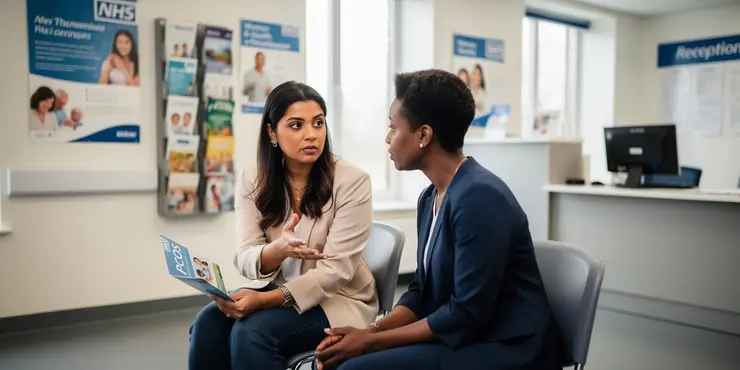
If symptoms are worrying but not life-threatening, contact your GP for an appointment. If you are unsure, NHS 111 can help you decide whether you need urgent care.
Keep a note of your symptoms, when they started, and how often they happen. This can help a doctor decide whether it is likely to be PCOS or something else that needs treatment sooner.
Frequently Asked Questions
Common PCOS symptoms self diagnosis urgent signs include irregular or absent periods, excess facial or body hair, acne, scalp hair thinning, weight gain, darkened skin patches, and difficulty getting pregnant. Urgent signs are uncommon for PCOS itself, but sudden severe pelvic pain, heavy bleeding, fainting, or symptoms of high blood sugar need prompt medical attention.
A safe PCOS symptoms self diagnosis urgent signs approach starts with tracking your menstrual cycles, acne, hair growth, weight changes, and any fertility concerns over several months. You can also note family history and symptoms of insulin resistance. Self-checking can help you recognize patterns, but a clinician is needed to confirm the diagnosis and rule out other conditions.
Important period changes for PCOS symptoms self diagnosis urgent signs include cycles longer than 35 days, fewer than 8 periods a year, missed periods, or very unpredictable bleeding. These patterns can point to ovulation problems, which are common in PCOS. If bleeding is extremely heavy or prolonged, seek medical care.
Skin and hair changes that matter for PCOS symptoms self diagnosis urgent signs include acne along the jawline, oily skin, increased facial or body hair, thinning hair on the scalp, and dark velvety skin patches on the neck or underarms. These signs can suggest higher androgen levels or insulin resistance.
Weight gain alone does not confirm PCOS symptoms self diagnosis urgent signs. PCOS can occur in people of many body sizes, and weight changes can have many causes. It is more meaningful when weight gain happens along with irregular periods, acne, excess hair growth, or hair thinning.
Urgent signs during PCOS symptoms self diagnosis urgent signs include severe one-sided pelvic pain, fainting, chest pain, shortness of breath, very heavy bleeding, signs of pregnancy with pain or bleeding, or symptoms of very high blood sugar such as confusion or extreme thirst. These are not typical PCOS symptoms and should be assessed quickly.
Yes, PCOS symptoms self diagnosis urgent signs can be confused with pregnancy, thyroid disorders, elevated prolactin, stress-related cycle changes, or other hormone conditions. Because many disorders overlap, a pregnancy test and medical evaluation are often needed before assuming PCOS.
For PCOS symptoms self diagnosis urgent signs, track symptoms for at least 3 months if possible, and longer if your cycles are very irregular. Record period dates, bleeding patterns, acne flare-ups, hair growth changes, and weight changes. Longer tracking makes patterns easier to recognize and share with a clinician.
Lab tests that often help confirm PCOS symptoms self diagnosis urgent signs include pregnancy testing, thyroid tests, prolactin, androgen levels, and sometimes glucose or insulin-related tests. A clinician may also order a pelvic ultrasound. PCOS is diagnosed by combining symptoms, exam findings, and test results while excluding other causes.
Teenagers can notice PCOS symptoms self diagnosis urgent signs, but diagnosis is harder during the first few years after menstruation starts because irregular cycles can be normal then. Persistent very long cycles, severe acne, excess hair growth, or scalp hair thinning may warrant evaluation by a clinician.
Lifestyle-related signs that often appear with PCOS symptoms self diagnosis urgent signs include strong sugar cravings, fatigue after meals, difficulty losing weight, and a family history of diabetes. These can suggest insulin resistance, which is common in PCOS, but they are not specific to PCOS on their own.
Someone should stop relying only on PCOS symptoms self diagnosis urgent signs and see a doctor if periods are absent for 3 months or more, symptoms are worsening, fertility is a concern, or there are urgent symptoms like severe pain or heavy bleeding. Medical evaluation helps confirm the cause and prevent complications.
Useful questions during PCOS symptoms self diagnosis urgent signs tracking include: Are my cycles longer than 35 days? Am I missing periods? Do I have new acne, hair growth, or scalp hair loss? Has my weight changed? Do I have dark skin patches or trouble with fertility? These questions help identify patterns.
Yes, hormonal birth control can reduce or mask PCOS symptoms self diagnosis urgent signs by regulating bleeding and improving acne or hair growth. If you are using birth control, symptoms may be harder to interpret. A clinician may need to review your history and timing before testing.
Urgent signs in PCOS symptoms self diagnosis urgent signs are often not caused by PCOS itself, but they can signal another serious problem such as ovarian torsion, ectopic pregnancy, severe anemia, or uncontrolled diabetes. Because these can be dangerous, urgent symptoms should not be ignored.
Normal cycle variation usually means occasional changes, especially in the first few years after periods begin or near menopause. PCOS symptoms self diagnosis urgent signs are more concerning when irregular cycles are persistent, combined with excess androgen signs like acne or hair growth, or when periods become very infrequent.
Stress can cause cycle changes and worsen acne or appetite, but stress alone usually does not explain the full pattern of PCOS symptoms self diagnosis urgent signs. Persistent irregular periods plus androgen-related symptoms may suggest PCOS or another hormone issue and should be evaluated.
The most useful records for PCOS symptoms self diagnosis urgent signs are period dates, cycle length, bleeding severity, photos of acne or hair growth changes, weight trends, medication list, pregnancy test results, and family history of diabetes or PCOS. Clear records make evaluation faster and more accurate.
Routine PCOS symptoms self diagnosis urgent signs usually involve slowly developing irregular periods, acne, hair growth, hair thinning, and weight changes. Urgent signs are sudden or severe, such as intense pelvic pain, heavy bleeding, fainting, or symptoms of pregnancy complications or severe metabolic problems. Those require prompt medical care.
Fertility concerns should be part of PCOS symptoms self diagnosis urgent signs if you have been trying to conceive for 12 months without success, or for 6 months if age 35 or older. Irregular or absent ovulation in PCOS can make conception harder, so earlier medical guidance can help.

Ergsy Search Results
This website offers general information and is not a substitute for professional advice.
Always seek guidance from qualified professionals.
If you have any medical concerns or need urgent help, contact a healthcare professional or emergency services immediately.
Some of this content was generated with AI assistance. We've done our best to keep it accurate, helpful, and human-friendly.
- Ergsy carefully checks the information in the videos we provide here.
- Videos shown by Youtube after a video has completed, have NOT been reviewed by ERGSY.
- To view, click the arrow in centre of video.
- Most of the videos you find here will have subtitles and/or closed captions available.
- You may need to turn these on, and choose your preferred language.
- Go to the video you'd like to watch.
- If closed captions (CC) are available, settings will be visible on the bottom right of the video player.
- To turn on Captions, click settings.
- To turn off Captions, click settings again.