
Get Answers
Understanding Sleep Apnea
Sleep apnea is a common condition where breathing stops and starts during sleep. It can lead to disrupted sleep and other health complications if untreated. In the UK, several treatment options are available, ranging from lifestyle changes to medical interventions.
Lifestyle Changes
Simple lifestyle changes can significantly impact the management of sleep apnea. For individuals who are overweight, weight loss can reduce the severity of symptoms. Regular exercise can also help improve sleep quality. Avoiding alcohol and medications that relax the muscles of the throat can prevent airway obstruction during sleep. Establishing a regular sleep schedule can also be beneficial.
Continuous Positive Airway Pressure (CPAP)
The most common treatment for moderate to severe sleep apnea is the use of a continuous positive airway pressure (CPAP) machine. This device delivers air pressure through a mask while you sleep, keeping the airways open. CPAP is highly effective if used consistently, though some may find the mask uncomfortable at first.
Mouthpieces and Oral Appliances
Mouthpieces, or oral appliances, are another option for treating sleep apnea. These devices are designed to keep the throat open by holding the jaw in a forward position or by preventing the tongue from blocking the airway. They are usually prescribed by a dentist with special training in dental sleep medicine. Oral appliances can be an alternative for those who find CPAP intolerable.
Surgery
In cases where other treatments aren't successful, surgery may be considered. Surgical options aim to remove or shrink excess tissue in the throat, correct structural problems, or stimulate muscles to keep the airways open. Procedures include Uvulopalatopharyngoplasty (UPPP), the removal of tissue from the rear of your mouth and top of the throat, and somnoplasty, which uses radiofrequency energy to reduce tissue size.
Positional Therapy
Some people experience sleep apnea primarily when sleeping on their back. Positional therapy involves training the body to sleep in a different position, usually on the side. Special devices can be used, such as a vest that makes it uncomfortable to sleep on one's back, thereby encouraging side-sleeping.
Adaptive Servo-Ventilation (ASV)
For those with complex sleep apnea or central sleep apnea, adaptive servo-ventilation (ASV) may be recommended. ASV is a newer airflow device that adjusts the pressure during sleep to normalise breathing patterns. It continuously monitors breathing patterns and adapts the air pressure as needed.
Consultation with Healthcare Professionals
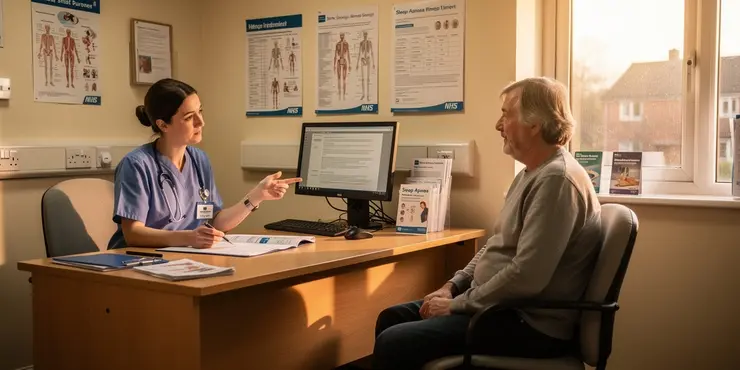
UK residents with symptoms of sleep apnea should consult with their GP. A referral to a sleep specialist may be necessary to identify the most appropriate treatment based on the individual's circumstances. Proper diagnosis and treatment can significantly improve sleep quality and overall health.
What is Sleep Apnea?
Sleep apnea is when you stop and start breathing while you sleep. This can disturb your sleep and cause health issues. In the UK, there are several ways to treat it, like changing your habits or using special devices.
Changing Your Habits
Simple changes can help with sleep apnea. If you are overweight, losing weight can make it better. Exercising regularly can help too. Avoid alcohol and some medicines before bed because they relax your throat, which can block your breathing. A regular sleep routine is also good.
CPAP Machine
A CPAP machine is often used for moderate to severe sleep apnea. It has a mask that gives you air while you sleep to keep your throat open. Some people find the mask uncomfortable, but it works well if used every night.
Mouthpieces
Mouthpieces can help with sleep apnea. They keep your throat open by holding your jaw forward or stopping your tongue from blocking your airway. Dentists with special training can provide these. They are good for people who do not like CPAP.
Surgery
If other treatments don’t work, surgery might help. It removes or shrinks tissue in your throat to keep it open. Options include removing tissue from the back of the mouth or using radio waves to make tissues smaller.
Changing Sleep Position
Some people have sleep apnea mainly when they sleep on their back. Changing your sleep position can help. You can use special devices to encourage sleeping on your side instead.
ASV Machine
For complex cases, an ASV machine might be used. This machine monitors your breathing and adjusts air pressure to help you breathe normally while sleeping.
Talk to a Doctor
If you live in the UK and think you have sleep apnea, talk to your doctor. They might send you to a sleep specialist. The right treatment can make you sleep better and be healthier.
Frequently Asked Questions
CPAP (Continuous Positive Airway Pressure) therapy involves a machine that uses mild air pressure to keep the airways open. It's the most common and effective treatment for obstructive sleep apnea.
BiPAP (Bilevel Positive Airway Pressure) delivers two different pressure settings for inhaling and exhaling. It may be recommended if CPAP is not effective or comfortable for a patient.
Yes, lifestyle changes such as losing weight, avoiding alcohol and tobacco, and sleeping on your side can help reduce symptoms of sleep apnea.
Oral appliances are devices fitted by a dentist to reposition the lower jaw forward, which can help keep the airway open during sleep.
Surgery may be considered when other treatments are not effective. Options include removing tissue from the throat, repositioning the jaw, or implanting devices to keep the airway open.
Positional therapy involves training a person to sleep in a position that reduces sleep apnea episodes. It's more suitable for cases where apnea is worse when lying on the back.
Inspire therapy involves a surgically implanted device that stimulates the hypoglossal nerve, which controls tongue movement, to keep the airway open during sleep.
Yes, weight loss can significantly improve or even eliminate symptoms of sleep apnea in overweight individuals, as excess weight can contribute to airway obstruction.
Nasal decongestants or sprays might provide temporary relief for mild sleep apnea symptoms, especially related to nasal congestion, but are not a long-term solution.
Improving sleep hygiene by establishing a regular sleep schedule, creating a restful environment, and avoiding stimulants can complement other treatments but won't cure sleep apnea on its own.
Some studies suggest acupuncture might help reduce sleep apnea symptoms, but more research is needed. It's usually considered a complementary treatment, not a primary one.
Myofunctional therapy involves exercises to strengthen tongue and throat muscles. It may help reduce symptoms in combination with other treatments, particularly for mild cases.
Research is ongoing, with new treatments such as magnetic stimulation or advanced surgical options in development. However, these are not widely available yet.
Currently, there are no medications approved specifically for treating obstructive sleep apnea, though some may be used to manage related symptoms or conditions.
Weight management therapy focuses on reducing body weight to help alleviate the physical obstruction in the airway that contributes to sleep apnea.
Dietary changes to promote weight loss and overall health, reducing alcohol and caffeine intake, and ensuring adequate hydration can support sleep apnea treatment.
Treating atrial fibrillation might improve sleep apnea symptoms since both conditions are interconnected. Managing heart health can also reduce associated risks.
Alcohol relaxes the muscles in the throat, which can worsen sleep apnea by causing more airway obstruction.
Most OTC snoring aids are not effective for sleep apnea as they don't address the root cause of the condition—airway obstruction during sleep.
Yoga and breathing exercises can improve respiratory strength and oxygen flow, potentially reducing symptoms, but they should be used alongside other treatments.
CPAP stands for Continuous Positive Airway Pressure. It's a machine that helps you breathe while you sleep. It blows gentle air to keep your throat open. This helps people who stop breathing during sleep (sleep apnea).
BiPAP is a machine that helps people breathe. It gives two kinds of air pressure: one for breathing in and one for breathing out. This machine might be a good choice if another machine, called CPAP, does not work well or feel good.
Yes, changing how you live can help with sleep apnea.
You can try losing weight, not drinking alcohol, and not smoking.
Sleeping on your side can also help you feel better.
Mouth devices are tools that a dentist fits in your mouth. They move your bottom jaw forward to help you breathe better when you sleep.
If other treatments do not work, doctors might think about surgery. This could mean taking out tissue from the throat, moving the jaw, or putting in devices to help keep the airways open.
To help understand this better, you can:
- Use pictures to see what the surgery looks like.
- Ask a doctor to explain it in simple words.
- Use tools like text-to-speech to listen to the information.
Positional therapy helps people sleep in a way that makes it easier to breathe. It is good for people who have more problems breathing when they sleep on their back.
Inspire therapy uses a special device put in during surgery. This device helps the tongue move by sending signals to a nerve in your tongue. This helps keep your throat open when you sleep so you can breathe better.
Losing weight can help people who have trouble with sleep apnea. Sleep apnea is when you stop breathing for short times while you sleep. If you weigh too much, it can make this worse.
When you lose extra weight, it can help you breathe better at night. Sometimes, it can even make sleep apnea go away!
If reading is hard, try using tools like audiobooks or text-to-speech apps to hear the words. You can also ask someone you trust to read with you.
Nasal sprays can help you breathe easier for a little while if you have a stuffy nose from sleep apnea. But they won't fix the problem forever.
To sleep better, try these things:
- Go to bed and wake up at the same time every day.
- Make your bedroom calm and comfy for sleep.
- Stay away from things like coffee or energy drinks before bed.
These can help you sleep better but won't fix sleep apnea by themselves. You might still need other treatments too.
Some people think acupuncture can help with sleep problems, like sleep apnea. But we need to study it more to be sure. Acupuncture is usually used with other treatments, not by itself.
Myofunctional therapy is when you do exercises to make the muscles in your tongue and throat stronger. It can help make some problems better, especially when you use it with other treatments for small problems.
Scientists are working hard to find new ways to help. Some new ideas include using magnets or special surgeries. But right now, these new ways are not ready for everyone to use.
Right now, there are no special medicines just for treating obstructive sleep apnea. But, some medicines can help with symptoms or other related problems.
Weight management therapy helps you lose weight. This can make it easier to breathe when you sleep. It can help people who have trouble breathing when they sleep.
Changing what you eat can help you lose weight and be healthier. Eating better can also help with sleep problems like sleep apnea.
Try to drink less alcohol and less caffeine, like in coffee and tea. These can make sleep problems worse.
Make sure you drink enough water every day. Staying hydrated is good for your health and can help you sleep better.
If you need help with eating better, talk to a doctor or a dietitian. They can give you good advice.
Fixing problems with how the heart beats can help with breathing problems during sleep. This is because these two problems are connected. Taking care of the heart can also make you healthier in other ways.
Here are some things that might help:
- Talk to a doctor about heart health.
- Go to bed at the same time every night.
- Use a pillow that helps you breathe easier.
- Try breathing exercises before bedtime.
When you drink alcohol, it makes the muscles in your throat relax. This can make snoring worse because it blocks the airway when you sleep more.
Most over-the-counter (OTC) snoring aids do not work well for sleep apnea. This is because they do not fix the main problem. The main problem is that your airway gets blocked while you sleep.
Yoga and breathing exercises can help you breathe better. They might make you feel better, but you should also use other medicines or treatments.

Ergsy Search Results
This website offers general information and is not a substitute for professional advice.
Always seek guidance from qualified professionals.
If you have any medical concerns or need urgent help, contact a healthcare professional or emergency services immediately.
Some of this content was generated with AI assistance. We've done our best to keep it accurate, helpful, and human-friendly.
- Ergsy carefully checks the information in the videos we provide here.
- Videos shown by Youtube after a video has completed, have NOT been reviewed by ERGSY.
- To view, click the arrow in centre of video.
- Most of the videos you find here will have subtitles and/or closed captions available.
- You may need to turn these on, and choose your preferred language.
- Go to the video you'd like to watch.
- If closed captions (CC) are available, settings will be visible on the bottom right of the video player.
- To turn on Captions, click settings.
- To turn off Captions, click settings again.