
Get Answers
Understanding Psoriasis
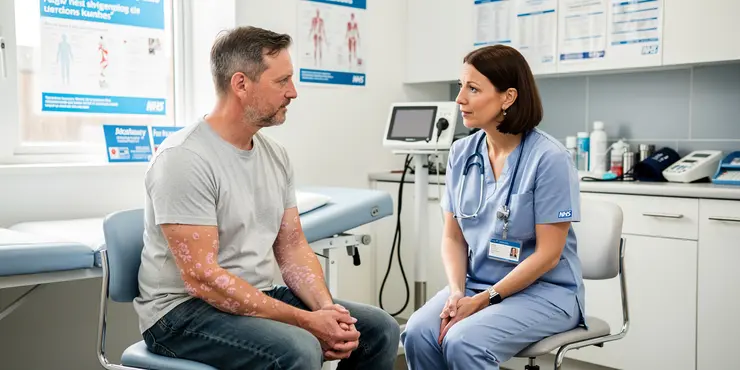
Psoriasis is a chronic autoimmune condition characterized by the rapid growth of skin cells, leading to scaling on the skin’s surface. These scales are often accompanied by inflammation and redness. Managing psoriasis can be challenging, but various treatment options are available in the UK to help control symptoms and improve quality of life.
Topical Treatments
Topical therapies are often the first line of treatment for mild to moderate psoriasis. These include creams and ointments applied directly to the skin. Common topical treatments include corticosteroids (to reduce inflammation), vitamin D analogues (to slow skin cell growth), coal tar (to reduce scaling, inflammation, and itchiness), and dithranol (to reduce cell growth). These treatments can be effective but are often used under medical supervision to prevent side effects.
Phototherapy
Phototherapy or light therapy involves exposing the skin to ultraviolet (UV) light under medical supervision. UVB phototherapy and PUVA (psoralen and UVA) are two common methods. UVB therapy uses a special lamp to expose the skin to UVB rays, which can help reduce symptoms. PUVA involves taking a drug that increases sensitivity to light before UVA exposure. Phototherapy is typically reserved for moderate to severe psoriasis or when topical treatments are ineffective.
Systemic Treatments
For more severe cases, systemic treatments may be prescribed. These involve medications taken orally or by injection that work throughout the body, not just on the skin. Common systemic treatments include methotrexate, ciclosporin, and acitretin. These medications can have significant side effects and require close monitoring by a healthcare professional.
Biologic Therapies
Biologic therapies are a newer class of systemic treatment that target specific parts of the immune system to reduce inflammation. In the UK, biologics such as adalimumab, etanercept, infliximab, and secukinumab are used for moderate to severe psoriasis. These treatments are usually administered via injection and are particularly helpful for patients who do not respond to other treatments. Biologics can be expensive and typically require specialist prescription and oversight.
Lifestyle and Home Remedies
In addition to medical treatments, certain lifestyle changes can help manage psoriasis symptoms. These include maintaining a healthy diet, using moisturizing creams regularly to manage dryness, avoiding known triggers like stress or injury to the skin, and refraining from smoking and excessive alcohol consumption.
Conclusion
While there is no cure for psoriasis, a range of treatment options are available to alleviate symptoms and improve quality of life. It is important for patients in the UK to work closely with their healthcare providers to determine the most appropriate treatment plan. Managing psoriasis often involves a combination of therapies and lifestyle adjustments tailored to the individual's needs.
Understanding Psoriasis
Psoriasis is a condition that affects the skin. It is long-lasting and happens because the body's defenses attack the skin by mistake. This makes skin cells grow too quickly, leading to patches or scales on the skin. These patches can be red and sore. There are different ways to treat psoriasis in the UK. These treatments help to manage the symptoms and make life better for those with psoriasis.
Topical Treatments
Topical treatments are creams or ointments put directly on the skin. They are usually the first choice for treating mild to moderate psoriasis. Some common types are: - Corticosteroids: They help reduce redness and swelling. - Vitamin D creams: They slow down the fast growth of skin cells. - Coal Tar: It helps with itching and scales. - Dithranol: It slows down skin cell growth. People use these treatments with guidance from a doctor, so they use them safely.
Phototherapy
Phototherapy is also called light therapy. It uses special light to help the skin. A doctor usually gives phototherapy to people whose psoriasis is moderate or severe. Two main types of phototherapy are: - UVB therapy: It uses a special lamp with UVB light. - PUVA: You take a medicine to make your skin sensitive to light, and then it is exposed to UVA light. Phototherapy can work when creams don’t help enough.
Systemic Treatments
Systemic treatments are stronger treatments for severe psoriasis. They are medicines taken by mouth or by injection. These medicines treat psoriasis all over the body, not just on the skin. Common ones are: - Methotrexate - Ciclosporin - Acitretin They can have strong side effects, so doctors watch patients closely.
Biologic Therapies
Biologic therapies are newer and treat the immune system. They help with moderate to severe psoriasis. Some biologics in the UK are: - Adalimumab - Etanercept - Infliximab - Secukinumab These treatments usually come as injections. They are used when other treatments aren’t enough and are prescribed by specialists due to their cost.
Lifestyle and Home Remedies
Apart from medical treatments, you can also make lifestyle changes to help manage psoriasis. Helpful actions are: - Eating healthy foods - Using moisturizing creams to ease dry skin - Avoiding things that make symptoms worse, like stress or skin injuries - Not smoking and cutting down on alcohol These steps can support medical treatments.
Conclusion
Psoriasis cannot be cured, but there are many ways to ease the symptoms and improve how you feel. It is important to work with your doctor in the UK to find the best treatment plan. A good plan usually includes a mix of medical treatments and lifestyle changes that suit you personally.
Frequently Asked Questions
Common topical treatments include corticosteroids, vitamin D analogues, salicylic acid, coal tar, and topical retinoids.
Yes, phototherapy, including UVA and UVB light treatments, can help in reducing symptoms of psoriasis.
Systemic medications are drugs taken orally or by injection that work throughout the body to reduce inflammation and slow down skin cell production. Examples include methotrexate, cyclosporine, and acitretin.
Yes, biologics are a newer form of treatment that target specific parts of the immune system. Examples include etanercept, infliximab, and ustekinumab.
Vitamin D analogues, such as calcipotriol, help to slow skin cell growth and can reduce scaling and swelling.
Corticosteroids help to reduce inflammation and are commonly used as a first-line treatment for mild to moderate psoriasis.
Yes, managing stress, maintaining a healthy weight, avoiding smoking, and reducing alcohol intake can help manage symptoms.
Yes, over-the-counter treatments include moisturizers, anti-itch creams, and dandruff shampoos containing coal tar or salicylic acid.
Coal tar can reduce itching, scaling, and inflammation, though it might not be as effective as other treatments for severe cases.
While no specific diet is proven to treat psoriasis, a healthy diet can support the immune system and reduce inflammation.
Salicylic acid helps to remove scales and smooth the skin, making other topical treatments more effective.
Systemic retinoids, like acitretin, work by slowing skin cell growth and reducing inflammation.
Yes, stress is a known trigger for psoriasis flare-ups, so stress management techniques can be beneficial.
Some people find relief with alternative therapies like acupuncture, fish oil supplements, or aloe vera, but these should complement conventional treatments.
Biologics can increase the risk of infections, as they suppress parts of the immune system. Other side effects vary by medication.
Moisturizers can help reduce dryness, scaling, itching, and redness, complementing other treatments.
Research is ongoing, and new treatments such as JAK inhibitors and more specific biologics are being developed.
Phototherapy uses ultraviolet light to slow down skin cell growth and reduce inflammation and scaling.
Currently, there is no cure for psoriasis, but various treatments can effectively manage and reduce symptoms.
Topical retinoids help to normalize DNA activity in skin cells, reducing psoriasis symptoms such as scaling and skin thickness.
There are creams and lotions that can help the skin. Some of these are:
- Special creams to reduce swelling
- Lotions with vitamin D
- Creams with salicylic acid
- Coal tar products
- Topical retinoids, which help the skin grow better
It might help to ask a doctor or nurse which is best for you.
Yes, light therapy can help make psoriasis better. This uses special lights called UVA and UVB.
Some medicines work inside your whole body. You take them by swallowing or getting a shot. These medicines help make swelling go down and slow how fast skin cells grow. Some examples of these medicines are methotrexate, cyclosporine, and acitretin.
Yes, biologics are a new type of medicine. They help by targeting certain parts of the body's defense system. Some examples of these medicines are etanercept, infliximab, and ustekinumab.
Vitamin D is like a special helper for your skin. There are different kinds, like calcipotriol. These can make skin problems better by helping skin cells grow slower. They can also help make the skin less flaky and swollen.
Here are some things that might help you understand this better:
- Pictures: Look at pictures of skin to see what happens.
- Videos: Watch videos that explain how vitamin D helps.
Corticosteroids are special medicines that help to make swelling go down. Doctors often use them first to treat mild to moderate psoriasis, which is a skin problem.
Yes, doing things like staying calm, keeping a healthy weight, not smoking, and drinking less alcohol can help feel better.
Yes, you can buy things at the store to help. You can get:
- Lotions to keep your skin soft.
- Creams to stop itching.
- Special shampoos for dandruff with coal tar or salicylic acid.
Tools like picture guides or reading apps can also help you use these things.
Coal tar can help stop itching. It can also help with flaking and swelling. But for very bad cases, other treatments might work better.
Eating healthy food is good for your body. It helps keep your immune system strong and can lower swelling and soreness in your skin.
Salicylic acid helps get rid of rough skin. It makes the skin smooth, so other skin treatments work better.
Systemic retinoids, like acitretin, help by making skin cells grow slower and by reducing swelling.
Yes, stress can make psoriasis worse, so it helps to find ways to relax and feel calm.
Some people feel better when they use other types of help like acupuncture, fish oil pills, or aloe vera. But you should use these along with your normal medicine from the doctor.
If reading is hard, try using tools like audiobooks or ask someone to read with you.
Biologics are medicines. They can make it easier to get sick because they weaken the immune system. Different biologics can cause different problems.
Moisturizers can help make your skin feel better. They stop skin from being dry, itchy, or red. They also help with other skin treatments.
Scientists are working hard to find new medicines. These new medicines are called JAK inhibitors and biologics.
Light therapy uses a special kind of light to help skin problems. It slows down skin growth and can help with redness and scaling.
Right now, there is no way to make psoriasis go away forever. But, there are different treatments that can help make it feel better.
Topical retinoids are creams or gels that you put on your skin. They help fix how skin cells work. This can make psoriasis better. Psoriasis is when your skin gets thick and scaly. Retinoids can help make your skin smooth again.
If you have trouble reading, try using a ruler or your finger to help you follow the words. You could also ask someone to read with you.

Ergsy Search Results
This website offers general information and is not a substitute for professional advice.
Always seek guidance from qualified professionals.
If you have any medical concerns or need urgent help, contact a healthcare professional or emergency services immediately.
Some of this content was generated with AI assistance. We've done our best to keep it accurate, helpful, and human-friendly.
- Ergsy carefully checks the information in the videos we provide here.
- Videos shown by Youtube after a video has completed, have NOT been reviewed by ERGSY.
- To view, click the arrow in centre of video.
- Most of the videos you find here will have subtitles and/or closed captions available.
- You may need to turn these on, and choose your preferred language.
- Go to the video you'd like to watch.
- If closed captions (CC) are available, settings will be visible on the bottom right of the video player.
- To turn on Captions, click settings.
- To turn off Captions, click settings again.