
Get Answers
Understanding Sunburn Risk
Sunburn is a common concern, especially during the warmer months, as it can lead to skin damage and increase the risk of skin cancer. In the UK, understanding when the risk of sunburn is highest can help individuals take necessary precautions to protect their skin. The primary factor contributing to sunburn is exposure to ultraviolet (UV) radiation from the sun.
Peak UV Radiation Hours
The sunburn risk is highest when the sun is at its most intense, which typically occurs between 11 a.m. and 3 p.m. during British Summer Time (BST). During these peak hours, the sun’s rays have a shorter distance to travel through the atmosphere, resulting in stronger UV radiation reaching the Earth's surface. This means that the sunburn risk is significantly elevated during this time, and it’s crucial to take protective measures if spending time outdoors.
UV Index and Sunburn Risk
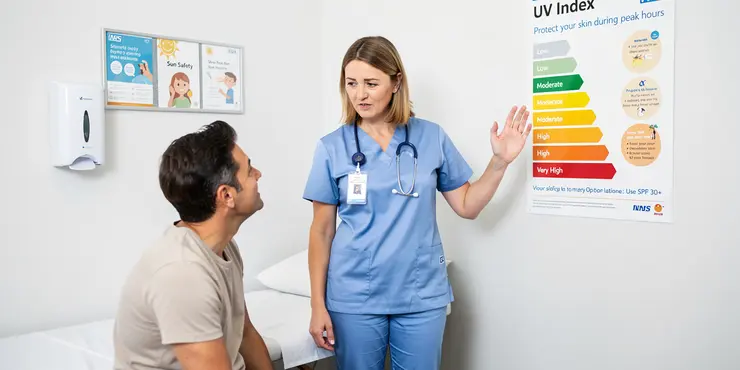
The UV Index is a helpful tool for gauging the strength of sun exposure at a particular time and place. It provides a forecast of the expected risk of overexposure to UV radiation. In the UK, a UV Index of 3 or higher indicates a moderate risk of sunburn, and caution is advised. The Index tends to rise quickly during the late morning, peaking in the early afternoon. Therefore, checking the UV Index can provide useful guidance on when it’s safest to be outside without risking sunburn.
Regional Variations
While the time of day significantly impacts sun exposure, geographical location within the UK also plays a role. The sunburn risk may vary depending on the latitude and prevailing weather conditions of an area. Southern parts of the UK typically receive more intense sunlight compared to the north. However, regardless of the region, peak sunburn risks generally align with the midday hours when the sun is strongest.
Preventive Measures
To minimise the risk of sunburn during high-risk hours, it is advisable to seek shade, especially between 11 a.m. and 3 p.m. Wearing protective clothing, such as hats and sunglasses, applying broad-spectrum sunscreen with at least SPF 30, and staying hydrated can further prevent sunburn. Additionally, paying attention to the day's weather and UV forecasts can help individuals plan outdoor activities more safely.
Conclusion
In summary, the risk of sunburn is highest in the UK during the late morning to mid-afternoon, particularly between 11 a.m. and 3 p.m. Monitoring the UV Index and being aware of regional differences can help individuals protect themselves from excessive UV exposure. By understanding and respecting these timeframes, taking preventive measures becomes easier, ultimately helping to avoid sunburn and maintain healthy skin.
Understanding Sunburn Risk
Sunburn happens when your skin gets too much sun. This can hurt your skin and might cause skin cancer later on. In the UK, knowing when the sun is strongest can help you stay safe. Sunburn is mainly caused by UV rays from the sun.
Peak UV Radiation Hours
The risk of getting sunburned is highest when the sun is very strong. This usually happens between 11 a.m. and 3 p.m. in the UK. During these hours, the sun's rays are stronger. It's important to protect your skin if you are outside at this time.
UV Index and Sunburn Risk
The UV Index is a useful tool. It tells how strong the sun's rays are in a place at a certain time. If the UV Index is 3 or more, there's a risk of sunburn. It's good to check the UV Index to know when it's safer to be outside.
Regional Variations
Besides the time of day, where you are in the UK also affects sunburn risk. The south gets more strong sunlight than the north. But no matter where you are, the sun is strongest and risk is highest around midday.
Preventive Measures
To avoid sunburn when the sun is strong, try to stay in the shade between 11 a.m. and 3 p.m. Wear hats and sunglasses, use sunscreen with SPF 30 or more, and drink lots of water. Checking the weather and UV forecast can help you plan outdoor activities safely.
Conclusion
In short, you are most likely to get sunburned in the UK from late morning to mid-afternoon, especially between 11 a.m. and 3 p.m. Watching the UV Index and knowing about the sun's strength in your area can help you stay safe. By taking care during these times, you can protect your skin and keep it healthy.
Frequently Asked Questions
The sunburn risk is highest between 10 a.m. and 4 p.m. when the sun's rays are the strongest.
During these hours, the sun is at its highest point in the sky, leading to more direct and intense UV radiation.
Yes, especially around noon, UV radiation is at its peak, so sun protection is highly recommended.
Yes, UV rays can penetrate clouds, causing sunburn even on overcast days.
Yes, the UV index is generally higher in the summer due to the angle of the sun and clearer skies.
Yes, UV exposure increases with altitude, so the risk of sunburn is higher in mountainous regions.
Yes, UV rays can still be strong in winter, especially reflected off snow, increasing sunburn risk.
Yes, sunburn is possible anytime the sun is out; however, the risk is lower in early morning and late afternoon.
Yes, UVA rays can penetrate windows, so prolonged exposure can lead to sun damage.
Yes, water and sand can reflect UV rays, increasing the risk of sunburn.
While the risk is lower outside peak hours, it's still advisable to use sun protection anytime you are exposed to direct sunlight.
Use sunscreen with high SPF, wear protective clothing, seek shade, and wear a hat and sunglasses.
Lighter skin types tend to burn more easily than darker skin types, but all skin types can be damaged by UV exposure.
Yes, sunscreen can expire. Using expired sunscreen may not provide adequate protection, increasing sunburn risk.
Sunscreen should be reapplied every two hours or more often if swimming or sweating.
The UV index measures UV radiation strength. A higher index indicates greater sunburn risk.
Yes, surfaces like water, snow, or sand can reflect UV rays and heighten sunburn risk.
Yes, individuals with more melanin in their skin have a higher natural resistance but can still experience skin damage.
UVA rays penetrate the skin deeply, causing aging, while UVB rays cause more surface damage, leading to sunburn.
Check your local weather report, or use smartphone apps that provide UV index readings for your area.
The risk of getting sunburned is bigger between 10 a.m. and 4 p.m. That is when the sun is very strong.
During these hours, the sun is high in the sky. This makes the sun's rays stronger and more direct.
Yes, the sun is strongest around lunchtime. It's a good idea to use sun protection like sunscreen or wear a hat to keep safe.
Yes, the sun's rays can go through clouds. This means you can still get a sunburn on cloudy days.
Yes, the UV index is usually higher in the summer. This is because the sun is higher in the sky, and the sky is often clearer.
Yes, the sun is stronger in the mountains, so you can get a sunburn more easily up there.
Yes, the sun's rays (UV rays) can be strong in winter too. They bounce off snow and can cause sunburn.
Yes, you can get sunburn whenever the sun is shining. But, it's less likely in the early morning and late afternoon.
Yes, UVA rays can go through windows. Staying in the sun for a long time can hurt your skin.
Yes, water and sand can bounce the sun's UV rays onto your skin. This makes it easier to get sunburnt.
It is safer to be in the sun when it is not the middle of the day. But, it is still a good idea to use sunscreen any time the sun is shining on you.
Use sunscreen that protects you well from the sun. Wear clothes that cover your skin. Stay in the shade when it's sunny, and wear a hat and sunglasses.
People with light skin get sunburned faster than people with dark skin. But the sun can hurt all skin types.
Yes, sunscreen can go bad. Old sunscreen might not work well, and it can make you more likely to get sunburned.
Put on more sunscreen every two hours. Put more on if you swim or sweat.
The UV index tells us how strong the sun is. A higher number means you can get sunburned faster.
Yes, surfaces like water, snow, or sand can bounce sunlight and make sunburn more likely.
Yes, people with darker skin can be better at blocking the sun, but they can still get sunburned.
UVA rays go deep into your skin and make it age faster. UVB rays harm the top of your skin and can give you sunburn.
Using sunscreen and wearing a hat can help protect your skin from the sun. You can also try sitting in the shade or wearing long sleeves to cover your skin.
Look at the weather report for your area, or use apps on your phone that tell you about the UV index where you are.

Ergsy Search Results
This website offers general information and is not a substitute for professional advice.
Always seek guidance from qualified professionals.
If you have any medical concerns or need urgent help, contact a healthcare professional or emergency services immediately.
Some of this content was generated with AI assistance. We've done our best to keep it accurate, helpful, and human-friendly.
- Ergsy carefully checks the information in the videos we provide here.
- Videos shown by Youtube after a video has completed, have NOT been reviewed by ERGSY.
- To view, click the arrow in centre of video.
- Most of the videos you find here will have subtitles and/or closed captions available.
- You may need to turn these on, and choose your preferred language.
- Go to the video you'd like to watch.
- If closed captions (CC) are available, settings will be visible on the bottom right of the video player.
- To turn on Captions, click settings.
- To turn off Captions, click settings again.