
Get Answers
Understanding Abnormal Screening Results
If you've received abnormal results from a screening test, it's important to remember that this doesn't necessarily mean you have a serious condition. Screening tests are designed to alert healthcare providers to the potential presence of an issue, which requires further investigation. Abnormal results are often preliminary and may require follow-up tests for a more definitive diagnosis.
Consult Your GP
Your first step should be to consult with your General Practitioner (GP). They can provide detailed explanations of your test results and the potential implications. Your GP will review your medical history and help determine the next steps. They might also refer you to a specialist if necessary. It's important to discuss any concerns or symptoms you might have in this appointment.
Undergo Follow-up Testing
Follow-up testing is crucial to verify initial findings. Your GP may recommend additional tests such as blood tests, imaging studies, or biopsies, depending on the abnormal result's nature. Follow-up tests help in confirming whether there is a real issue and assist in planning the appropriate treatment if needed.
Maintain Open Communication
During this period, maintaining open communication with healthcare providers is vital. Keep a list of any symptoms you're experiencing, note how they're affecting your daily life, and share this with your healthcare team. Don’t hesitate to ask questions or seek clarification about any part of the process you don't understand, including the potential implications of findings and what future steps might involve.
Consider a Second Opinion
If you're uncertain about the results or the suggested follow-up care, consider getting a second opinion. This can provide reassurance or offer alternative perspectives on the next steps. The NHS provides access to a wealth of resources, and your GP can guide you on how to obtain another medical opinion.
Emotional Support and Resources
Receiving abnormal results can be stressful. Seek support from family, friends, or professional counselors if you're struggling with anxiety or worry about the results. The NHS website is a valuable resource for information and support. Additionally, patient support groups may also provide a community and resources to help you navigate your healthcare journey.
Stay Informed
Educate yourself about the specific tests and potential conditions you're being evaluated for. Reliable information can be found on the NHS website and through leaflets provided by your healthcare provider. Staying informed will help you make knowledgeable decisions about your health and care plan.
What Does an Abnormal Test Result Mean?
If your test result is not normal, it might feel scary. But it does not always mean something is seriously wrong. These tests help doctors know if there might be a problem. They often need to do more tests to learn more about what's happening.
Talk to Your Doctor
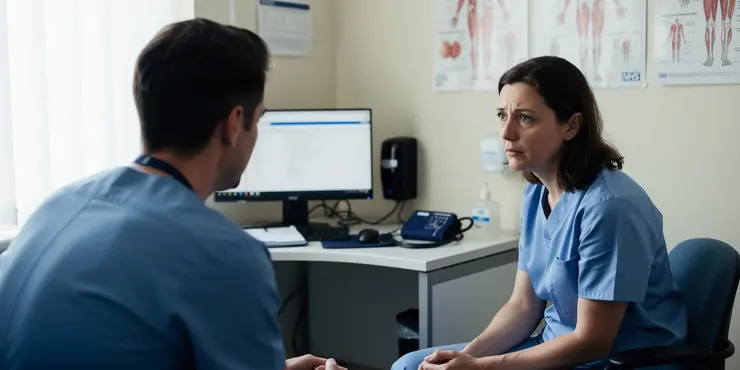
Your first step is to talk to your doctor. They can explain your test result and what it might mean. The doctor will check your health history and decide what to do next. They might send you to see another doctor who knows more. Tell your doctor about anything that is worrying you.
Do More Tests
Doing more tests is important to understand the first test result. Your doctor might ask you to do more tests like blood tests or special pictures of your body. These tests help check if there is a real problem and what kind of help you might need.
Keep Talking with Your Doctor
Keep talking to your doctor during this time. Write down how you are feeling and share this with them. Ask questions if you do not understand something. It is important to know what the next steps might be.
Think About Another Opinion
If you feel unsure about the results, you can talk to another doctor. This can help you feel better or give you new ideas. Your doctor can help you find another doctor to talk to.
Get Support
It can be stressful to get an abnormal result. Talk to family or friends if you feel worried. You can also talk to a counselor. The NHS website has a lot of helpful information. Support groups are also a good place for help and advice.
Learn More
Learn about the tests and what they check for. Good information is on the NHS website or from your doctor. Knowing more helps you make good choices about your health.
Frequently Asked Questions
Contact your healthcare provider to discuss the results and understand their implications.
Following up is crucial to determine the next steps in diagnosis or treatment and to ensure your health is properly managed.
Yes, sometimes screening tests show false positives, so further evaluation is necessary to confirm any findings.
Schedule an appointment as soon as possible to discuss further tests or treatments with your healthcare provider.
Follow-up tests may include diagnostic imaging, blood tests, biopsies, or other specific procedures.
Seeking a second opinion can be beneficial for reassurance and to explore all possible options.
Abnormal results may lead to modifications in treatment plans, lifestyle changes, or more frequent monitoring.
Delaying follow-up can lead to progression of a possible condition, making treatment more difficult later.
Your healthcare provider will inform you if any special preparations are required for follow-up tests.
Ask about what the results mean, recommended next steps, potential treatments, and any risks involved.
Depending on the condition, lifestyle changes such as diet and exercise may be recommended as part of your management plan.
It's often beneficial to inform family members, as some conditions can be hereditary or impact family health planning.
Consider seeking support from mental health professionals, talking to friends or family, and staying informed about your health.
While some conditions might require surgery, it's best to discuss with your healthcare provider for an accurate assessment.
Keep copies of all test results, appointments, treatments, and recommendations for future reference.
Coverage depends on your insurance policy, so it's advisable to contact your insurer to verify benefits.
Discuss your concerns with your provider, and consider seeking a second opinion to explore other options.
The likelihood varies by test and condition; your healthcare provider can provide specific information related to your situation.
Consult your healthcare provider for personalized recommendations before making significant lifestyle changes.
Some organizations and healthcare providers offer financial assistance programs; inquire with your provider for options.
Talk to your doctor or nurse to learn more about your test results and what they mean for you.
It is very important to follow up. This helps to know what to do next for diagnosis or treatment. It also makes sure your health is taken care of properly.
Yes, sometimes tests can say there is a problem when there isn’t one. So, doctors need to check again to be sure.
Call your doctor to set a time to talk. You can ask about tests or help you might need.
After your first tests, you might need more checks. These could be special pictures of inside your body, blood tests, taking a small piece of body tissue to look at, or other special checks.
Getting a second opinion can be helpful. It can make you feel better and help you see all your choices.
If the test results are not normal, the doctor might change your treatment. They could ask you to live in a healthier way or see you more often to check on you.
If you wait too long to see a doctor, a health problem might get worse. This can make it harder to fix later.
Your doctor or nurse will tell you if you need to do anything special for your next tests.
Ask what the results mean. Talk about what to do next, like treatments. Ask about any risks too.
If you have a health problem, your doctor might ask you to change what you eat and do some exercise. These changes can help you feel better.
It can be helpful to tell your family. Some health problems can run in families. Knowing can help your family take care of their health.
Think about getting help from doctors who understand feelings. Talk to your friends or family. Learn about staying healthy.
Some health problems might need surgery to fix. It is important to talk to your doctor. They can tell you what is best for you.
Save all your test results, appointments, treatments, and doctor’s advice. This will help you in the future.
Coverage means what your insurance will pay for. It depends on the plan you have. To find out, you should call your insurance company and ask them what they cover.
Talk to your doctor about what you are worried about. You can also ask another doctor to see if there are other choices.
The chance of something happening is different for each test and situation. Your doctor can give you the right information for you.
Before you make big changes to your life, talk to your doctor. They can give you advice that is just right for you.
Some places and doctors can help with money if you need it. Ask your doctor or the place you go for help.

Ergsy Search Results
This website offers general information and is not a substitute for professional advice.
Always seek guidance from qualified professionals.
If you have any medical concerns or need urgent help, contact a healthcare professional or emergency services immediately.
Some of this content was generated with AI assistance. We've done our best to keep it accurate, helpful, and human-friendly.
- Ergsy carefully checks the information in the videos we provide here.
- Videos shown by Youtube after a video has completed, have NOT been reviewed by ERGSY.
- To view, click the arrow in centre of video.
- Most of the videos you find here will have subtitles and/or closed captions available.
- You may need to turn these on, and choose your preferred language.
- Go to the video you'd like to watch.
- If closed captions (CC) are available, settings will be visible on the bottom right of the video player.
- To turn on Captions, click settings.
- To turn off Captions, click settings again.