
Get Answers
What is sleep apnoea?
Sleep apnoea is a condition that causes repeated breathing interruptions while you sleep. These pauses can happen many times a night and may last a few seconds or longer.
The most common type is obstructive sleep apnoea. This happens when the muscles in the throat relax too much and block the airway.
A less common type is central sleep apnoea, where the brain does not send the right signals to the breathing muscles. Some people have a mix of both types.
Common signs and symptoms
Loud snoring is a common sign, although not everyone who snores has sleep apnoea. Another clue is gasping, choking, or making noisy breathing sounds during sleep.
People often feel very tired during the day, even after a full night in bed. They may also wake with a dry mouth, headache, or sore throat.
Sleep apnoea can affect concentration, mood, and memory. Some people notice they are irritable, low in energy, or more likely to fall asleep in quiet situations.
Why it matters
Sleep apnoea is more than just a poor night’s sleep. If it is not treated, it can affect your health and wellbeing over time.
Repeated drops in oxygen and broken sleep can put strain on the heart and blood vessels. This may raise the risk of high blood pressure, stroke, and heart disease.
It can also increase the chance of accidents, especially if you feel sleepy while driving or at work. Daytime tiredness can make everyday tasks harder to manage.
Who is more likely to get it?
Sleep apnoea can affect adults of any age, but some people are more at risk than others. It is more common in men, people who are overweight, and older adults.
It may also be linked to a large neck size, smoking, drinking alcohol in the evening, or having a family history of the condition. Nasal congestion and certain medical conditions can also play a part.
Women can also get sleep apnoea, especially after the menopause. In children, enlarged tonsils or adenoids can sometimes be the cause.
Getting help and treatment
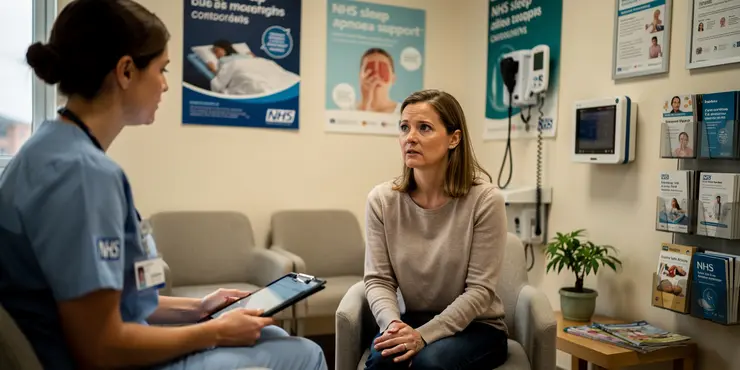
If you think you may have sleep apnoea, speak to your GP. They can ask about your symptoms and may arrange a sleep study or refer you to a specialist.
Treatment depends on how severe the condition is. Common options include weight loss if needed, avoiding alcohol before bed, and sleeping on your side.
Some people are offered a CPAP machine, which gently keeps the airway open during sleep. Other treatments may include a dental device or, in some cases, surgery.
Getting the right treatment can improve sleep, energy, and overall health. If you are worried about your snoring or tiredness, it is worth seeking advice.
Frequently Asked Questions
Sleep apnoea is a sleep disorder in which breathing repeatedly stops and starts during sleep, often leading to poor sleep quality and daytime symptoms.
Common symptoms of sleep apnoea include loud snoring, choking or gasping during sleep, restless sleep, morning headaches, dry mouth, and daytime sleepiness.
Sleep apnoea can be caused by airway obstruction, unstable breathing control, or a combination of factors such as excess weight, anatomy of the airway, alcohol use, and certain medical conditions.
People at higher risk of sleep apnoea include those who are overweight, older adults, men, people with a family history of sleep apnoea, and individuals with nasal blockage or certain medical conditions.
Sleep apnoea is usually diagnosed using a sleep study, either in a sleep lab or at home, which measures breathing, oxygen levels, heart rate, and sleep patterns.
Obstructive sleep apnoea happens when the upper airway becomes blocked during sleep, while central sleep apnoea occurs when the brain does not send proper signals to the muscles that control breathing.
Sleep apnoea can be serious because repeated breathing interruptions may increase the risk of high blood pressure, heart disease, stroke, accidents from daytime sleepiness, and other health problems.
Yes, sleep apnoea can often be treated with lifestyle changes, CPAP therapy, oral appliances, positional therapy, or surgery in some cases, depending on the cause and severity.
CPAP stands for continuous positive airway pressure, and it uses a machine to deliver air through a mask to keep the airway open during sleep.
Yes, weight loss can reduce the severity of sleep apnoea in many people, especially when excess body weight contributes to airway narrowing during sleep.
Yes, alcohol can relax the throat muscles and make sleep apnoea worse by increasing airway collapse and reducing arousal responses during sleep.
Yes, children can have sleep apnoea, often due to enlarged tonsils or adenoids, and it may cause snoring, restless sleep, behavioural issues, or growth concerns.
Yes, sleep apnoea can contribute to high blood pressure because repeated drops in oxygen and sleep disruption can stress the cardiovascular system.
Yes, sleep apnoea can affect daytime concentration, memory, mood, and alertness because poor sleep quality and low oxygen levels interfere with normal brain function.
Sleep apnoea usually does not go away on its own, and it often requires treatment or ongoing management to reduce symptoms and health risks.
Lifestyle changes that may help sleep apnoea include losing weight, avoiding alcohol before bed, sleeping on the side, quitting smoking, and maintaining regular sleep habits.
Yes, surgery can be an option for some people with sleep apnoea, especially when structural problems in the airway contribute to obstruction and other treatments are not effective.
Yes, sleep apnoea can increase the risk of accidents because excessive daytime sleepiness and reduced alertness may impair driving and work performance.
Yes, sleep apnoea should still be evaluated and treated even if symptoms seem mild, because untreated sleep apnoea can still lead to long-term health complications.
Someone should see a doctor about sleep apnoea if they snore loudly, stop breathing during sleep, wake up choking, feel excessively tired during the day, or have concerns about poor sleep.

Ergsy Search Results
This website offers general information and is not a substitute for professional advice.
Always seek guidance from qualified professionals.
If you have any medical concerns or need urgent help, contact a healthcare professional or emergency services immediately.
Some of this content was generated with AI assistance. We've done our best to keep it accurate, helpful, and human-friendly.
- Ergsy carefully checks the information in the videos we provide here.
- Videos shown by Youtube after a video has completed, have NOT been reviewed by ERGSY.
- To view, click the arrow in centre of video.
- Most of the videos you find here will have subtitles and/or closed captions available.
- You may need to turn these on, and choose your preferred language.
- Go to the video you'd like to watch.
- If closed captions (CC) are available, settings will be visible on the bottom right of the video player.
- To turn on Captions, click settings.
- To turn off Captions, click settings again.