
Get Answers
What symptoms should I track?
If you think you may have PCOS, it helps to keep a simple record of your symptoms over time. This can show patterns that are easy to miss from one month to the next. It can also make it easier to talk to a GP.
Common symptoms to note include irregular or missed periods, very heavy bleeding, acne, excess facial or body hair, and thinning hair on the scalp. You may also notice weight gain, difficulty losing weight, or darkened skin in certain areas such as the neck or under the breasts.
Track your menstrual cycle
Your periods are one of the most important things to monitor. Write down the date your period starts and ends, how heavy it is, and whether you have spotting between periods. If your cycle is longer than usual or very unpredictable, that is useful information.
It can also help to note whether you have signs of ovulation, such as changes in cervical mucus or mild mid-cycle pain. Not everyone gets these signs, but tracking them can give a clearer picture of your cycle. If you use an app or calendar, make sure the information is easy to read and update.
Keep a record of skin and hair changes
PCOS can affect hormones linked to skin and hair. Track acne, oily skin, new facial hair, hair growth on the chest, stomach or back, and any scalp hair thinning. If changes are getting worse, note when they started and how quickly they developed.
It may help to take dated photos every few weeks. This gives you a clear comparison over time, especially for acne or hair growth. Try to use the same lighting and angle if you do this.
Note other symptoms and triggers
PCOS can also be linked with tiredness, low mood, cravings, headaches, and trouble sleeping. These symptoms are not specific to PCOS, but they can still be relevant when taken together. Keep track of when they happen and how severe they feel.
You may also want to note changes after certain foods, stress, exercise, or illness. This is not about blaming yourself or finding a single cause. It is simply about spotting patterns that may help your GP understand what is going on.
When to speak to a GP
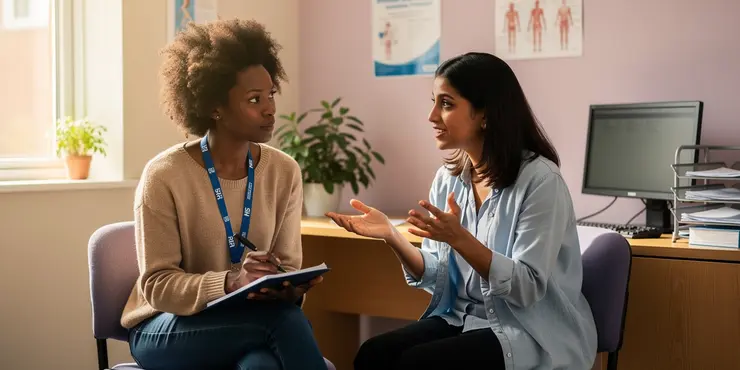
Self-tracking cannot diagnose PCOS, but it can support a proper medical assessment. In the UK, a GP can review your symptoms, ask about your cycle, and arrange blood tests or an ultrasound if needed. Bring your notes with you, even if they only cover a few months.
Seek medical advice sooner if your periods stop completely, bleeding is very heavy, or symptoms are affecting your mental health. It is also a good idea to speak to a GP if you are trying to conceive and your cycles are irregular. Early support can make a real difference.
Frequently Asked Questions
PCOS symptoms self diagnosis tracking is a personal method of recording patterns such as irregular periods, acne, hair growth changes, weight changes, and mood shifts to help you notice possible PCOS-related patterns over time.
PCOS symptoms self diagnosis tracking helps you compare symptoms across weeks and months, which can make recurring patterns easier to spot and discuss with a healthcare professional.
PCOS symptoms self diagnosis tracking should include menstrual cycle dates, cycle length, acne, hair thinning, excess facial or body hair, weight changes, cravings, energy levels, sleep issues, and mood changes.
PCOS symptoms self diagnosis tracking is usually most useful when updated daily or at least several times per week, especially for period dates, symptoms, and any notable changes.
PCOS symptoms self diagnosis tracking can be done with a notebook, spreadsheet, calendar app, symptom tracker app, or printed tracking sheet, as long as it is consistent and easy to use.
PCOS symptoms self diagnosis tracking cannot replace a medical diagnosis, but it can provide useful information to support a clinician's evaluation.
In PCOS symptoms self diagnosis tracking, the most important menstrual details are start and end dates, cycle length, skipped periods, unusually heavy bleeding, spotting, and any unexpected changes.
In PCOS symptoms self diagnosis tracking, acne can be recorded by noting the date, location, severity, flare triggers, and whether it improves or worsens around certain times in the cycle.
In PCOS symptoms self diagnosis tracking, note any new facial or body hair growth, thinning scalp hair, shedding, and whether the change is gradual or sudden.
Yes, weight changes can be included in PCOS symptoms self diagnosis tracking, along with appetite changes, bloating, and patterns related to diet, sleep, or stress.
In PCOS symptoms self diagnosis tracking, mood symptoms can be tracked by rating anxiety, irritability, low mood, stress, and sleep quality on a simple scale each day.
In PCOS symptoms self diagnosis tracking, an irregular cycle usually means periods are consistently late, very long, absent, or vary widely from month to month.
PCOS symptoms self diagnosis tracking can include ovulation signs such as cervical mucus changes, basal body temperature, ovulation tests, or mid-cycle symptoms, while remembering these signs may be inconsistent in PCOS.
The best way to organize PCOS symptoms self diagnosis tracking is with separate sections for cycles, physical symptoms, emotional symptoms, sleep, diet, and notes about possible triggers.
PCOS symptoms self diagnosis tracking is often most useful after several months of consistent records, because longer tracking makes recurring patterns easier to identify.
Yes, stress and sleep are important parts of PCOS symptoms self diagnosis tracking because they can affect cycles, cravings, energy, skin, and mood.
From PCOS symptoms self diagnosis tracking, share cycle dates, symptom trends, any skipped periods, hair or skin changes, weight changes, and anything that seems to trigger flare-ups.
PCOS symptoms self diagnosis tracking can help during a doctor visit by giving a clear history of symptoms, which may improve the accuracy of the evaluation and save time.
Common mistakes in PCOS symptoms self diagnosis tracking include tracking inconsistently, recording too few symptoms, relying on memory instead of daily notes, and not dating entries.
Someone should seek medical help instead of relying only on PCOS symptoms self diagnosis tracking if periods stop for a long time, symptoms worsen quickly, pain is severe, or there are signs of another health issue.

Ergsy Search Results
This website offers general information and is not a substitute for professional advice.
Always seek guidance from qualified professionals.
If you have any medical concerns or need urgent help, contact a healthcare professional or emergency services immediately.
Some of this content was generated with AI assistance. We've done our best to keep it accurate, helpful, and human-friendly.
- Ergsy carefully checks the information in the videos we provide here.
- Videos shown by Youtube after a video has completed, have NOT been reviewed by ERGSY.
- To view, click the arrow in centre of video.
- Most of the videos you find here will have subtitles and/or closed captions available.
- You may need to turn these on, and choose your preferred language.
- Go to the video you'd like to watch.
- If closed captions (CC) are available, settings will be visible on the bottom right of the video player.
- To turn on Captions, click settings.
- To turn off Captions, click settings again.