
Get Answers
Why installation crew qualifications matter
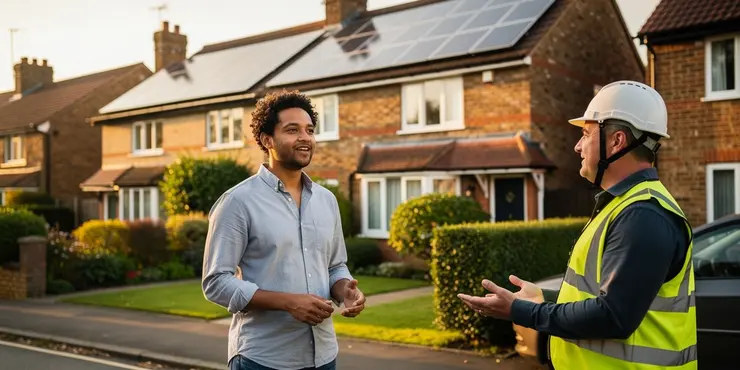
When you are buying solar panels in the UK, the installation team matters as much as the equipment. A well-qualified crew can help ensure the system is safe, efficient, and built to last.
Poor installation can lead to leaks, electrical faults, lower energy output, and problems with warranties. Asking the right questions before you buy can help you avoid costly mistakes later.
Check for training and certifications
Ask whether the installers are trained to work on solar PV systems and whether they hold relevant electrical qualifications. In the UK, you should expect to see evidence of recognised training and experience with domestic solar installations.
You can also ask if the company is MCS certified, as this is an important standard for many UK homeowners. If you plan to export electricity or apply for certain incentives, MCS accreditation may be especially important.
Ask about experience with similar homes
Not every roof is the same, so it helps to know whether the crew has installed systems on homes like yours. Ask how many years they have been fitting solar panels and how many installations they complete each year.
If you have a slate roof, a flat roof, or a home in a conservation area, ask whether they have specific experience with that type of property. A team with relevant experience is more likely to spot issues early and recommend the right mounting solution.
Find out who will actually do the work
Some companies sell the job but use subcontractors for the installation. That is not always a problem, but you should ask who will be on site and whether they are directly employed or subcontracted.
Ask who will handle the electrical work, roof mounting, and final testing. It is also sensible to ask who will be responsible if something goes wrong after the system is fitted.
Questions about safety, insurance, and guarantees
Ask whether the installation team carries public liability and employer’s liability insurance. This protects you if there is accidental damage or an injury during the job.
You should also ask what safety procedures they follow when working at height and around electrical systems. A professional crew should be happy to explain how they manage risk on your property.
Ask for references and proof of quality
Request recent customer references or examples of completed projects in your area. Good installers should be able to show positive reviews, case studies, or photos of previous work.
Finally, ask what aftercare is included and how faults are handled once the system is live. A reputable installer will stand by their work and offer clear support if you need it.
Frequently Asked Questions
A qualified crew should have documented training in solar PV installation, electrical safety, roofing safety, and local code compliance, along with relevant licenses or certifications required in your area.
Ask whether the crew members and the company hold the electrical, contractor, roofing, and solar-specific licenses required by your state, province, or municipality.
Useful certifications often include NABCEP or equivalent solar credentials, OSHA safety training, and manufacturer-specific installation certifications for the equipment being installed.
Look for a crew with several years of hands-on solar installation experience and a track record of projects similar to your roof type, system size, and property layout.
The crew should be trained in fall protection, ladder safety, electrical lockout procedures, personal protective equipment use, and safe roof work practices.
Yes, because solar installations involve electrical design, wiring, grounding, and code compliance, so the crew should include qualified electrical professionals or work closely with them.
They should carry general liability insurance, workers' compensation insurance, and, if applicable, commercial auto coverage, with proof available on request.
Ask for license numbers, certification documents, insurance certificates, and references, then verify them with the issuing organizations or licensing boards.
Ask who will supervise the installation, whether a certified lead installer or licensed electrician is on site, and how quality control is handled during the job.
Manufacturer training helps ensure the crew installs your panels, inverters, racking, and batteries according to product specifications and warranty requirements.
Ask how they stay current with local electrical, fire, and building codes, and whether they handle permits, inspections, and utility interconnection approvals.
Ask whether any part of the work is subcontracted, what qualifications those subcontractors have, and whether they are insured and licensed to do the work.
Yes, if you want batteries, the crew should have specific experience with battery storage design, installation, commissioning, and safety requirements.
References are very important because they show how the crew performs in real projects, including workmanship, communication, schedule reliability, and problem resolution.
Ask whether they use installation checklists, post-install inspections, torque verification, electrical testing, and final performance checks before turning the system on.
Yes, because different roof types and conditions require different mounting methods, flashing techniques, and safety precautions to avoid leaks and structural issues.
The crew should be able to explain the process clearly, provide timelines, answer technical questions, and keep you informed about permits, inspections, and any site issues.
Ask who will test the system, how performance is verified, whether monitoring is set up, and what documentation you will receive at completion.
A qualified crew should understand both workmanship warranties and manufacturer warranties, and they should explain what is covered, for how long, and how claims are handled.
Red flags include missing licenses, no proof of insurance, vague answers about experience, pressure to sign quickly, reluctance to provide references, and unclear permit or inspection plans.

Ergsy Search Results
This website offers general information and is not a substitute for professional advice.
Always seek guidance from qualified professionals.
If you have any medical concerns or need urgent help, contact a healthcare professional or emergency services immediately.
Some of this content was generated with AI assistance. We've done our best to keep it accurate, helpful, and human-friendly.
- Ergsy carefully checks the information in the videos we provide here.
- Videos shown by Youtube after a video has completed, have NOT been reviewed by ERGSY.
- To view, click the arrow in centre of video.
- Most of the videos you find here will have subtitles and/or closed captions available.
- You may need to turn these on, and choose your preferred language.
- Go to the video you'd like to watch.
- If closed captions (CC) are available, settings will be visible on the bottom right of the video player.
- To turn on Captions, click settings.
- To turn off Captions, click settings again.