
Speak To An Expert
Get clear, personalised advice for your situation.
Jot down a few questions to make the most of your conversation.
Understanding Shoplifting
Shoplifting is the act of unlawfully taking items from a retail establishment without intending to pay for them. It is considered a form of theft and is a criminal offense in the UK, subject to legal penalties. Shoplifting can be committed by individuals acting alone or by groups working together to steal goods from stores. The motivations behind shoplifting can vary, ranging from financial necessity to kleptomania, a psychological compulsion to steal.
Methods of Shoplifting
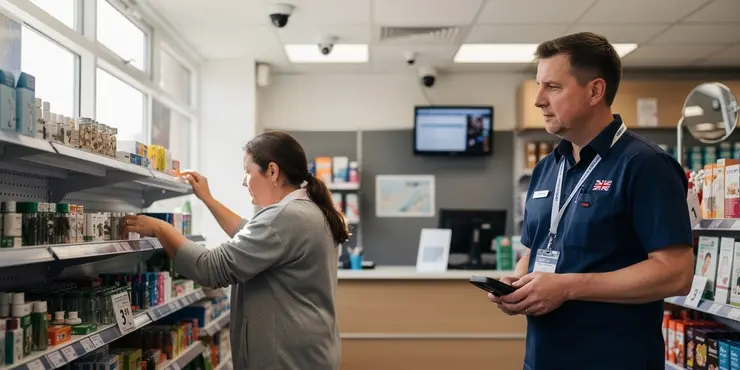
Shoplifters employ a variety of methods to conceal and remove items from stores. Common techniques include hiding merchandise in bags, clothing, or prams, switching price tags to pay less for an item, or simply walking out with items in hand. Some shoplifters may use more sophisticated methods, such as distraction tactics to divert staff attention, or using tools to remove security tags. Retailers implement security measures like CCTV cameras, electronic article surveillance tags, and security personnel to prevent and detect shoplifting attempts.
Impact on Retailers and Society
Shoplifting has a significant impact on retailers, consumers, and the wider economy. For retailers, losses from shoplifting can result in reduced profits, increased prices, and higher insurance costs. This crime represents a substantial part of shrinkage, the loss of inventory not attributed to sales. The costs often translate to higher prices for consumers as businesses raise prices to cover losses. Additionally, it can contribute to job losses in the retail sector if stores close due to increased theft or financial strain. On a broader scale, shoplifting affects the economy by contributing to lost tax revenue and increased policing and legal costs.
Legal Consequences of Shoplifting
In the UK, shoplifting is treated as either a summary or an either-way offense, depending on the severity and circumstances. Summary offenses involve lower-value thefts and are usually tried in magistrates' courts, whereas either-way offenses can be tried in either magistrates' courts or Crown Courts. Penalties for shoplifting range from fines and community service to imprisonment. Rehabilitation programs may also be offered for first-time or minor offenders to address underlying causes and prevent re-offending.
Preventing Shoplifting
Preventing shoplifting requires a multi-faceted approach involving both retailers and communities. Retailers can enhance security through staff training, technological solutions, and store layout adjustments. Community awareness and education play a vital role in prevention, encouraging honesty and respect for property. Cooperation between retailers, police, and community groups can lead to a better understanding of local crime trends and more effective prevention strategies. Collective efforts can reduce shoplifting and its effects while fostering a safer shopping environment.
Understanding Shoplifting
Shoplifting is when someone takes things from a shop without paying. It is against the law in the UK. People who shoplift can work alone or in groups. Some steal because they need money. Others do it because they cannot stop themselves.
Methods of Shoplifting
Shoplifters use many ways to take things. They might hide items in bags or clothes. They might change price tags or just walk out with things. Some use tricks to distract shop workers. Shops use cameras and alarms to stop shoplifting.
Impact on Retailers and Society
Shoplifting affects shops, customers, and the economy. Shops lose money and might have to raise prices. This means things cost more for everyone. Shops might close, causing people to lose jobs. Shoplifting also means lost tax money and costs for police.
Legal Consequences of Shoplifting
If caught shoplifting in the UK, you can face different punishments. Small thefts go to magistrates' courts. Bigger ones might go to Crown Courts. Punishments can include fines, community work, or jail time. Some may go to programs to help them stop stealing.
Preventing Shoplifting
Stopping shoplifting needs teamwork. Shops can train workers and use technology to spot thieves. Communities can teach people to respect others' things. Shops, police, and community groups can work together to stop crime. This makes shops safer for everyone.
Frequently Asked Questions
Shoplifting is the act of stealing goods from a store by concealing them on one's person without paying for them.
Common methods include concealing items in bags, clothing, or on the person, switching price tags, or walking out with an item without paying.
People shoplift for various reasons including financial need, thrill-seeking, peer pressure, or mental health issues such as kleptomania.
Yes, shoplifting is a criminal offense and is considered theft or larceny under law.
Consequences can include fines, community service, restitution, probation, and even jail time, depending on the severity and local laws.
Yes, shoplifting offenses can range from misdemeanor to felony, often depending on the value of the stolen goods.
Stores use security measures like surveillance cameras, security tags, alarm systems, and security personnel to deter and catch shoplifters.
Yes, minors can be charged with shoplifting, but they are usually dealt with in the juvenile justice system.
It's best to alert store employees or security rather than intervene personally, to ensure your own safety.
Yes, it is possible to accidentally leave a store with an item, but intent is key in legal definitions. It's advisable to return and pay for the item if this occurs.
EAS systems use tags or labels attached to items which trigger alarms if not removed or deactivated at the checkout.
Organized retail crime involves professional thieves working in groups to steal large quantities of goods for resale.
Yes, shoplifting leads to loss of revenue for stores, which can result in higher prices for consumers to offset the losses.
There is no single profile, as shoplifters come from all demographics and backgrounds, but they may share certain behavioral traits.
Yes, many jurisdictions allow for a 'shopkeeper's privilege' where employees can detain a suspect in a reasonable manner until authorities arrive.
Commonly shoplifted items include small, high-value goods like cosmetics, electronics, clothing, and over-the-counter medications.
Employees may face increased pressure, scrutiny, and even blame for shoplifting incidents, impacting workplace morale and security procedures.
Technology like inventory management systems, AI-powered surveillance, and loss prevention software helps stores identify and reduce theft.
Yes, many communities and organizations offer educational and rehabilitation programs aimed at preventing shoplifting and altering behaviors.
In some cases, especially for first-time offenses or minor incidents, shoplifting charges can be expunged or sealed from a criminal record after certain conditions are met.
Shoplifting is when someone takes things from a store without paying. They hide the things on their body and leave the store.
There are some ways people might try to take things without paying. They might hide things in bags or clothes. They might also change the price tags or just walk out without paying.
If you find reading difficult, here are some tips and tools that might help:
- Use pictures or symbols to help you understand.
- Ask someone to read with you.
- Use apps or tools that read words out loud.
- Take breaks and read a little bit at a time.
People take things from shops without paying for many reasons. Some people need money. Others do it for fun. Some do it because their friends do it. And some people have a mental health problem called kleptomania that makes it hard for them to stop.
Yes, shoplifting is against the law. It means taking things from a store without paying, and this is called stealing or theft.
If someone breaks the law, they might have to do certain things as a consequence. These can be paying money (called a fine), doing work to help the community, paying back someone they hurt, following rules to stay out of trouble (called probation), or even spending time in jail. What happens depends on how serious the problem is and the laws in that area.
To help understand this better, you can use tools like audiobooks to hear the information or ask someone to explain it in simpler words. Reading with a family member or friend can also make it easier to understand.
Yes, stealing from a store can be a big problem or a small problem. It depends on how much the stolen things are worth.
Stores have ways to stop people from stealing. They use video cameras, special tags on items, loud alarms, and security guards to help catch anyone who tries to take things without paying.
Yes, kids can get in trouble for stealing from a store. But they usually go to a special court for young people.
It is better to tell a shop worker or a security guard if you see something wrong. This way, you can stay safe.
Yes, sometimes people leave a store with something they didn't pay for by mistake. It's important to show you didn't mean to do it. If this happens, it's a good idea to go back to the store and pay for the item.
Stores use special tags on things you can buy. If you try to leave the store with the tag still on, it will make an alarm sound. The tag is removed or turned off when you pay, so the alarm does not go off.
Organized retail crime is when groups of people work together to steal a lot of things from stores. They take these things and sell them to other people.
Yes, when people steal from shops, stores lose money. This means they might make other things cost more to cover what they lost.
There is not just one kind of shoplifter. People who steal from shops can be anyone, from any group or place. But, they might act in some similar ways.
Yes, in many places, store workers can safely hold someone they think stole something until the police get there.
People often steal small things from shops. These things are worth a lot of money. Some of these things are makeup, gadgets, clothes, and medicine you can buy without a prescription.
Workers might feel more stress and worry if people steal from the store. They might feel like they are getting blamed. This can make everyone feel sad or upset at work.
Stores can use different tools to help stop stealing. Some tools are: inventory systems to keep track of items, smart cameras that use computers to watch the store, and special software to prevent theft.
Yes, many groups and places have programs to stop shoplifting and help people change their actions.
Sometimes, if it's your first time or not a big problem, you can have shoplifting charges erased from your record. This can happen if you follow some rules.

Ergsy Search Results
This website offers general information and is not a substitute for professional advice.
Always seek guidance from qualified professionals.
If you have any medical concerns or need urgent help, contact a healthcare professional or emergency services immediately.
Some of this content was generated with AI assistance. We've done our best to keep it accurate, helpful, and human-friendly.
- Ergsy carefully checks the information in the videos we provide here.
- Videos shown by Youtube after a video has completed, have NOT been reviewed by ERGSY.
- To view, click the arrow in centre of video.
- Most of the videos you find here will have subtitles and/or closed captions available.
- You may need to turn these on, and choose your preferred language.
- Go to the video you'd like to watch.
- If closed captions (CC) are available, settings will be visible on the bottom right of the video player.
- To turn on Captions, click settings.
- To turn off Captions, click settings again.