
Get Answers
Introduction to the SENCO Role
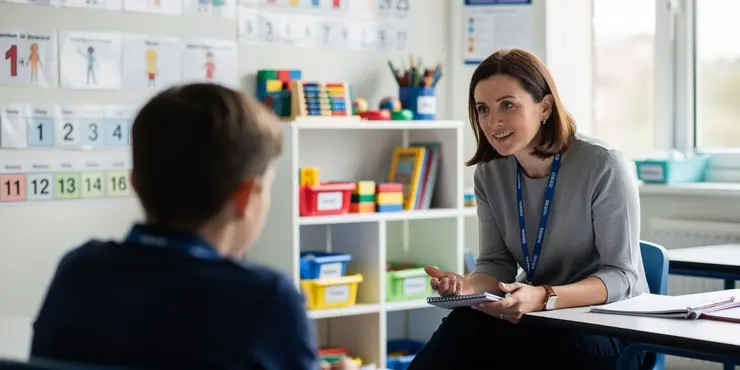
In the UK, the Special Educational Needs Coordinator (SENCO) plays a vital role in managing and supporting the educational needs of pupils with special educational needs and disabilities (SEND). The SENCO is responsible for ensuring that these students receive the necessary support to achieve their full potential and to promote an inclusive educational environment for all.
Understanding Special Educational Needs
Special Educational Needs (SEN) refers to children who have learning difficulties or disabilities that make it harder for them to learn than most children of the same age. Schools have a duty to support these children under the Children and Families Act 2014. The SENCO, as a specialist in this field, leads and coordinates the efforts needed to support SEN students within the school environment.
Key Responsibilities of a SENCO
A SENCO's role involves both strategic and personal aspects. Strategically, they are responsible for developing and implementing the SEN policy within the school. This includes identifying students who have SEN, coordinating their care, and ensuring that necessary provisions and interventions are in place. They maintain records of progress, liaise with teachers and parents, and work closely with external agencies, such as health and social services.
On a personal level, SENCOs often provide direct support to students, developing individual education plans (IEPs) tailored to each student's needs. They also work with teachers, offering insights, training, and resources to equip them with the skills to support SEN students in their classrooms. Additionally, they ensure compliance with the legal requirements regarding SEN education.
Collaboration and Liaison
A significant part of the SENCO role involves collaborating with a wide range of people both within and outside the school. This includes working with classroom teachers to adapt lessons and teaching approaches, meeting with parents to discuss their child's needs and progress, and coordinating with external specialists such as speech therapists, educational psychologists, and occupational therapists. Effective communication and relationship building are crucial skills for a SENCO to ensure the best outcomes for SEN students.
The Impact of a SENCO
The work of a SENCO helps foster a more inclusive school culture and ensures that all students have access to appropriate educational opportunities. By addressing diverse learning needs and providing necessary interventions, SENCOs not only support academic development but also bolster the social and emotional well-being of their students. Through their leadership, SENCOs play a fundamental role in bridging educational gaps and advocating for fairness and equality in education.
What Does a SENCO Do?
In the UK, a SENCO helps kids who have special educational needs (SEND). This means they need extra help to learn. The SENCO makes sure these kids get the help they need to do well in school and makes the school a place where everyone feels included.
What Are Special Educational Needs?
Some children find learning harder than other kids the same age. They might have learning difficulties or disabilities. Schools must help these kids. The SENCO is the expert who leads the school to make sure these kids get the support they need.
What Does a SENCO Do in School?
The SENCO has important jobs to do. They make plans to help children with special needs. They find out which kids need help and make sure they get it. They keep track of how the kids are doing, talk to teachers and parents, and work with doctors or social workers.
SENCOs also help kids directly. They make special education plans for each child. They work with teachers to help them teach these kids better. They also make sure the school follows the rules about special needs education.
Working with Others
SENCOs work with lots of people. They help teachers change lessons so all kids can learn. They talk to parents about their child's needs and progress. They also work with experts like speech therapists or psychologists. Talking and being friendly are important for a SENCO.
Why is a SENCO Important?
SENCOs make schools better places for everyone. They make sure all kids get a chance to learn well. They help children feel good about themselves and happy at school. SENCOs make sure all children are treated fairly and get what they need in education.
Frequently Asked Questions
SENCO stands for Special Educational Needs Coordinator.
The primary role of a SENCO is to manage and coordinate the support for children with special educational needs and disabilities (SEND) within a school.
The SENCO works with teachers, parents, school staff, and external professionals to ensure that the needs of students with SEND are met.
A SENCO identifies students who need support through assessments, teacher observations, and consultations with parents and external specialists.
A SENCO creates Individual Education Plans (IEPs) or similar frameworks to target specific learning goals for students with SEND.
A SENCO supports teachers by providing guidance, resources, and training on strategies to support students with SEND in the classroom.
The SENCO role is important because it ensures that students with SEND receive appropriate support and resources necessary for their learning and development.
A SENCO typically has teaching qualifications and additional training in special educational needs, such as the National Award for SEN Coordination.
A SENCO engages with parents through meetings, regular communication, and involving them in the planning of their child’s educational needs.
The SENCO role can be full-time or part-time, depending on the size of the school and the number of students with SEND.
A SENCO collaborates with educational psychologists, speech and language therapists, and other professionals to support students with SEND.
A SENCO contributes to whole-school policies by promoting inclusive practices and ensuring that SEND considerations are included in school policies and planning.
The SENCO's role in staff training includes organizing and providing training sessions focused on strategies and resources for teaching students with SEND.
SENCOs measure progress through regular assessments, reviewing IEP goals, and adjusting support strategies based on student outcomes.
Yes, a classroom teacher can also be a SENCO, but they must balance both roles, often requiring strong organizational skills and possible additional support.
The SENCO’s role in transition planning is important to ensure that students with SEND are supported when moving between schools or different phases of their education.
A SENCO should review a child's progress regularly, often termly, but it can vary depending on the individual needs of the student.
The SENCO role can vary between types of schools based on the school's size, the number of students with SEND, and specific institutional needs.
In the UK, the SENCO's role is guided by the SEND Code of Practice, while other countries have their own legislation and guidelines regarding SEND.
A SENCO ensures continuity by maintaining detailed records, liaising with all stakeholders, and advocating for necessary resources and interventions.
SENCO means the person who helps children with special learning needs at school.
The main job of a SENCO is to help and support children in school who need extra help with learning or have disabilities.
The SENCO is a special teacher who helps students with extra learning needs. They talk with other teachers, parents, and helpers to make sure these students get the support they need.
A SENCO is a person who helps find students who need extra help at school. They do this by checking how the students are doing, talking to teachers, and talking to parents and other experts.
A SENCO helps make learning plans for kids who need extra help at school. These plans have special goals to help each child learn better.
A SENCO helps teachers. They give advice, tools, and training to help teachers work with students who need extra support in class.
The SENCO job is very important. It helps make sure that children with special educational needs and disabilities (SEND) get the right help and tools they need to learn and grow.
A SENCO is a teacher who has extra training to help children with special needs. They have a special certificate called the National Award for SEN Coordination.
A SENCO talks with parents by having meetings, staying in touch often, and letting them help plan their child's learning at school.
The SENCO helps children who need extra support at school. This job can be full-time or part-time. It depends on how big the school is and how many children need help.
A SENCO is a person who helps students who need extra support. They work with special doctors, experts in talking and understanding, and other helpers to make sure students get the help they need.
The SENCO helps make school rules fair for everyone. They make sure that every child, especially those with special needs, is thought about when making school rules and plans.
The SENCO's job is to help teachers learn how to teach children with special needs.
SENCOs check how well you are doing by giving you tests, looking at your learning plans, and changing how they help you if you need it.
Yes, a classroom teacher can also be a SENCO. This means they do two jobs. They teach and help students with special needs. They need to be good at organizing and might need extra help.
The SENCO helps kids with special needs when they change schools or move to a new class. This makes things easier for them.
The SENCO, who is a special teacher at school, should look at how a child is doing in their school work. They usually check every term, but they might do it more or less often. It depends on what the child needs.
A SENCO is a special person in school who helps kids who need extra support.
SENCO jobs can be different in each school. It depends on:
- How big the school is.
- How many kids need extra help.
- What the school needs.
Use pictures and simple words to help understand.
In the UK, the person who helps children with special needs at school is called the SENCO. They follow special rules called the SEND Code of Practice. Other countries have their own rules to help children with special needs.
A SENCO keeps everything running smoothly. They do this by:
- Keeping good notes about everything.
- Talking with everyone involved.
- Making sure the right help and tools are available.

Ergsy Search Results
This website offers general information and is not a substitute for professional advice.
Always seek guidance from qualified professionals.
If you have any medical concerns or need urgent help, contact a healthcare professional or emergency services immediately.
Some of this content was generated with AI assistance. We've done our best to keep it accurate, helpful, and human-friendly.
- Ergsy carefully checks the information in the videos we provide here.
- Videos shown by Youtube after a video has completed, have NOT been reviewed by ERGSY.
- To view, click the arrow in centre of video.
- Most of the videos you find here will have subtitles and/or closed captions available.
- You may need to turn these on, and choose your preferred language.
- Go to the video you'd like to watch.
- If closed captions (CC) are available, settings will be visible on the bottom right of the video player.
- To turn on Captions, click settings.
- To turn off Captions, click settings again.