
Get Answers
Introduction
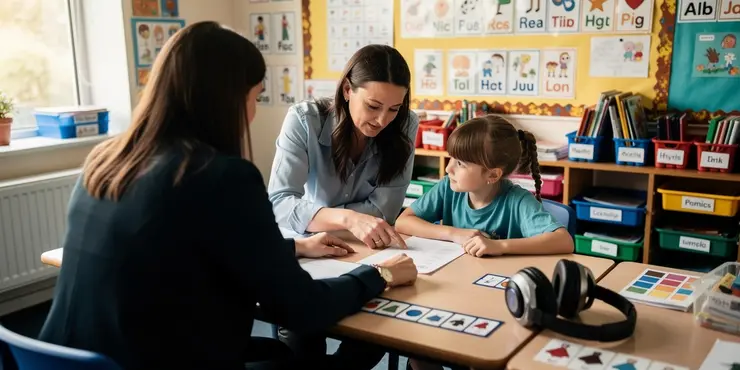
In the UK, children with special educational needs and disabilities (SEND) require tailored support to flourish within educational environments. Teachers play a crucial role in ensuring these children's needs are met, fostering an inclusive culture that enables every student to reach their potential. Understanding the multifaceted role of teachers in supporting SEND children is key to appreciating the positive impact they can make on these students' educational journeys.
Identifying SEND Needs
Teachers are often among the first professionals to identify potential SEND in children. By closely observing students' behaviors and academic performance, teachers can recognize signs that may indicate a child requires additional support. Early identification is crucial, as it allows for timely intervention that can significantly enhance educational outcomes. Teachers can then collaborate with parents and special educational needs coordinators (SENCOs) to assess the child's specific needs and plan appropriate support strategies.
Adapting Teaching Strategies
One of the primary roles teachers play in supporting SEND children involves adapting their teaching strategies to accommodate various learning needs. This might include differentiating instruction by modifying the content, process, or learning environment to suit individual students. For example, employing a variety of teaching aids, such as visual supports or assistive technology, can help SEND students better understand the material. Additionally, providing alternative activities or working in small groups can allow these children to engage more effectively with the curriculum.
Creating an Inclusive Environment
Teachers are essential in fostering an inclusive classroom environment where all students feel valued and supported. They encourage understanding and acceptance among students, promoting a culture where diverse needs are respected. Strategies to achieve this may include whole-class discussions about diversity and disability, celebrating the achievements of all students, and implementing buddy systems where peers support each other. By creating an inclusive atmosphere, teachers help SEND children feel more connected to their peers and more confident in engaging with classroom activities.
Collaborating with Specialists and Families
Effective support for SEND children often requires a collaborative approach. Teachers work alongside special educators, SENCOs, educational psychologists, and various therapists to design and implement personalized learning plans. In addition, maintaining strong communication lines with families is essential to ensure consistency between school and home support systems. Teachers regularly update parents on their child's progress, challenges, and achievements, allowing them to take an active role in their child's education.
Conclusion
In conclusion, teachers play a pivotal role in supporting SEND children within the UK education system. Through early identification, tailored teaching strategies, fostering an inclusive environment, and collaborating with specialists and families, teachers contribute significantly to the educational and personal development of these students. Their commitment and dedication to addressing the unique needs of SEND children ensure that these students have the opportunity to succeed and thrive in their educational journey.
Introduction
In the UK, some kids need special help to do well at school. These kids are called SEND, which stands for Special Educational Needs and Disabilities. Teachers help them a lot so they can learn and do their best. It's important to see how teachers help these kids because their help makes a big difference in the kids' learning and growing.
Finding Out Who Needs Help
Teachers are often the first to notice if a kid might need extra help. They watch how kids act and learn in class. If they see a kid struggling, they can help quickly. This early help is important because it gives the kid a better chance to do well in school. Teachers work with the kid's parents and special helpers to figure out what the kid needs and how to help them best.
Changing How We Teach
Teachers change how they teach to help SEND kids learn better. They might use different tools like pictures or technology to make things easier to understand. Teachers also plan different activities or use small groups so every kid can join in and learn in a way that works for them.
Making Everyone Feel Welcome
Teachers make sure every kid feels welcome and supported in the classroom. They teach kids to understand and accept each other. This might include talking about differences and letting kids help each other. When everyone feels included, SEND kids feel happier and more confident to join in class activities.
Working with Others
Helping SEND kids is a team effort. Teachers work with special helpers like psychologists and therapists. They also talk a lot with families to make sure kids get help both at school and at home. By keeping everyone updated on how the kid is doing, families can help their children learn and grow.
Conclusion
Teachers are very important for helping SEND kids in the UK. They find out who needs help, change their teaching ways, make everyone feel included, and work with families and specialists. Thanks to teachers, SEND kids have a better chance to learn and do well in school.
Frequently Asked Questions
SEND stands for Special Educational Needs and Disabilities.
Teachers identify SEND children through observations, assessments, and consultations with specialists if necessary.
Teachers play a crucial role by creating inclusive learning environments, differentiating instruction, and collaborating with specialists to support SEND children.
Teachers can differentiate instruction by modifying the content, processes, products, and learning environment to cater to diverse learning needs.
Collaboration with parents, specialists, and other educators ensures a comprehensive support network for SEND children, addressing their needs effectively.
Accommodations can include modified materials, extra time on tests, assistive technology, and alternative assessment strategies.
Teachers can promote inclusivity by adopting an attitude of acceptance, celebrating diversity, and implementing universal design for learning.
Assessment helps in understanding the abilities and needs of SEND students, guiding instructional decisions and measuring progress.
Teachers can maintain regular communication through meetings, reports, and updates to ensure parents are informed and involved in their child's education.
An IEP is a document developed for each public school child who needs special education, outlining specific educational goals and services.
Teachers can use technology like text-to-speech software, interactive whiteboards, and educational apps to support various learning needs.
Behavior management strategies include positive reinforcement, clear expectations, and individualized behavior intervention plans.
Teachers plan lessons using differentiated instruction, flexible grouping, and scaffolding to meet the varied needs of learners.
Professional development keeps teachers informed about best practices, new methodologies, and advancements in special education.
Teaching assistants provide additional support in the classroom, assist with individual or small group work, and help implement IEPs.
Teachers provide appropriate accommodations, ensure accessible environments, and collaborate with specialists to support physical disabilities.
UDL is a framework for teaching that provides all students with equal opportunities to learn by catering to diverse learning preferences.
Teachers can use visual aids, sign language, augmentative communication devices, and collaborate with speech and language therapists.
Teachers can motivate SEND students by setting achievable goals, using interests to drive learning, and recognizing and celebrating successes.
Challenges include diverse needs, limited resources, time constraints, and ensuring adequate training and support for teachers.
SEND means Special Educational Needs and Disabilities. These are extra help some children might need at school to learn better.
Teachers find children who need extra help by watching them, giving them tests, and talking to experts when needed.
Teachers have an important job. They make sure all children can learn well. They change how they teach to help each child. They also work with experts to help children with special needs.
Teachers can change how they teach to help all students learn. They can use different ideas, ways of teaching, things to make, and places to learn.
Working together with parents, experts, and teachers helps support children with special learning needs. This teamwork makes sure the children get the help they need.
Accommodations are changes that can help you learn better. These might include:
- Materials that are easier to understand
- More time to finish tests
- Special tools like a computer or tablet to help
- Different ways to show what you have learned
Teachers can help everyone feel included by being kind to everyone, celebrating differences, and using different ways to help students learn.
Assessment helps teachers know what SEND students can do and what they need help with. It guides how teachers teach and checks if students are making progress.
Teachers can talk to parents often. They can have meetings, write reports, and give updates to make sure parents know what is happening with their child's learning.
An IEP is a paper that helps plan school for kids who need extra help in their learning. It says what goals the child has and what help they will get at school.
Teachers can use technology to help students learn. They can use tools like talking computers, smart boards, and learning apps to support different ways people learn.
Ways to help with behavior include giving rewards when someone does something good, telling them clearly what you want them to do, and making special plans if someone needs extra help.
Teachers make lessons in different ways. They use different tools and groups. This helps all students learn in the best way for them.
Professional development helps teachers learn the best ways to teach. It shows them new ways to help students and teaches them better ways to help kids who need extra support.
Teaching assistants help teachers in the classroom. They work with one person or small groups of students. They also help with special learning plans.
Teachers help students with physical disabilities by making things easier for them. They make sure classrooms are set up so everyone can use them. Teachers also work with other experts to give the help students need.
UDL is a way of teaching that helps every student learn. It makes sure all students have the same chances to learn, no matter how they like to learn.
Teachers can use pictures and signs to help students understand. They can also use special devices that help people talk and work with experts who help with speaking and understanding words.
Teachers can help students by:
- Setting small and easy goals they can reach.
- Finding out what they like and using it to make learning fun.
- Saying "Well done!" when they do something good.
To make learning easier, teachers can use:
- Pictures and videos to explain things.
- Extra time for tasks.
- Reading tools or apps.
Ask for help if you are stuck. It's okay to ask questions.
There are some problems we face. People have different needs. We don’t have enough resources. There is not much time. We also need to make sure teachers get the right help and training.

Ergsy Search Results
This website offers general information and is not a substitute for professional advice.
Always seek guidance from qualified professionals.
If you have any medical concerns or need urgent help, contact a healthcare professional or emergency services immediately.
Some of this content was generated with AI assistance. We've done our best to keep it accurate, helpful, and human-friendly.
- Ergsy carefully checks the information in the videos we provide here.
- Videos shown by Youtube after a video has completed, have NOT been reviewed by ERGSY.
- To view, click the arrow in centre of video.
- Most of the videos you find here will have subtitles and/or closed captions available.
- You may need to turn these on, and choose your preferred language.
- Go to the video you'd like to watch.
- If closed captions (CC) are available, settings will be visible on the bottom right of the video player.
- To turn on Captions, click settings.
- To turn off Captions, click settings again.