
Get Answers
Introduction to CPR and Defibrillation
Cardiopulmonary resuscitation (CPR) is a lifesaving technique used in emergencies when someone's heartbeat or breathing has stopped. While CPR alone can help maintain blood flow to the brain and heart, it often needs to be paired with defibrillation to restart the heart. This is where the role of a defibrillator becomes crucial in the CPR process.
Understanding the Defibrillator
A defibrillator is a medical device designed to deliver an electric shock to the heart. It is used to treat life-threatening cardiac dysrhythmias, specifically ventricular fibrillation (VF) and non-perfusing ventricular tachycardia (VT). In these conditions, the heart's electrical activity is chaotic, causing the heart to stop effectively pumping blood. The shock delivered by a defibrillator can help restore a normal rhythm.
The Importance of Defibrillation in CPR
During a cardiac arrest, CPR can help maintain some circulation, but it does not restart the heart. Defibrillation, on the other hand, is essential to reestablish the heart’s rhythm. For every minute defibrillation is delayed, the chances of survival decrease by about 10%. Therefore, rapid defibrillation following CPR can significantly enhance the chances of survival.
Types of Defibrillators
There are several types of defibrillators, including Automated External Defibrillators (AEDs), Manual External Defibrillators, and Implantable Cardioverter Defibrillators (ICDs). In public settings and for laypeople, AEDs are the most common. They are designed to be user-friendly, providing voice and visual prompts to guide the rescuer through the defibrillation process.
Using a Defibrillator During CPR
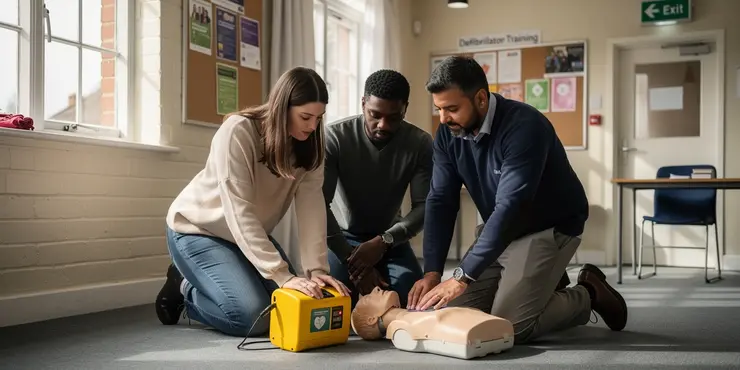
When using an AED during CPR, it is important to follow the device's instructions. The AED will assess the heart's rhythm and decide if a shock is needed. If recommended, the rescuer should ensure no one is touching the patient before delivering the shock. After the shock, CPR should be continued immediately to maintain circulation until emergency services arrive or the individual shows signs of recovery.
Public Access Defibrillation in the UK
In the UK, there has been a concerted effort to increase the availability of public access defibrillators. These devices are found in many public places, such as schools, shopping centres, and sporting venues. Their presence allows bystanders to assist in cardiac emergencies, providing essential treatment before professional medical assistance can arrive.
Conclusion
Defibrillators play a vital role in the chain of survival during cardiac emergencies. While CPR is important to maintain blood flow, the use of a defibrillator is crucial for the restoration of a regular heart rhythm. As more public access defibrillators become available, the chances of surviving cardiac arrest in public places improve significantly. Therefore, understanding and utilising defibrillators effectively alongside CPR can save lives.
Introduction to CPR and Defibrillation
Cardiopulmonary resuscitation, or CPR, is a way to help someone when their heart or breathing stops. CPR can help keep blood moving to the brain and heart. But, to get the heart beating again, we often need a special machine called a defibrillator. This machine is very important when giving CPR.
Understanding the Defibrillator
A defibrillator is a machine that can send an electric shock to the heart. This shock can help fix serious heart problems like when the heart's beats are mixed up. These problems are called ventricular fibrillation (VF) and ventricular tachycardia (VT). When the heart beats the wrong way, it can stop pumping blood. The defibrillator's shock can help the heart beat normally again.
The Importance of Defibrillation in CPR
When someone's heart stops, CPR helps keep blood moving but doesn’t make the heart beat again. The defibrillator can restart the heart. Every minute we wait to use the defibrillator makes survival less likely. That’s why using a defibrillator quickly after starting CPR can save lives.
Types of Defibrillators
There are different kinds of defibrillators. The most common for public places is the Automated External Defibrillator, or AED. AEDs are easy to use and can tell you what to do with simple instructions and pictures. They are designed for anyone to use, even if you are not a doctor.
Using a Defibrillator During CPR
When you use an AED with CPR, follow the device's instructions. The AED will check the heart and tell you if a shock is needed. Make sure no one is touching the person when giving the shock. After the shock, start CPR again right away until help arrives or the person starts moving.
Public Access Defibrillation in the UK
In the UK, many places now have defibrillators that anyone can use. You can find them in schools, shopping malls, and sports places. These defibrillators help bystanders give quick help during a heart emergency, even before doctors arrive.
Conclusion
Defibrillators are very important in helping people during heart emergencies. CPR helps keep blood moving, while defibrillators help get the heart beating right again. As more people can use defibrillators, more lives can be saved when someone’s heart stops working.
Frequently Asked Questions
The primary purpose of a defibrillator in CPR is to deliver an electric shock to the heart in order to restore a normal heart rhythm.
A defibrillator analyzes the heart's rhythm and, if necessary, delivers an electrical shock to help re-establish a normal pattern.
A defibrillator should be used as soon as it is available if a person is unresponsive and not breathing or not breathing normally.
There are automated external defibrillators (AEDs), manual defibrillators used by healthcare professionals, and implantable defibrillators.
Yes, AEDs are designed for use by the general public with clear instructions and are often found in public places.
CPR should be continued until the defibrillator is ready to analyze the heart rhythm or deliver a shock.
Defibrillators are integrated into the CPR process by pausing CPR briefly to allow the AED to analyze the heart rhythm and administer a shock if needed.
Defibrillation is important during cardiac arrest because it can restore a normal heart rhythm, significantly increasing the chances of survival.
A defibrillator is effective primarily for ventricular fibrillation and pulseless ventricular tachycardia.
Continue performing CPR until emergency medical services arrive and can provide a defibrillator.
Yes, defibrillators are safe to use when the instructions are properly followed; AEDs provide voice prompts and guidance.
Turn on the AED, attach electrode pads to the patient as shown in the diagrams, follow the device's prompts, and administer a shock if advised.
Yes, many AEDs have pediatric settings or pads that can be used for children.
A defibrillator should be used as soon as possible, ideally within the first few minutes of cardiac arrest.
No, defibrillators complement CPR but do not replace it; CPR should be continued to provide circulation until a defibrillator can be used.
AEDs are designed to only deliver a shock if it's necessary, but incorrect use can delay treatment; always follow AED prompts carefully.
Not all cardiac arrests require defibrillation; defibrillation is needed for specific heart rhythms like ventricular fibrillation.
Defibrillation is indicated when a person is in cardiac arrest with a shockable rhythm such as ventricular fibrillation.
Early defibrillation is crucial because it can quickly restore normal heart function and increase the chance of a successful resuscitation.
Defibrillation, if administered promptly, can significantly increase survival rates by restoring effective heart rhythm.
A defibrillator helps when doing CPR. It gives the heart an electric shock to make it beat normally again.
A defibrillator is a machine that checks how the heart is beating. If the heart is not beating right, it can give a shock to help it beat normally again.
If someone is not waking up and is not breathing or breathing in a strange way, use a defibrillator as soon as you can.
There are three types of defibrillators:
- 1. AEDs. These are machines that can help restart a person's heart. They are easy to use.
- 2. Manual defibrillators. Doctors and nurses use these machines in hospitals.
- 3. Implantable defibrillators. These are small machines that go inside a person's body to help keep their heart beating correctly.
If you want to learn more easily, you can use pictures, videos, or ask for help from someone you trust.
Yes, AEDs (a special machine to help someone’s heart) are made for everyone to use. They have simple instructions. You can find them in many public places.
Keep doing CPR until the defibrillator is ready to check the heart or give a shock.
When using a defibrillator during CPR, helpers should stop CPR for a moment. This gives the defibrillator time to check the heart's beat and give a shock if it is needed.
A defibrillator is a special machine that helps when the heart stops working properly. It can make the heart beat normally again and help save a person's life.
A defibrillator is a machine that helps when the heart is not beating right. It works well when the heart is shaking or beating too fast without a pulse.
Keep doing CPR until help comes. They will have a special machine to help.
Yes, defibrillators are safe when you use them the right way. AEDs talk to you and help you know what to do.
First, turn on the AED machine. Then, stick the pads onto the person, like in the pictures. Listen to what the machine tells you to do. If it says to give a shock, press the button.
Yes, many AEDs can be used for children. They have special settings or pads for kids.
You should use a defibrillator right away, if you can, in the first few minutes when someone's heart stops.
No, defibrillators help CPR but do not take its place. Keep doing CPR to help blood move until you can use a defibrillator.
AEDs (these are special machines) give a shock to help a heart. They only work when the shock is needed. If you use them the wrong way, they can take longer to help. Always listen and follow what the AED tells you to do.
Sometimes, when the heart stops, we need to use a special machine called a defibrillator. But this is only needed for some heart problems. One of these problems is called ventricular fibrillation.
Defibrillation is used when someone's heart stops and needs help to start beating right again. It is used when the heart has a problem called ventricular fibrillation.
When the heart stops, using a defibrillator fast can help the heart work again and save lives. It is very important to use it quickly.
If you use a defibrillator quickly, it can help save lives. It makes the heart beat correctly again.

Ergsy Search Results
This website offers general information and is not a substitute for professional advice.
Always seek guidance from qualified professionals.
If you have any medical concerns or need urgent help, contact a healthcare professional or emergency services immediately.
Some of this content was generated with AI assistance. We've done our best to keep it accurate, helpful, and human-friendly.
- Ergsy carefully checks the information in the videos we provide here.
- Videos shown by Youtube after a video has completed, have NOT been reviewed by ERGSY.
- To view, click the arrow in centre of video.
- Most of the videos you find here will have subtitles and/or closed captions available.
- You may need to turn these on, and choose your preferred language.
- Go to the video you'd like to watch.
- If closed captions (CC) are available, settings will be visible on the bottom right of the video player.
- To turn on Captions, click settings.
- To turn off Captions, click settings again.