
Speak To An Expert
Get clear, personalised advice for your situation.
Jot down a few questions to make the most of your conversation.
The Role of Community Hubs in Supporting Helpers
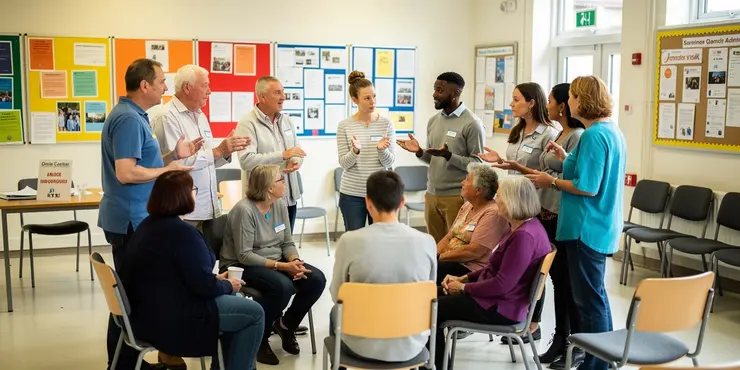
Community hubs have emerged as vital focal points in towns and cities across the UK, playing a crucial role in supporting individuals who are involved in helping professions and voluntary roles. These hubs offer a range of activities and resources to support the mental well-being and practical needs of those who dedicate their time and efforts to helping others.
Providing Resources and Training
Community hubs often serve as resource centres, offering valuable training and information for helpers. They may host workshops, seminars, and training sessions aimed at equipping volunteers and professionals with the necessary skills to address a variety of community needs. From first aid courses to mental health support training, these hubs are instrumental in ensuring that helpers are well-prepared and qualified.
Facilitating Networking Opportunities
Another critical role of community hubs is facilitating connections among helpers. By bringing together volunteers, social workers, educators, and other community-focused individuals, these hubs foster an environment of collaboration. Networking events and informal gatherings provide opportunities for sharing experiences and best practices, enabling helpers to build a support network that can enhance their effectiveness and resilience.
Promoting Mental Health and Well-being
The work of community helpers can often be demanding and emotionally taxing. Community hubs offer a sanctuary where they can access mental health resources, counselling sessions, and peer support groups. Recognising the challenges faced by those in helping roles, these hubs prioritise mental health support, ensuring that helpers have access to the care and guidance they need to maintain their well-being while continuing their vital work.
Encouraging Volunteerism and Community Engagement
Community hubs also play an essential role in promoting volunteerism and encouraging broader community engagement. By highlighting volunteer opportunities and showcasing the positive impact of community work, these hubs inspire others to get involved. They provide a platform for recruiting new volunteers and celebrating the achievements of those already committed to helping roles, thereby reinforcing the value of community service.
Offering Flexible Spaces for Community Activities
Many community hubs offer flexible spaces that can be adapted for various activities and meetings, providing helpers with the facilities they need to meet, plan, and execute their initiatives. These spaces are often equipped with the necessary tools and technology to support diverse activities, from planning sessions to community events, thereby enhancing the ability of helpers to collaborate effectively.
Conclusion
In summary, community hubs are indispensable in supporting helpers across the UK. By providing resources, fostering connections, promoting mental health, and facilitating volunteerism, these hubs empower those in helping roles to deliver more effective and sustainable community services. As community hubs continue to evolve, their role in supporting and uplifting helpers remains central to their mission, ensuring a resilient and compassionate society.
The Role of Community Hubs in Supporting Helpers
Community hubs are special places in towns and cities in the UK. They help people who work in jobs helping others or who volunteer their time. These hubs offer different activities and things to help with mental well-being and practical needs for those who spend their time helping others.
Providing Resources and Training
Community hubs give important resources and training to helpers. They have workshops, seminars, and training sessions. These help volunteers and professionals learn new skills they need. Hubs teach things like first aid and how to support mental health. This helps helpers be ready and qualified to help the community.
Facilitating Networking Opportunities
Community hubs also help helpers meet each other. They bring together volunteers, social workers, teachers, and others who care about the community. These hubs hold events where people share their experiences and practices. This helps them make friends and get support, which makes them better at what they do.
Promoting Mental Health and Well-being
Helping others can be tough and draining. Community hubs offer a safe space where helpers can find mental health resources and counselling. They also have peer support groups. These hubs know helpers face challenges, so they make sure to support their mental health. This helps helpers continue their important work.
Encouraging Volunteerism and Community Engagement
Community hubs are important for getting more people to volunteer and join in the community. They show people how good volunteering can be. Hubs talk about volunteer opportunities and celebrate what volunteers achieve. This encourages more people to help and shows how valuable community service is.
Offering Flexible Spaces for Community Activities
Community hubs have spaces that can be used for different activities and meetings. These spaces have tools and technology to help. Helpers can use these spaces to meet, plan, and run their events. This makes it easier for them to work together and help the community.
Conclusion
In summary, community hubs are very important in helping helpers across the UK. They provide resources, help people connect, support mental health, and encourage volunteering. These hubs help people in helping roles do better and longer-lasting work for the community. As they develop, their role in supporting helpers remains key to keeping a caring society.
Frequently Asked Questions
A community hub is a focal point within a community that provides a range of services and activities designed to support and strengthen the local area.
Community hubs support helpers by providing resources, training, networking opportunities, and a physical space for organizing activities and services.
Community hubs typically offer services such as education and training programs, social activities, health and wellbeing services, and space for meetings and events.
Yes, community hubs can offer training programs for volunteers to help them gain necessary skills and knowledge.
In crisis situations, community hubs can act as central points for coordinating relief efforts, disseminating information, and providing support to affected individuals.
Community hubs foster engagement by providing a space for community members to come together for events, discussions, and cooperative projects.
Yes, many community hubs offer mental health support services or act as referral points for mental health resources.
Community hubs facilitate networking by hosting events, workshops, and activities where helpers can meet and connect with each other.
Community hubs contribute to local economic development by supporting small businesses, providing workforce training, and promoting local entrepreneurship.
Yes, community hubs often provide access to technology and offer training on digital skills to bridge the digital divide.
Community hubs support inclusion by hosting culturally diverse events, providing services for marginalised groups, and promoting intercultural dialogue.
Community hubs support education by offering tutoring, literacy programs, and workshops for both children and adults.
Yes, many community hubs participate in environmental sustainability efforts through initiatives like community gardens, recycling programs, and educational workshops.
In rural areas, community hubs are vital for providing access to services that might otherwise be limited due to geographic constraints.
Community hubs support older adults through social activities, health programs, and by connecting them with necessary community services.
Challenges include securing funding, managing resources, and ensuring community engagement and participation.
Yes, community hubs may offer food programs, host community kitchens, or serve as distribution points for food banks.
People can get involved by attending events, volunteering, offering services, or participating in programs offered by the hub.
Yes, community hubs frequently collaborate with local governments, NGOs, schools, and other community organizations to enhance their offerings.
Funding sources can include government grants, private donations, fundraising events, and partnerships with businesses and non-profits.
A community hub is a special place in a neighborhood. It offers different services and fun activities. These help make the neighborhood stronger and better.
Community hubs help people who want to help others. They give them things they need, like information and tools. They teach them how to help better. Helpers can also meet other helpers there. They have a space where people can plan and do activities and services.
Community hubs are places where people can do lots of things. They have:
- Classes and lessons to help you learn new things.
- Fun activities to do with others.
- Help to stay healthy and feel good.
- Rooms to meet with people and have events.
If you want help reading, you can try using audiobooks or ask someone to read with you.
Yes, community centers can have training sessions for helpers. This helps them learn new skills.
During emergencies, community hubs can help people. They work as main places to organize help, share information, and support those who need it.
Here are some ways to communicate clearly:
- Use short sentences.
- Use simple words.
- Repeat key information.
Supportive tools:
- Text-to-speech apps can read the words out loud.
- Visual aids like pictures can help explain ideas.
Community hubs are places where people can meet. They help people join in events, talk to each other, and work together on group projects.
Yes, lots of local centers help people who need mental health support. They can also tell you where to find other places that help with mental health.
Community hubs are places where people come together. They have events, workshops, and fun activities. Helpers can meet and make friends there.
Community hubs help the local economy in a few ways. They support small businesses, teach people skills for jobs, and encourage starting new businesses in the area.
Yes, community centers can help people use computers and the internet. They also teach how to use technology better.
Community places help everyone feel included. They do this by having events from different cultures, giving help to people who might feel left out, and encouraging people from different cultures to talk to each other.
Community hubs help with learning. They have tutoring, reading programs, and workshops for kids and grown-ups.
Yes, many community places help the environment. They do things like make gardens, recycle, and teach classes.
In the countryside, community centers are very important. They help people get services that are hard to find because they live far away.
Community hubs help older people by organizing fun activities, health programs, and connecting them to important services they need.
Big problems can be getting money, using things well, and getting people in the community to join in and help.
Yes, community hubs can help with food. They might have food programs, places to cook together, or give out food from food banks.
You can join in by going to events, helping out as a volunteer, giving your services, or joining in programs at the hub.
Yes, community hubs often work together with local governments, charities, schools, and other groups to offer more help.
Money for projects can come from different places. It can come from the government, people giving money, special events to raise money, and working with businesses or other groups.

Ergsy Search Results
This website offers general information and is not a substitute for professional advice.
Always seek guidance from qualified professionals.
If you have any medical concerns or need urgent help, contact a healthcare professional or emergency services immediately.
Some of this content was generated with AI assistance. We've done our best to keep it accurate, helpful, and human-friendly.
- Ergsy carefully checks the information in the videos we provide here.
- Videos shown by Youtube after a video has completed, have NOT been reviewed by ERGSY.
- To view, click the arrow in centre of video.
- Most of the videos you find here will have subtitles and/or closed captions available.
- You may need to turn these on, and choose your preferred language.
- Go to the video you'd like to watch.
- If closed captions (CC) are available, settings will be visible on the bottom right of the video player.
- To turn on Captions, click settings.
- To turn off Captions, click settings again.