
Get Answers
How public works can affect a home business
If roadworks, rail upgrades, utility works or other public projects affect your home business, the first question is whether you have suffered a loss that the law recognises. In the UK, the strongest rights usually arise where there is physical damage, interference with access, or a formal legal notice from the authority or contractor.
If you run a business from home and rely on clients visiting you, disruption can matter even if your property itself is not damaged. Loss of passing trade, reduced access, noise, dust, or parking restrictions may all affect you, but compensation is not automatic. Much depends on how serious the interference is and whether it amounts to a legal nuisance or an actionable loss.
Access to your home office and client visits
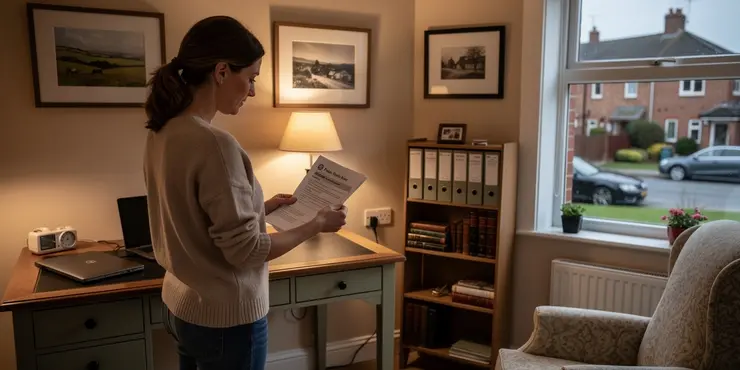
Where your home office depends on client visits, access is especially important. If public works make it difficult for clients to reach your home, the impact may be more serious than for someone who works entirely online. Temporary closures, diversions, suspension of parking, or blocked pavements can all reduce footfall and appointments.
You should keep records of cancelled meetings, reduced bookings, and any extra time or costs caused by the disruption. Evidence such as diary entries, emails from clients, photos, and receipts can help show the real effect on your business. This is useful if you later seek compensation or challenge the works.
Possible rights and claims
If the works are being carried out by a utility company, local authority, or contractor, there may be a complaints process or a compensation scheme. In some cases, you may be able to claim for proven losses, especially where access is blocked for a significant period. If your property value is affected or land is taken, different legal rules may apply.
You may also have rights where the works create an unreasonable interference with your use of the property. However, the law distinguishes between inconvenience and a legal wrong. Minor disruption is often treated as part of ordinary life, even when it is frustrating for business owners.
What you should do next
Start by contacting the body responsible for the works and ask for the timetable, access arrangements, and any compensation process. If clients cannot reach you, ask whether alternative parking, pedestrian access, or temporary signage can be provided. Keep a written trail of every complaint and response.
If the losses are significant, speak to a solicitor who understands property and business loss claims. They can assess whether you have a claim in nuisance, negligence, or under specific statutory powers. Early advice is often important, because time limits may apply.
Frequently Asked Questions
Public works affecting home business or travel rights for home office client visits include government construction or infrastructure projects such as road closures, utility upgrades, sidewalk work, transit changes, or access restrictions. These projects can affect customer access, delivery schedules, parking, noise levels, and the ability to meet clients at a home office. The impact depends on the scope, duration, and location of the work.
Eligibility depends on the specific program, law, or local policy governing the public works project. Some programs only cover direct property impacts, while others may consider business interruption, access limitations, or documented losses tied to reduced client visits. Home-based business owners should review local rules, prove the impact, and keep records of losses or access barriers.
They can make it harder for clients to reach the home office by changing road patterns, reducing parking, or creating detours. Even temporary construction can discourage visits if access is confusing or unsafe. Clear signage, alternate directions, and updated appointment instructions can help reduce disruption.
Useful documentation typically includes before-and-after photos, appointment logs, canceled meeting records, income statements, delivery delays, maps showing access changes, and notices from the public agency. Written statements from clients or contractors may also help. The more clearly the records connect the public works to the business loss, the stronger the claim.
Owners can update clients in advance, provide alternate routes, shift meetings to virtual formats, reschedule visits, and add clear parking or entry instructions. Posting signs, adjusting business hours, and coordinating with nearby businesses can also help. Preparing a contingency plan before work begins usually reduces missed appointments.
Property owners may have rights under local, state, or federal law if public works materially interfere with access, but those rights vary widely. Some situations allow claims for temporary inconvenience, while others require substantial impairment or permanent damage. Owners should review the project notice, local compensation rules, and any applicable eminent domain or nuisance laws.
Public works can remove street parking, limit driveway access, or create no-parking zones near the home office. This can discourage client visits and make appointments less practical. Business owners should identify nearby legal parking options and communicate them clearly to clients.
Possibly, but it depends on the nature of the loss and current tax rules. Some expenses caused by business disruption, alternative transportation, or temporary workspace changes may be deductible if they are ordinary and necessary business expenses. A tax professional should review the facts, because personal losses and reimbursed losses are treated differently.
The owner should contact the public works agency immediately, document the blockage, request a timeline and alternative access plan, and notify clients about the issue. If the blockage materially affects business operations, the owner may also ask about accommodation, access permits, or compensation. Keeping a detailed record of dates and impacts is important.
They can delay package delivery, limit contractor access, or make service vehicles unable to reach the property. This may interrupt supplies, equipment repairs, or scheduled maintenance. Providing delivery instructions and temporary access details can reduce missed or delayed service calls.
Yes, many local jurisdictions have rules about construction hours, access preservation, noise, dust control, and notice requirements in residential areas. If a home office operates in a neighborhood, these rules can be especially important because they affect both living conditions and business operations. Local ordinances and project permits usually control the details.
There is no single time limit that applies everywhere. Some claims arise from brief but severe disruptions, while others require a longer period of interference. The relevant standard usually depends on the governing law, the extent of access loss, and whether the impact is temporary or ongoing.
Temporary inconvenience is a minor disruption that a business can reasonably work around, such as short-term noise or a brief detour. Actionable harm usually involves more serious interference, such as sustained loss of access, major client cancellations, or measurable revenue decline. The legal threshold depends on the applicable jurisdiction and facts.
If public works reduce accessible parking, block ramps, or create unsafe walking paths, they may trigger accessibility concerns. Home offices that receive clients may need to provide alternate accessible routes or meeting arrangements when possible. The responsible agency may also have obligations to maintain or restore accessible access during construction.
Yes, if the conditions create a real safety concern, the owner can choose to suspend in-person visits and move meetings online or to another location. Safety can include heavy equipment, poor visibility, unstable walkways, or hazardous traffic patterns. The owner should communicate the temporary change clearly and document the reason.
Notice requirements vary by agency and project type, but many public works projects require advance notice to nearby residents and affected property owners. Notices often describe the scope, schedule, access restrictions, and contact information for concerns. If the project is expected to affect client access, early notice is especially important for home-based businesses.
The owner can compare revenue before, during, and after the project, track canceled appointments, and estimate lost transactions attributable to access problems. Supporting evidence may include client messages, appointment calendars, and reduced foot traffic or referrals. A clear, documented method helps distinguish project-related losses from normal business fluctuation.
Keep notices, emails, photos, videos, maps, invoices, appointment logs, cancellation records, and notes about dates and times of disruptions. Retain proof of extra costs such as signage, alternate parking, temporary office rentals, or delivery rerouting. Good records make it easier to resolve insurance, tax, or compensation disputes later.
Insurance may help only if the policy covers business interruption, access loss, or related extra expenses, and many policies exclude government construction or off-premises access issues. The owner should review policy language, document the disruption, and notify the insurer promptly if a claim may exist. A broker or attorney can help interpret coverage terms.
Legal help is advisable when the project causes major access loss, repeated client cancellations, property damage, disputed compensation, or possible violation of access rights. An attorney can assess whether there is a claim under local law, eminent domain principles, nuisance rules, or contract protections. Early advice is useful because some claims have short deadlines.

Ergsy Search Results
This website offers general information and is not a substitute for professional advice.
Always seek guidance from qualified professionals.
If you have any medical concerns or need urgent help, contact a healthcare professional or emergency services immediately.
Some of this content was generated with AI assistance. We've done our best to keep it accurate, helpful, and human-friendly.
- Ergsy carefully checks the information in the videos we provide here.
- Videos shown by Youtube after a video has completed, have NOT been reviewed by ERGSY.
- To view, click the arrow in centre of video.
- Most of the videos you find here will have subtitles and/or closed captions available.
- You may need to turn these on, and choose your preferred language.
- Go to the video you'd like to watch.
- If closed captions (CC) are available, settings will be visible on the bottom right of the video player.
- To turn on Captions, click settings.
- To turn off Captions, click settings again.