
Get Answers
What Is a Hair Graft?
A hair graft is a small piece of tissue taken from the donor area, usually the back or sides of the head. Each graft can contain one to four hairs, depending on the natural grouping of your follicles.
When clinics talk about the number of grafts needed, they are referring to how many of these follicular units will be transplanted. The exact number depends on how much hair loss you have and where you want the new hairline or density.
How Many Grafts Might You Need?
The number of grafts needed varies from person to person. A small receding hairline may need around 1,500 to 2,000 grafts, while more advanced thinning can require 3,000 to 4,500 grafts or more.
If you are looking for fuller coverage across the crown and hairline, the total can be even higher. In many cases, the surgeon will prioritise the areas that will give the biggest visual improvement first.
What Affects the Number of Grafts?
Your Norwood stage, which measures male pattern baldness, is one of the biggest factors. The more extensive the hair loss, the more grafts are usually needed to create a natural-looking result.
Hair characteristics also matter. Thicker hair, curlier hair, and lighter hair colours can often provide better coverage with fewer grafts than fine, straight hair.
The size of the bald or thinning area and your desired density will also influence the plan. A more conservative result may need fewer grafts than a very dense restoration.
Why Turkey Is Popular for Hair Transplants
Turkey is a popular destination for UK patients because clinics often offer competitive package prices. These packages may include the procedure, hotel stays, airport transfers, and aftercare support.
Many people also travel to Turkey because of the large number of clinics that specialise in hair restoration. However, it is important to compare surgeon experience, clinic standards, and patient reviews rather than choosing on price alone.
How to Find Out Your Exact Number
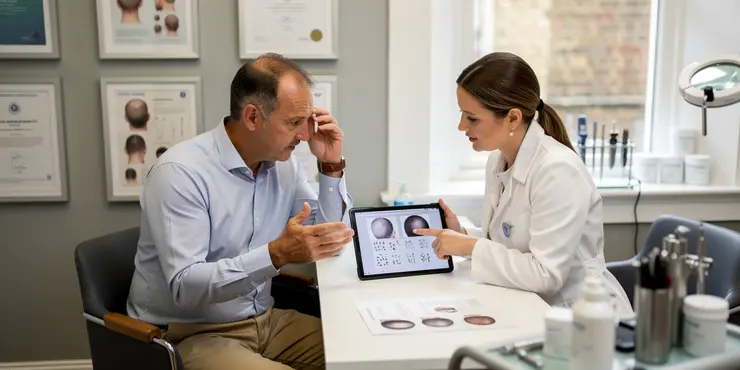
The best way to know how many grafts you need is through a consultation. A good clinic will assess your donor area, hair loss pattern, and expectations before recommending a treatment plan.
Be cautious of clinics that promise an exact graft count without examining you properly. A realistic plan should balance coverage, safety, and long-term results, especially if your hair loss may continue over time.
Final Thoughts
Most UK patients need anywhere from 1,500 to 4,500 grafts for a hair transplant in Turkey, but this is only a guide. Your ideal number depends on your level of hair loss, hair type, and the result you want.
If you are considering treatment abroad, focus on getting a proper medical assessment first. That will give you the clearest idea of how many grafts you need and what kind of result is achievable.
Frequently Asked Questions
The number of grafts needed in Turkey depends on the size of the bald area, hair loss pattern, donor hair density, hair thickness, curl, and the level of coverage you want. A clinic usually estimates grafts after examining the scalp and planning the hairline.
A receding hairline often needs fewer grafts than full scalp restoration, but the exact amount varies. Many patients require a moderate number of grafts to rebuild the front hairline and temples while keeping a natural look.
Crown thinning usually requires a separate graft estimate because the crown can need many grafts to create visible coverage. The amount depends on the size of the thinning area and whether the goal is light coverage or dense restoration.
Norwood stage 3 hair loss often requires a smaller to moderate graft count, mainly focused on the front and temples. The final number depends on how aggressively the hairline is rebuilt and how much density is desired.
Norwood stage 6 hair loss usually requires a high graft count because a large area of the scalp is affected. Clinics in Turkey often prioritize the frontal zone first and then assess whether the crown can be treated in the same session or a second session.
Factors include age, pattern of hair loss, donor supply, scalp laxity, hair characteristics, and cosmetic goals. The surgeon also considers whether the patient may lose more hair in the future and plans for long-term balance.
Clinics estimate grafts by examining the recipient area, measuring the thinning zones, and checking donor availability. They may use scalp analysis, photos, and a hairline design discussion to create a personalized graft plan.
The technique can affect how grafts are implanted, but the total number needed is usually based on the bald area rather than the method alone. FUE and DHI may differ in packing strategy, density, and session planning.
Sometimes one session is enough, but advanced hair loss may require multiple sessions depending on donor supply and the number of grafts needed. The clinic will decide based on safety, coverage goals, and how much density can be achieved realistically.
The safe donor amount depends on donor density, scalp condition, and the need to preserve a natural appearance in the back and sides. Overharvesting can cause visible thinning, so the surgeon must balance coverage with donor safety.
Yes, hair thickness, texture, and color contrast can change how many grafts are needed for the same visual result. Thicker or wavier hair may provide better coverage with fewer grafts than fine, straight hair.
Natural-looking results depend on placing grafts in the right zones and creating a soft hairline, not only on using a high number. Many patients need enough grafts to blend density across the front, mid-scalp, and sometimes crown.
No, the calculation can differ because men and women often have different hair loss patterns and cosmetic goals. Women may need treatment for diffuse thinning, while men often need concentrated restoration in the frontal area and crown.
Clinics review overall health, scalp condition, donor quality, and the stability of hair loss before confirming a graft plan. They may also ask about medications, previous surgeries, and any conditions that could affect healing or growth.
In some cases, medication can help stabilize ongoing hair loss and improve long-term planning, but it does not replace grafts for existing bald areas. A clinic may recommend medication to support the surgical result and preserve existing hair.
If the needed graft count is higher than the donor can safely provide, the surgeon may limit the session, lower the density target, or suggest a staged approach. Planning focuses on creating the best possible cosmetic result without exhausting the donor area.
Package pricing can vary, and some clinics set a maximum graft count while others price by session or technique. It is important to confirm exactly how many grafts are included, what the package covers, and whether extra grafts cost more.
Yes, a larger graft count can mean a longer procedure and may slightly increase the early healing burden, but recovery also depends on technique and individual healing. Most patients follow the same aftercare steps regardless of graft number.
Online calculators can give a rough estimate, but they cannot replace an in-person or video consultation. A real assessment is more accurate because it considers donor density, hair characteristics, and the exact pattern of loss.
Patients should ask how many grafts are recommended, how the doctor calculated the estimate, whether the donor area can support that number, what results are realistic, and whether the clinic provides a detailed surgical plan. It is also wise to ask about surgeon involvement, aftercare, and the risk of needing a second session.

Ergsy Search Results
This website offers general information and is not a substitute for professional advice.
Always seek guidance from qualified professionals.
If you have any medical concerns or need urgent help, contact a healthcare professional or emergency services immediately.
Some of this content was generated with AI assistance. We've done our best to keep it accurate, helpful, and human-friendly.
- Ergsy carefully checks the information in the videos we provide here.
- Videos shown by Youtube after a video has completed, have NOT been reviewed by ERGSY.
- To view, click the arrow in centre of video.
- Most of the videos you find here will have subtitles and/or closed captions available.
- You may need to turn these on, and choose your preferred language.
- Go to the video you'd like to watch.
- If closed captions (CC) are available, settings will be visible on the bottom right of the video player.
- To turn on Captions, click settings.
- To turn off Captions, click settings again.