
Speak To An Expert
Get clear, personalised advice for your situation.
Jot down a few questions to make the most of your conversation.
Introduction to the MMR Vaccine
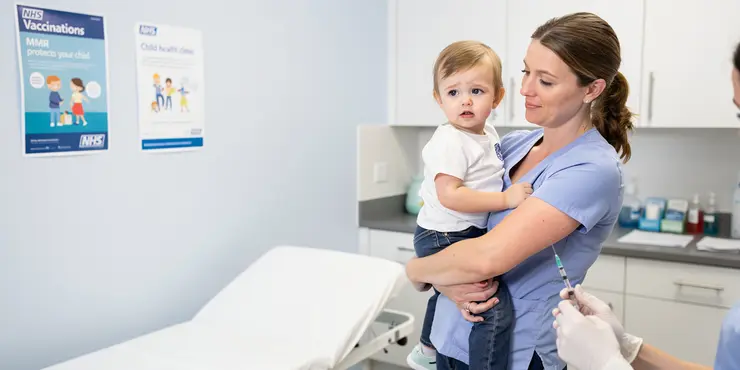
The MMR vaccine is a crucial immunisation jab offered to children in the UK. It protects against three significant viral infections: measles, mumps, and rubella. These diseases can lead to severe health complications if left unchecked.
The vaccine was introduced in the UK in 1988, revolutionising the way these diseases are controlled. It has since become a standard part of the childhood vaccination programme.
What Does the MMR Vaccine Protect Against?
Measles is a highly contagious virus that can cause severe respiratory symptoms and fever. It can lead to complications like pneumonia, encephalitis, and even death.
Mumps is known for causing painful swelling of the salivary glands. It can also result in complications such as meningitis or hearing loss.
Rubella, also known as German measles, is usually mild but can cause severe birth defects if contracted by pregnant women. This is why it is vital to control its spread through vaccination.
How the MMR Vaccine Works
The MMR vaccine contains live attenuated viruses, meaning they are weakened forms of the measles, mumps, and rubella viruses. These do not cause disease but stimulate the immune system to build a defence.
After vaccination, the immune system learns to recognise and fight these viruses. This training helps to prevent future infections.
Children typically receive the MMR vaccine in two doses: the first within the first year and a booster before starting school.
Safety and Side Effects
Numerous studies have confirmed the MMR vaccine's safety and efficacy. It is continually monitored to ensure it meets high safety standards.
Most children experience no side effects, but some may have mild reactions such as a low-grade fever or mild rash. Serious side effects are extremely rare.
The benefits of the MMR vaccine far outweigh the risks, as it protects against potentially severe diseases.
Importance of Vaccination
Widespread use of the MMR vaccine has drastically reduced the incidence of measles, mumps, and rubella in the UK. High vaccination rates are essential to maintain herd immunity.
Herd immunity protects those who cannot be vaccinated, such as newborns and individuals with certain health conditions.
Ensuring all eligible children receive the MMR vaccine is critical for public health and the prevention of outbreaks.
Frequently Asked Questions
The MMR vaccine stands for Measles, Mumps, and Rubella vaccine.
The MMR vaccine protects against measles, mumps, and rubella.
Yes, the MMR vaccine is considered safe and is routinely recommended for children and adults. Side effects, if any, are usually mild.
Children should receive the first dose of the MMR vaccine at 12-15 months of age and the second dose at 4-6 years of age.
Yes, adults who have not been vaccinated or do not have immunity to measles, mumps, and rubella should get the MMR vaccine.
Common side effects include mild fever, rash, and swelling at the injection site.
Serious side effects are very rare but can include allergic reactions or fever-related seizures.
Yes, the MMR vaccine is very effective, providing immunity to measles, mumps, and rubella in the majority of people who are vaccinated.
Vaccination helps prevent outbreaks and provides individual and community immunity against these contagious diseases.
Yes, the MMR vaccine can be administered alongside other vaccines, such as the varicella (chickenpox) vaccine.
Those who have had a severe allergic reaction to the vaccine previously or have specific medical conditions should not receive the vaccine.
No, studies have shown that there is no link between the MMR vaccine and autism.
The MMR vaccine is given as an injection under the skin in the upper arm or thigh.
It is possible if a person has had a natural infection, but vaccination is the safer and more reliable method of acquiring immunity.
You should contact your healthcare provider to reschedule the missed dose as soon as possible.
No, pregnant women should not receive the MMR vaccine. Women are advised to get vaccinated before pregnancy.
It typically takes about two weeks for the body to build immunity after vaccination.
Yes, there is an MMRV vaccine that combines varicella with MMR, often given to children between 12 months and 12 years of age.
These diseases are transmitted through respiratory droplets from coughs or sneezes of infected individuals.
Symptoms of measles include a high fever and rash; mumps causes swollen glands; rubella can include rash and fever.

Ergsy Search Results
This website offers general information and is not a substitute for professional advice.
Always seek guidance from qualified professionals.
If you have any medical concerns or need urgent help, contact a healthcare professional or emergency services immediately.
Some of this content was generated with AI assistance. We've done our best to keep it accurate, helpful, and human-friendly.
- Ergsy carefully checks the information in the videos we provide here.
- Videos shown by Youtube after a video has completed, have NOT been reviewed by ERGSY.
- To view, click the arrow in centre of video.
- Most of the videos you find here will have subtitles and/or closed captions available.
- You may need to turn these on, and choose your preferred language.
- Go to the video you'd like to watch.
- If closed captions (CC) are available, settings will be visible on the bottom right of the video player.
- To turn on Captions, click settings.
- To turn off Captions, click settings again.