
Speak To An Expert
Get clear, personalised advice for your situation.
Jot down a few questions to make the most of your conversation.
Introduction
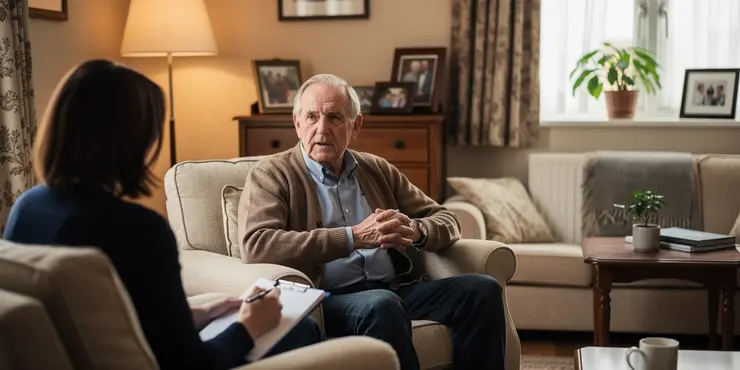
In the United Kingdom, mental health resources for seniors are crucial for promoting well-being and improving quality of life. As the population ages, understanding and accessing these resources becomes increasingly important. This article explores the various mental health services available to seniors in the UK.
NHS Services
The National Health Service (NHS) provides a range of mental health services specifically tailored for older adults. Geriatric mental health teams consist of specialists who understand the unique challenges faced by seniors. These teams can provide assessments, diagnosis, and treatment plans. Seniors can access these services through their GP, who will refer them to the appropriate NHS mental health service if required.
Community Mental Health Teams
Community Mental Health Teams (CMHTs) provide comprehensive support to seniors with mental health issues. They offer psychological therapies, support with medication, and help manage mental health conditions within the community setting. These teams consist of psychiatrists, nurses, social workers, and psychologists who work collaboratively to provide holistic care.
Voluntary Organizations
Numerous voluntary organizations offer mental health support for seniors in the UK. Age UK, for example, provides counseling services, befriending schemes, and information on managing mental health. Mental Health Foundation and Mind are other charities that provide valuable resources and support networks for older adults facing mental health challenges.
Helplines and Online Support
Helplines such as Samaritans and Silver Line offer immediate support to seniors who need someone to talk to. Samaritans provide a 24/7 service for anyone in distress, while Silver Line offers confidential advice and friendship specifically for older people. Additionally, online platforms like NHS Choices and Mind offer resourceful information that seniors can access at their convenience.
Psychological Therapies
The Improving Access to Psychological Therapies (IAPT) program is available to seniors experiencing depression or anxiety. This service provides access to therapy sessions such as cognitive behavioral therapy (CBT), which has been effective in managing common mental health issues among older adults. Referrals to IAPT can be made via a GP or in some cases, self-referral is possible.
Specialized Dementia Care
For seniors experiencing dementia, specialized care and support are essential. The NHS offers memory clinics designed to assess and diagnose dementia and provide ongoing support. There are also various care homes and day centers across the UK that specialize in dementia care, ensuring that seniors receive appropriate management and support for their condition.
Conclusion
Mental health resources for seniors in the UK are varied and comprehensive, aiming to address the complex needs of the aging population. By utilizing NHS services, community support, voluntary organizations, and specialized care facilities, seniors can access the necessary care to maintain their mental health and well-being. Encouraging older adults to seek help and support when needed is crucial in enhancing their quality of life.
Introduction
In the UK, seniors need help for their mental health to stay happy and healthy. As more people grow older, it’s important to know about and use mental health help. This article talks about the different help seniors can get in the UK.
NHS Services
The National Health Service (NHS) has special mental health help for older people. There are expert teams that understand what older adults face. They can check, understand, and help with treatment. Seniors can get this help by visiting their doctor (GP), who can send them to the right NHS mental health service if they need it.
Community Mental Health Teams
Community Mental Health Teams (CMHTs) help seniors with their mental health. They offer talking therapies, support with medicines, and help with mental health problems in the community. These teams have doctors, nurses, social workers, and psychologists working together to help in many ways.
Voluntary Organizations
Many groups in the UK offer mental health support for seniors. Age UK helps with talking therapies, friend schemes, and gives information on looking after mental health. Other charities like Mental Health Foundation and Mind also provide resources and support for older adults dealing with mental challenges.
Helplines and Online Support
Helplines like Samaritans and Silver Line give quick help to seniors who need to talk. Samaritans are open 24/7 for anyone feeling upset, and Silver Line gives private advice and friendship just for older people. Websites like NHS Choices and Mind offer useful information that seniors can check anytime.
Psychological Therapies
The Improving Access to Psychological Therapies (IAPT) program helps seniors with depression or anxiety. They offer therapy sessions, like cognitive behavioral therapy (CBT), which helps with common mental health problems for older people. A GP can make a referral or, in some cases, seniors can refer themselves.
Specialized Dementia Care
Special care is needed for seniors with dementia. The NHS has memory clinics to check and understand dementia and give ongoing support. There are also care homes and day centers around the UK that are experts in dementia care, making sure seniors get the right help for their condition.
Conclusion
There are many mental health resources for seniors in the UK to meet older people's complex needs. By using NHS services, community support, voluntary groups, and special care centers, seniors can get the care they need to keep their mental health and well-being. Encouraging older adults to ask for help when they need it is important for their quality of life.
Frequently Asked Questions
Seniors often face mental health issues such as depression, anxiety, cognitive decline, and loneliness.
Yes, many countries have specific helplines for seniors. For example, in the U.S., the Eldercare Locator can connect seniors with resources.
Senior centers often provide socialization opportunities, support groups, and mental health programs to help seniors stay engaged and reduce feelings of isolation.
Yes, there are many online resources, including virtual therapy, online support groups, and educational materials about mental health specifically catered to seniors.
Yes, Medicare generally covers certain types of therapy such as individual and group psychotherapy, but coverage specifics can vary.
Caregivers can support seniors by providing emotional support, encouraging social activities, and facilitating access to mental health professionals.
Old adults can benefit from cognitive behavioral therapy (CBT), interpersonal therapy, and reminiscence therapy, among others.
Regular physical activity can improve mood, reduce anxiety and depression symptoms, and promote overall mental well-being in seniors.
Yes, many communities and organizations offer support groups for seniors, addressing topics like grief, chronic illness, and loneliness.
Family members can play a crucial role by providing emotional support, involving seniors in family activities, and ensuring they get the care they need.
Technology can assist by providing teletherapy options, mental health apps, and platforms for communication with family and friends, reducing isolation.
Many community centers and organizations offer workshops that focus on mental health education, resilience building, and coping strategies specifically for seniors.
Geriatric psychiatrists are medical doctors specialized in the mental health care of older adults, addressing issues like dementia and depression among seniors.
Yes, medications can be prescribed to help manage conditions like depression and anxiety in seniors, but they should be monitored closely to avoid side effects.
Social interaction can help reduce feelings of loneliness and isolation, improve mood, and lead to a more active and fulfilling life, which is crucial for mental health.
Many community programs offer art therapy, music therapy, exercise classes, and social outings that cater to the mental health of seniors.
Seniors can cope with grief through counseling, joining support groups, engaging in memorial activities, and maintaining connections with loved ones.
Yes, there are assisted living facilities and nursing homes with specialized programs and trained staff for seniors with mental health issues.
Maintaining a routine can provide structure, reduce stress, and promote stability, which is beneficial for mental health.
Seniors can maintain mental health by staying physically active, engaged in social activities, eating well, and proactively managing stress.
Older people can sometimes feel sad, worried, or lonely. They might also have trouble remembering things.
Yes, lots of countries have special phone lines to help older people. In the U.S., there is a service called Eldercare Locator. It helps older people find the help they need.
Places called senior centers help older people make friends and spend time with others. They have groups where people can talk and share their feelings. They also have programs to help people feel happy and not lonely.
Yes, there are many helpful things online. You can find therapy on the internet. There are also support groups you can join. You can learn about mental health, especially for older people.
Yes, Medicare usually pays for some kinds of therapy, like one-on-one therapy and group therapy. But what they pay for might be different in each case.
People who help seniors can do a few things to make them feel better:
- Talk to them and listen to their feelings.
- Help them do fun things with other people.
- Help them talk to doctors or therapists if they need it.
Older people can get help from talking therapies. These can include:
- Talking about how you think and feel (this is called CBT)
- Talking about your relationships with other people
- Talking about your memories
These therapies can make you feel better and think more clearly.
If words are hard, try using pictures or drawing to help share your thoughts. A helper, like a family member or friend, can join sessions to support you.
Doing exercises often can make people feel happier, help them worry less, and stop them from feeling too sad. It helps older people feel good and healthy.
Yes, there are groups in many places that help older people. These groups talk about things like feeling sad, being sick for a long time, and feeling alone.
Family members can help a lot. They can listen and show they care. They can make sure seniors join in family fun. They also make sure seniors have the care they need.
Technology can help by giving people ways to talk to a therapist online, use apps for mental health, and stay in touch with family and friends. This helps people feel less alone.
Lots of community centers and groups have classes. These classes help seniors learn about mental health. They teach how to stay strong and deal with tough times.
Geriatric psychiatrists are doctors who help older people with their mental health. They take care of problems like dementia and depression in seniors.
Yes, doctors can give medicine to help older people feel better if they are sad or worried. But doctors need to watch them closely to make sure the medicine is safe and doesn't cause problems.
Talking and being with other people can help us not feel alone. It can make us feel happier and help us do more fun things. This is very important for staying happy and healthy in our minds.
Lots of community programs have fun activities for older people. These activities can help them feel happy. They include art, music, exercise classes, and trips.
Older people can get help when they feel sad. They can talk to someone about their feelings. They can join a group to find friends who understand. Doing things to remember the person who has died can help too. Staying in touch with family and friends is important. This way, they don’t feel alone.
Yes, there are special homes where older people can live. These homes have helpers who know how to take care of people with mental health problems.
Having a daily routine helps you stay organized. It can make you feel less worried and help your brain feel calm and happy.
Older people can keep their minds healthy by doing a few things:
- Move your body with exercise.
- Spend time with friends and family.
- Eat healthy foods.
- Find ways to relax and stay calm.
These things can help you feel good and happy!
Try using pictures or listen to audio to help you understand this advice better.

Ergsy Search Results
This website offers general information and is not a substitute for professional advice.
Always seek guidance from qualified professionals.
If you have any medical concerns or need urgent help, contact a healthcare professional or emergency services immediately.
Some of this content was generated with AI assistance. We've done our best to keep it accurate, helpful, and human-friendly.
- Ergsy carefully checks the information in the videos we provide here.
- Videos shown by Youtube after a video has completed, have NOT been reviewed by ERGSY.
- To view, click the arrow in centre of video.
- Most of the videos you find here will have subtitles and/or closed captions available.
- You may need to turn these on, and choose your preferred language.
- Go to the video you'd like to watch.
- If closed captions (CC) are available, settings will be visible on the bottom right of the video player.
- To turn on Captions, click settings.
- To turn off Captions, click settings again.