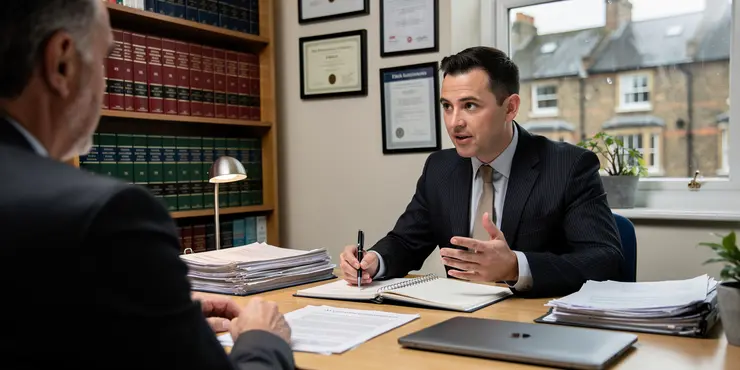

Speak To An Expert
Get clear, personalised advice for your situation.
Jot down a few questions to make the most of your conversation.
The Role of the Attorney General
The Attorney General for England and Wales plays a crucial role in the legal framework. As the chief legal advisor to the Crown and the Government, this office influences legal policy and practice.
Key responsibilities include overseeing the Crown Prosecution Service (CPS) and advising on the rule of law. The Attorney General also represents the public interest in significant legal matters.
Influence on Legal Professionals
The Attorney General's guidance can shape legal practice across England and Wales. They issue guidelines on ethical standards and prosecution policies.
These guidelines ensure consistency and fairness in the application of the law. Legal professionals must adhere to these directions in their work.
Oversight of the Crown Prosecution Service
The Attorney General exercises significant influence over the CPS, which prosecutes criminal cases investigated by the police. By providing oversight, the Attorney General ensures that prosecutions are conducted fairly and efficiently.
This oversight can affect decision-making processes in legal cases. It also impacts how resources are allocated within the legal system.
Appointing Key Legal Figures
The Attorney General plays a role in appointing key figures within the legal system. This includes recommending appointments for senior judges and legal advisers.
These appointments can influence the direction and focus of legal policies. They ensure that those in significant legal positions align with broader governmental objectives.
Influence on Legal Reform
The Attorney General contributes to shaping legal reform, often advising on changes to the legal framework. They also liaise with Parliament to promote necessary legislative adjustments.
This influence can lead to significant long-term impacts on the legal profession. Successful reforms often reflect changes in societal expectations and legal practices.
Public Interest Functions
The Attorney General may intervene in legal cases to uphold the public interest. This can involve issues of national security or significant constitutional matters.
By acting in these cases, the Attorney General ensures that legal outcomes reflect the interests of the public. This can set precedents and guide future legal interpretations.
Conclusion
The Attorney General holds a multifaceted role, impacting both legal policy and practice. Their influence is felt in ethical guidelines, prosecution oversight, and legal reform.
Ultimately, their contributions help maintain the integrity and efficacy of the legal system in England and Wales.
Frequently Asked Questions
The Attorney General serves as the chief legal advisor to the government and as the head of the Department of Justice, influencing law enforcement practices and the interpretation of laws.
The Attorney General can influence legal policy by issuing guidelines, prioritizing certain cases, and shaping the legal strategies of the government.
Yes, the Attorney General can affect the enforcement of laws by directing federal prosecutors and law enforcement agencies on which cases to prioritize.
The Attorney General sets priorities for federal prosecutors, thereby guiding the use of prosecutorial discretion in pursuing certain types of cases.
The Attorney General can propose new legislation, testify before Congress, and work with lawmakers to pass laws aligning with the administration's legal and policy goals.
No, the Attorney General manages federal legal matters, while state attorneys general oversee legal issues at the state level. However, they sometimes collaborate on national issues.
Through legal opinions and guidance memos, the Attorney General helps shape how laws are interpreted and applied across federal agencies.
Yes, the Attorney General oversees federal law enforcement agencies like the FBI and can direct their focus and resources on specific issues.
The Attorney General enforces federal civil rights laws, pursuing litigation and actions that promote equal rights and combat discrimination.
The Attorney General oversees federal litigation by managing the Department of Justice attorneys who represent the government in court.
The Attorney General may advise the President on judicial nominations, significantly influencing the ideological balance of the judiciary.
The Attorney General crafts legal strategies and policies that align with and promote the President's policy initiatives and priorities.
The Attorney General can recommend changes to federal sentencing guidelines and advocate for policies affecting sentencing practices.
The Attorney General enforces compliance with federal regulations by prosecuting violations and collaborating with regulatory agencies.
The Attorney General develops and implements crime prevention strategies, coordinating with federal, state, and local law enforcement.
The Attorney General influences immigration law by interpreting immigration statutes, issuing directives, and overseeing related litigation.
Yes, the Attorney General can intervene in cases of significant federal interest, although this is done selectively and with specific intent.
Through public statements, policies, and prosecution priorities, the Attorney General can influence public understanding and perception of legal issues.
The Attorney General leads federal anti-corruption efforts, overseeing investigations and prosecutions of public and corporate corruption.
Yes, the Attorney General can issue legal opinions that guide federal agencies, though these opinions may be subject to judicial review.

Ergsy Search Results
This website offers general information and is not a substitute for professional advice.
Always seek guidance from qualified professionals.
If you have any medical concerns or need urgent help, contact a healthcare professional or emergency services immediately.
Some of this content was generated with AI assistance. We've done our best to keep it accurate, helpful, and human-friendly.
- Ergsy carefully checks the information in the videos we provide here.
- Videos shown by Youtube after a video has completed, have NOT been reviewed by ERGSY.
- To view, click the arrow in centre of video.
- Most of the videos you find here will have subtitles and/or closed captions available.
- You may need to turn these on, and choose your preferred language.
- Go to the video you'd like to watch.
- If closed captions (CC) are available, settings will be visible on the bottom right of the video player.
- To turn on Captions, click settings.
- To turn off Captions, click settings again.