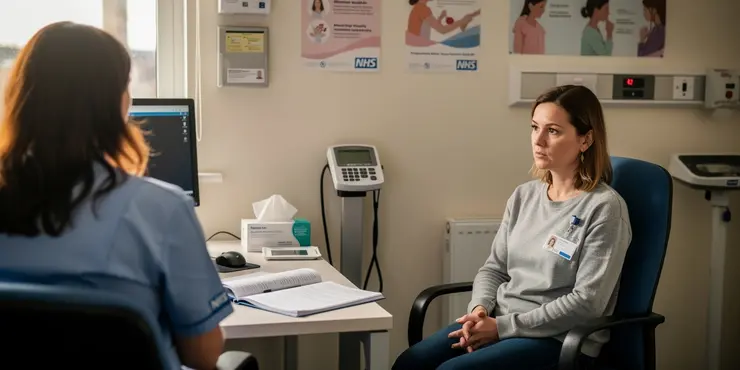

Speak To An Expert
Get clear, personalised advice for your situation.
Jot down a few questions to make the most of your conversation.
What is heavy menstrual bleeding?
Heavy menstrual bleeding, sometimes called menorrhagia, means periods that are unusually heavy or last longer than normal. It can affect everyday life, work, sleep, and emotional wellbeing.
For some people, periods have always been heavy. For others, bleeding becomes heavier over time or starts suddenly after a period of being normal.
What counts as heavy?
There is no single amount of blood loss that defines heavy menstrual bleeding for everyone. A period may be considered heavy if you need to change your pad or tampon every one to two hours, or if you frequently leak through to clothes or bedding.
Other signs include passing large blood clots, needing to use both pads and tampons together, or bleeding for more than seven days. If your period regularly stops you doing normal activities, it may also be classed as heavy.
Common signs and symptoms
Heavy menstrual bleeding can cause tiredness, low energy, and feeling weak or breathless. This is sometimes linked to iron deficiency or anaemia if blood loss is significant over time.
Some people also experience cramping, pelvic pain, and a feeling of pressure in the lower tummy. You may notice that you avoid plans, miss work, or feel anxious about leaving the house during your period.
What can cause it?
There are many possible causes of heavy periods. These can include hormonal changes, fibroids, polyps, adenomyosis, endometriosis, and problems with the womb lining.
Heavy bleeding may also be linked to contraception, such as the copper coil, or to medicines that affect blood clotting. In some cases, no clear cause is found, but the symptoms still deserve proper assessment.
When to speak to a GP
You should make an appointment with your GP if your periods are heavy enough to affect daily life. It is also important to seek advice if your bleeding becomes heavier suddenly, or if you have bleeding between periods.
Contact a doctor urgently if you are soaking through pads very quickly, feeling faint, or passing very large clots. If there is a chance you could be pregnant, get medical help as soon as possible.
Why treatment matters
Heavy menstrual bleeding is common, but it should not be ignored. Treatment can help reduce bleeding, improve energy levels, and make periods easier to manage.
Options may include medicines, hormonal treatments, or procedures depending on the cause. Your GP can help work out what is happening and suggest the most suitable next steps.
What is heavy menstrual bleeding?
Heavy menstrual bleeding means periods that are very heavy or last longer than usual. Some people call it menorrhagia. It can affect your daily life, work, sleep, and how you feel.
Some people have always had heavy periods. For others, periods may become heavier over time. Sometimes they start suddenly after being normal before.
What counts as heavy?
There is no one amount of blood loss that is the same for everyone. A period may be heavy if you need to change your pad or tampon every 1 to 2 hours. It may also be heavy if you leak through to your clothes or bedding.
Other signs are passing large blood clots, using pads and tampons together, or bleeding for more than 7 days. If your period stops you doing normal things, it may also be heavy.
Common signs and symptoms
Heavy periods can make you feel very tired, weak, or short of breath. This may happen because your body has low iron or anaemia.
You may also get tummy cramps, pain in the pelvis, or pressure low down in your tummy. You might miss plans, stay away from work or school, or feel worried about leaving the house during your period.
What can cause it?
There are many reasons for heavy periods. These can include hormone changes, fibroids, polyps, adenomyosis, endometriosis, and problems with the womb lining.
Heavy bleeding can also be linked to contraception, like the copper coil, or to medicines that affect blood clotting. Sometimes no clear cause is found. Even then, you still need support and a check-up.
When to speak to a GP
Make an appointment with your GP if heavy periods affect your daily life. You should also get help if the bleeding suddenly gets worse, or if you bleed between periods.
Get urgent medical help if you soak through pads very fast, feel faint, or pass very large clots. If you might be pregnant, get help as soon as possible.
Why treatment matters
Heavy periods are common, but they should not be ignored. Treatment can help lower the bleeding, give you more energy, and make periods easier to manage.
Treatments may include medicine, hormone treatment, or a procedure. Your GP can help find the cause and choose the best next step.
It may help to keep a period diary. Write down when bleeding starts, how heavy it is, and any pain or clots. You can also use a phone reminder, a calendar, or a period app to track your symptoms. If reading or remembering information is hard, ask someone you trust to go with you to your appointment and take notes.
Frequently Asked Questions
Heavy menstrual bleeding is menstrual bleeding that is heavier or longer than normal and may interfere with daily life.
A normal period usually has manageable flow, while heavy menstrual bleeding involves soaking through pads or tampons more often, passing large clots, or bleeding for many days.
Common signs include needing to change protection every hour or two, bleeding longer than 7 days, passing clots larger than a quarter, and feeling very tired or weak.
Yes, ongoing heavy blood loss can lead to iron deficiency anemia, which may cause fatigue, dizziness, shortness of breath, and pale skin.
Possible causes include hormonal imbalances, uterine fibroids, polyps, adenomyosis, bleeding disorders, certain medicines, and some medical conditions.
Not always, but it can be a sign of an underlying condition, so it should be evaluated if it is frequent, severe, or affecting your health.
You should see a doctor if bleeding is very heavy, lasts longer than usual, causes anemia symptoms, or disrupts your normal activities.
No, bleeding after menopause is not normal and should be checked by a healthcare professional right away.
Bleeding may be considered heavy if you soak through a pad or tampon in an hour, need double protection, or have periods lasting more than 7 days.
Stress can affect hormones and menstrual cycles, but it is not usually the only cause of heavy menstrual bleeding.
Heavy menstrual bleeding itself does not always affect fertility, but the underlying cause, such as fibroids or hormonal problems, sometimes can.
A doctor may ask about your symptoms, do a physical exam, and order blood tests, pregnancy tests, imaging, or other tests to find the cause.
Treatments may include iron supplements, hormone therapy, nonsteroidal anti-inflammatory drugs, tranexamic acid, or procedures in some cases.
Yes, some forms of birth control, such as hormonal pills, the patch, the ring, injections, or an IUD, can reduce menstrual bleeding.
Rest, staying hydrated, tracking your cycle, and taking iron-rich foods or supplements if recommended can help support your health.
Yes, it can happen in teenagers, especially in the first few years after periods begin, but it should still be assessed if it is very heavy.
Yes, uterine fibroids are a common cause of heavy menstrual bleeding, especially in adults.
Yes, tracking how long you bleed, how often you change protection, and whether you pass clots can help your doctor understand your symptoms.
Yes, if bleeding is so heavy that you feel faint, have chest pain, or cannot stand up safely, seek urgent medical care.
No, heavy menstrual bleeding refers to the amount of blood loss, while painful periods refer to cramping or pain, though both can happen together.
Heavy menstrual bleeding means having a period that is much heavier or lasts much longer than usual.
It can make daily life harder.
A normal period usually has a flow that is easy to manage.
Heavy period bleeding means you may soak through pads or tampons often. You may also pass big clots. Or you may bleed for many days.
If this is hard to track, use a calendar or a phone app to note your bleeding. This can help you see changes more clearly.
Common signs are:
- You need to change your pad or tampon every 1 or 2 hours.
- Your bleeding lasts more than 7 days.
- You pass clots that are bigger than a coin.
- You feel very tired or weak.
If this happens, it can help to keep a simple diary of your bleeding. You can also ask a doctor, nurse, or trusted adult for help.
Yes. Heavy blood loss over time can cause iron deficiency anaemia.
This means your body does not have enough iron. Iron helps make healthy blood.
You may feel:
tired
dizzy
short of breath
pale
If you feel like this, it can help to:
rest often
drink water
eat foods with iron, like meat, beans, and leafy green vegetables
ask a doctor or nurse for advice
If the bleeding is heavy or does not stop, get medical help quickly.
There are many reasons for this.
Some possible causes are:
Hormone changes.
Growths in the womb called fibroids.
Small lumps called polyps.
A problem called adenomyosis.
Blood problems that make bleeding easier.
Some medicines.
Some health conditions.
If this is hard to understand, it can help to:
Read the text again slowly.
Ask someone you trust to explain it.
Use a ruler or your finger to follow the words.
Look up any hard words one at a time.
Not always. But it can be a sign of another health problem.
You should get it checked if it happens a lot, if it is very bad, or if it is hurting your health.
If reading is hard, ask someone you trust to help explain it. You can also use short notes, pictures, or a phone reminder to keep track of symptoms.
You should see a doctor if the bleeding is very heavy.
You should also see a doctor if the bleeding lasts longer than normal.
See a doctor if you feel unwell, like feeling very tired, weak, or dizzy. These can be signs of anemia.
See a doctor if the bleeding makes it hard to do your usual daily activities.
If it helps, write down when the bleeding starts and stops. You can also ask someone you trust to help you keep track.
No, bleeding after menopause is not normal.
If you bleed after menopause, you should see a healthcare professional as soon as possible.
This can be a sign of a health problem that needs treatment.
Supportive tip: Write down when the bleeding starts, how much there is, and any other symptoms. This can help the healthcare professional understand what is happening.
Bleeding can be heavy if you soak through a pad or tampon in 1 hour.
It can also be heavy if you need to use 2 pads or tampons at the same time.
Bleeding may be heavy if your period lasts more than 7 days.
If you are worried, write down how often you change your pad or tampon. This can help you notice changes. You can also ask a trusted adult, nurse, or doctor for help.
Stress can affect the body.
It can change hormones and periods.
But stress is not usually the only reason for heavy bleeding during a period.
If your bleeding is very heavy, it is a good idea to talk to a doctor or nurse.
You can keep a simple period diary. This can help you track:
- when your period starts
- how long it lasts
- how heavy the bleeding is
- any pain or other changes
You may find it helpful to use a calendar, phone reminder, or notes app.
Heavy periods do not always affect fertility.
But the reason for the heavy periods can sometimes affect fertility.
For example, fibroids or hormone problems can sometimes make it harder to get pregnant.
If you are worried, a doctor can help find the cause.
It can help to:
- write down your period symptoms
- use a calendar or phone app to track your cycle
- bring a friend, family member, or support person to appointments
- ask the doctor to explain things in simple words
A doctor may ask you about how you feel. They may also look at your body and do a physical check.
The doctor may ask for some tests. These can include blood tests, a pregnancy test, or scans. These tests can help find out what is causing the problem.
It can help to bring a family member, friend, or carer with you. You can also write down your symptoms before you go. This may make it easier to remember important details.
Treatment can help with this problem.
It may include:
• iron tablets
• hormone treatment
• pain medicine called nonsteroidal anti-inflammatory drugs, or NSAIDs
• a medicine called tranexamic acid
• a procedure, in some cases
A doctor or nurse can help you choose the best option.
Yes. Some types of birth control can make your periods lighter.
These include:
hormonal pills
the patch
the ring
injections
an IUD
If reading this is hard, try reading one short part at a time. You can also ask someone you trust to read it with you.
Rest when you can.
Drink plenty of water.
Keep track of your cycle.
Eat foods with iron, such as beans, eggs, and leafy green vegetables.
Take iron supplements only if a doctor or nurse tells you to.
These steps can help support your health.
Yes. This can happen in teenagers.
It is more common in the first few years after periods start.
But if the bleeding is very heavy, a doctor should check it.
Yes. Uterine fibroids can cause heavy periods. This is common in adults.
Yes. It can help your doctor if you keep a note of:
- how long you bleed
- how often you change your pad, tampon, or other protection
- whether you pass clots
You can write this down on paper or use a phone note. This may help you remember the details more easily.
Yes. If the bleeding is very heavy, get urgent medical help.
Go for help right away if you:
- feel faint
- have chest pain
- cannot stand up safely
Ask someone to stay with you if you can. If reading is hard, use text-to-speech or ask a trusted person to read it with you.
No. Heavy menstrual bleeding means losing a lot of blood. Painful periods mean cramps or pain. Sometimes, both happen at the same time.

Ergsy Search Results
This website offers general information and is not a substitute for professional advice.
Always seek guidance from qualified professionals.
If you have any medical concerns or need urgent help, contact a healthcare professional or emergency services immediately.
Some of this content was generated with AI assistance. We've done our best to keep it accurate, helpful, and human-friendly.
- Ergsy carefully checks the information in the videos we provide here.
- Videos shown by Youtube after a video has completed, have NOT been reviewed by ERGSY.
- To view, click the arrow in centre of video.
- Most of the videos you find here will have subtitles and/or closed captions available.
- You may need to turn these on, and choose your preferred language.
- Go to the video you'd like to watch.
- If closed captions (CC) are available, settings will be visible on the bottom right of the video player.
- To turn on Captions, click settings.
- To turn off Captions, click settings again.