
Get Answers
What a power outage means
A power outage happens when the electricity supply to your home, street, or wider area stops unexpectedly. In the UK, this can be caused by severe weather, faults on the network, accidents, or planned maintenance.
Most outages are temporary and are resolved by the local electricity network operator. However, the impact can range from a few minutes without power to several hours or, in rare cases, longer.
What stops working
When the power goes off, lights, heating systems, and most electrical appliances will stop working. If you rely on an electric boiler, storage heaters, or a heat pump, your home may quickly become cold.
Broadband routers, Wi-Fi, and mobile charging can also be affected. Fridges and freezers will stay cold for a while, but they should be kept closed to preserve food for as long as possible.
How it affects everyday life
A power cut can disrupt work, cooking, and communication. If you are using a laptop or phone, battery life may become limited if the outage lasts longer than expected.
It can also make it harder to move around safely, especially in dark stairways or outdoor areas. For older people, young children, or anyone with medical needs, the disruption can be more serious.
What to do during an outage
First, check whether the problem is only in your home or affects the wider area. If your neighbours also have no power, the issue is likely with the local network rather than your fuse box.
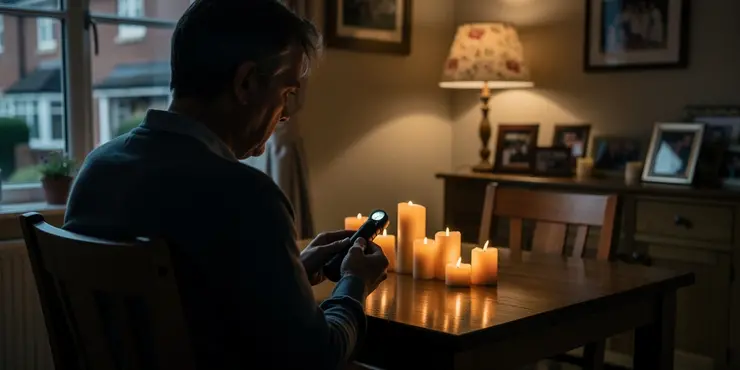
Turn off or unplug sensitive appliances to protect them from any power surge when electricity returns. Keep a torch handy rather than using candles, as candles can create a fire risk.
Who to contact in the UK
If you are in the UK, you should report a power cut to your local electricity network operator. Their phone number is usually available on your electricity bill or on their website, and many have a 24-hour helpline.
If someone is in immediate danger, such as due to a fallen power line, call 999 and stay well clear of the area. You should never touch damaged cables or try to move them yourself.
Preparing for future outages
It helps to keep an emergency kit with a torch, spare batteries, phone power bank, bottled water, and some non-perishable food. A battery-powered or wind-up radio can also provide updates if mobile networks are busy.
If someone in your home depends on powered medical equipment, make sure you have a backup plan. You may also want to keep a list of important contacts and a fully charged phone for emergencies.
Frequently Asked Questions
Power outage what happens refers to the effects and events that occur when electrical service is interrupted, such as lights going out, appliances stopping, and communication systems may be affected.
During power outage what happens in a home, lights, heating or cooling systems, refrigerators, Wi-Fi, and many plug-in devices may stop working until electricity is restored.
During power outage what happens to food in the refrigerator, the food may stay safe for a limited time if the door remains closed, but perishable items can spoil if the outage lasts too long.
During power outage what happens to internet and Wi-Fi, the router and modem usually turn off unless they have backup power, so internet access often stops.
During power outage what happens to elevators, they may stop operating and people inside may need assistance from building staff or emergency responders.
During power outage what happens to traffic lights, they may go dark or flash, which can create dangerous driving conditions and require drivers to treat intersections cautiously.
During power outage what happens to medical devices, equipment that depends on electricity may stop unless it has battery backup, generator support, or another power source.
During power outage what happens to heating and air conditioning, most systems stop working because they rely on electricity, which can make indoor temperatures uncomfortable or unsafe.
During power outage what happens at night, homes and streets can become very dark, making flashlights, emergency lighting, and caution especially important.
During power outage what happens to phones depends on the type of phone and available battery power, but charging may be unavailable and some internet-based calling services may stop working.
During power outage what happens to water service can vary, but if pumps or treatment systems need electricity, water pressure or service may be reduced or interrupted.
During power outage what happens in an apartment building, common areas, elevators, security systems, and unit appliances may lose power, and residents may need to wait for utility restoration.
During power outage what happens to home security systems depends on whether they have battery backup, but some alarms, cameras, and sensors may temporarily stop working.
During power outage what happens to computers and saved work, unsaved data may be lost if the device shuts off suddenly, so battery backups and regular saving can help prevent problems.
During power outage what happens to businesses often includes interruptions to checkout systems, lighting, refrigeration, internet, production equipment, and customer service.
During power outage what happens to generators is that they may automatically or manually start supplying backup electricity, depending on the system and fuel availability.
What happens during power outage what happens if the outage lasts a long time includes greater risks of spoiled food, temperature issues, communication loss, and more serious disruption to daily routines.
During power outage what happens to emergency services is that they usually continue operating with backup systems, but response times or communication may be affected in severe outages.
During power outage what happens when power comes back on is that lights, appliances, and systems usually restart, though some devices may need to be reset and power surges can occur.
How should people prepare for power outage what happens can include keeping flashlights, batteries, water, nonperishable food, charged power banks, and an emergency plan ready.

Ergsy Search Results
This website offers general information and is not a substitute for professional advice.
Always seek guidance from qualified professionals.
If you have any medical concerns or need urgent help, contact a healthcare professional or emergency services immediately.
Some of this content was generated with AI assistance. We've done our best to keep it accurate, helpful, and human-friendly.
- Ergsy carefully checks the information in the videos we provide here.
- Videos shown by Youtube after a video has completed, have NOT been reviewed by ERGSY.
- To view, click the arrow in centre of video.
- Most of the videos you find here will have subtitles and/or closed captions available.
- You may need to turn these on, and choose your preferred language.
- Go to the video you'd like to watch.
- If closed captions (CC) are available, settings will be visible on the bottom right of the video player.
- To turn on Captions, click settings.
- To turn off Captions, click settings again.