
Get Answers
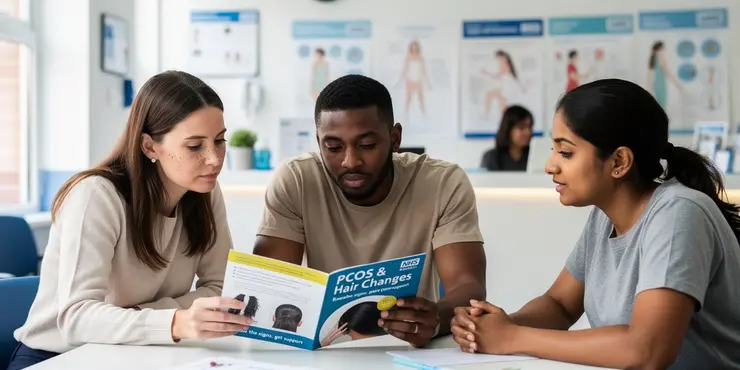
Hair changes that may suggest PCOS
In PCOS, hair-related symptoms are often linked to higher levels of androgens, sometimes called “male” hormones. These changes can affect both the scalp and body hair.
One of the most common signs is excess facial or body hair, known as hirsutism. This may appear on the upper lip, chin, chest, lower abdomen, back, or around the nipples.
You may also notice that body hair becomes thicker, darker, or grows faster than before. This can happen gradually, so it may be easier to spot by comparing changes over time.
Hair thinning on the scalp
Some people with PCOS experience hair thinning on the scalp, especially at the crown or along the parting. This is sometimes called female pattern hair loss.
The hair may not fall out in handfuls, but it can look less dense, flatter, or more difficult to style. A widening parting is often one of the earliest signs.
Scalp hair thinning can be easy to miss at first, particularly if you have naturally fine hair. Taking photos over time can help you notice whether the change is ongoing.
What hair symptoms are most useful for self-checking?
When looking at PCOS symptoms for self-diagnosis, the most important hair changes to notice are new facial or body hair and scalp hair thinning. These symptoms are more suggestive of hormone imbalance than ordinary hair variation.
It is also useful to think about whether the change is new, worsening, or affecting more than one area. For example, having more chin hair alongside a thinning parting may point more strongly towards PCOS.
Hair changes alone do not confirm PCOS, but they can be an important clue. They are especially relevant if you also have irregular periods, acne, or trouble with weight gain.
When to speak to a GP in the UK
If you notice unexplained hair growth on the face or body, or thinning hair on the scalp, it is a good idea to speak to your GP. This is especially important if the change is persistent or getting worse.
A GP can check for PCOS and rule out other causes, such as thyroid problems or iron deficiency. They may ask about your periods, skin changes, fertility, and family history.
If you are worried about hair loss or excess hair growth, don’t wait for symptoms to become severe before seeking help. Early advice can make it easier to manage the cause and discuss treatment options.
Frequently Asked Questions
Common hair-related symptoms include increased facial or body hair growth, thinning hair on the scalp, and a wider part or reduced hair volume. These signs can happen because PCOS is often linked to higher androgen levels.
You cannot confirm PCOS from hair changes alone. Hair-related symptoms may suggest PCOS, but a real diagnosis usually needs a medical history, physical exam, and sometimes blood tests or an ultrasound.
Scalp hair thinning in PCOS symptoms self diagnosis hair-related symptoms often looks like gradual thinning at the crown or a widening part. It may be due to androgen-related hair loss, but other causes are also possible.
Excess facial hair in PCOS symptoms self diagnosis hair-related symptoms is called hirsutism. It usually means thicker, darker hair growing in areas such as the upper lip, chin, chest, or abdomen.
Hair-related symptoms in PCOS symptoms self diagnosis hair-related symptoms often develop gradually over months or years. Sudden or very rapid hair changes should be evaluated by a clinician because they may point to other conditions.
Yes. PCOS symptoms self diagnosis hair-related symptoms can include both scalp hair thinning and unwanted hair growth on the face or body because the same hormone imbalance can affect different hair follicles differently.
Hair-related symptoms in PCOS symptoms self diagnosis hair-related symptoms are commonly linked to elevated androgens, such as testosterone, and sometimes insulin resistance, which can worsen androgen effects.
Yes, hair-related symptoms combined with irregular periods can raise suspicion for PCOS symptoms self diagnosis hair-related symptoms. The combination is more suggestive than hair changes alone, but a medical diagnosis is still needed.
Along with hair-related symptoms, look for irregular periods, acne, weight changes, fertility problems, and signs of insulin resistance such as darkened skin patches. Multiple symptoms together make PCOS more likely.
PCOS symptoms self diagnosis hair-related symptoms usually involve new or worsening hair growth or hair thinning, while family hair traits are often stable and lifelong. A change over time is more concerning for a hormone issue.
Yes, stress can cause hair shedding that may resemble PCOS-related scalp hair loss. Because several conditions can cause hair changes, it is important not to assume PCOS based on hair symptoms alone.
PCOS symptoms self diagnosis hair-related symptoms more commonly affect scalp, facial, chest, and body hair. Eyebrow or eyelash changes are less typical and may suggest another cause if they are the main issue.
Hair-related symptoms of PCOS symptoms self diagnosis hair-related symptoms can begin during the teenage years or early adulthood. They may become more noticeable after puberty or after stopping hormonal birth control.
Yes, hormonal birth control can reduce some androgen-related hair symptoms in PCOS symptoms self diagnosis hair-related symptoms. It can also mask signs of PCOS, making symptoms seem better while it is being used.
You should see a doctor if hair-related symptoms are getting worse, are causing distress, or come with irregular periods, acne, or fertility concerns. A doctor can help determine whether PCOS or another condition is responsible.
Tests for PCOS symptoms self diagnosis hair-related symptoms may include hormone blood tests, blood sugar tests, and sometimes pelvic ultrasound. The exact tests depend on your symptoms and medical history.
Yes, weight changes can affect hormone balance and may worsen PCOS symptoms self diagnosis hair-related symptoms in some people. However, PCOS can also occur in people of any body size.
You can track hair-related symptoms by noting where hair growth is increasing, where scalp hair is thinning, how fast changes happen, and taking periodic photos in the same lighting. A symptom log can help a doctor assess the pattern.
Hair-related symptoms in PCOS symptoms self diagnosis hair-related symptoms may improve with treatment, but reversal varies. Newer scalp thinning and unwanted hair growth often respond better than long-standing changes.
When self evaluating PCOS symptoms self diagnosis hair-related symptoms, avoid diagnosing yourself from hair changes alone or comparing yourself only to online images. A medical professional can rule out thyroid problems, anemia, genetic hair loss, and other causes.

Ergsy Search Results
This website offers general information and is not a substitute for professional advice.
Always seek guidance from qualified professionals.
If you have any medical concerns or need urgent help, contact a healthcare professional or emergency services immediately.
Some of this content was generated with AI assistance. We've done our best to keep it accurate, helpful, and human-friendly.
- Ergsy carefully checks the information in the videos we provide here.
- Videos shown by Youtube after a video has completed, have NOT been reviewed by ERGSY.
- To view, click the arrow in centre of video.
- Most of the videos you find here will have subtitles and/or closed captions available.
- You may need to turn these on, and choose your preferred language.
- Go to the video you'd like to watch.
- If closed captions (CC) are available, settings will be visible on the bottom right of the video player.
- To turn on Captions, click settings.
- To turn off Captions, click settings again.