
Get Answers
Introduction to Screw Worms
Screw worms, known scientifically as Cochliomyia hominivorax or Chrysomya bezziana, are parasitic flies that cause myiasis, a condition where the larvae infest and feed on the living tissue of warm-blooded animals. Although not currently present in the UK, the threat posed by screw worms is significant due to their devastating impact on livestock and other animals in regions where they are found.
Impact on Livestock
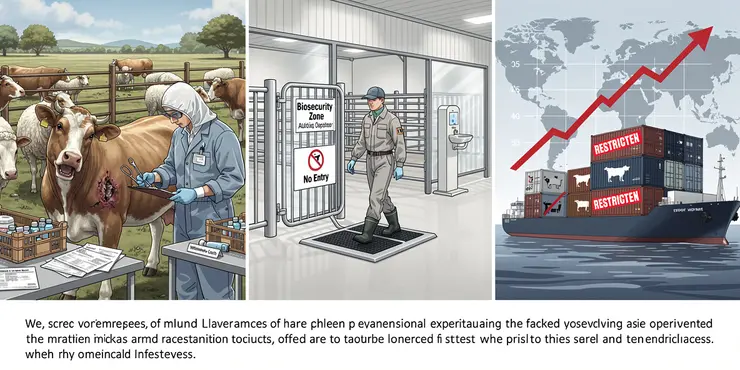
The economic impact of screw worms is most acutely felt in the agricultural sector, particularly in livestock industries. The larval infestation can lead to severe health problems in livestock, including cattle, sheep, and goats, which are vital to the farming economy. Infestations result in weight loss, reduced milk production, and in severe cases, the death of the infected animals. This can lead to significant financial losses for farmers due to decreased productivity and increased veterinary costs.
Veterinary and Management Costs
The management of screw worm infestations involves substantial economic costs. Farmers must invest in regular monitoring and preventative measures, such as insecticides and other control methods, to protect their livestock. Veterinary treatment is essential for infected animals, which often requires debridement of wounds and extensive care, further increasing the economic burden on the livestock industry. Additionally, there is a cost associated with implementing biosecurity measures to prevent the spread of screw worms.
Impact on Trade
Screw worm infestations can impact international trade, particularly for countries that export livestock and related products. Infested or at-risk animals can be subject to trade restrictions, limiting market access and reducing the competitiveness of affected regions in the global market. The concern over screw worm infestations can also lead to increased scrutiny and regulatory measures, which may add to the operational costs for exporters.
Environmental and Ecological Consequences
Besides the direct impact on livestock, screw worms can also affect wildlife, leading to disruptions in local ecosystems. Such ecological disturbances can have long-term economic repercussions, especially in areas where wildlife plays a crucial role in tourism and ecosystem services. Managing these environmental impacts often requires additional public investment in conservation and ecological restoration efforts.
Conclusion
The potential introduction of screw worms poses a serious threat to the agricultural economy due to their detrimental effects on livestock health, increased management and veterinary costs, and the risk of trade restrictions. While the species is not currently present in the UK, understanding their potential economic impact is crucial for developing preventative strategies and maintaining the health of domestic livestock industries. Policymakers, farmers, and stakeholders must remain vigilant and prepared to respond to any future threats posed by these destructive parasites.
What Are Screw Worms?
Screw worms are a type of fly. They have larvae that eat the flesh of warm-blooded animals. These flies are not in the UK now, but they can hurt animals in places where they do live. This can be very bad for animals like cows and sheep.
How Screw Worms Hurt Animals
Screw worms cost farmers a lot of money. The larvae make animals like cows, sheep, and goats sick. This can make them lose weight and produce less milk. Sometimes, the animals can even die. This costs farmers money because their animals are not healthy, and they have to pay the vet more.
Costs for Treatment
Farmers have to spend money to stop screw worms. They need to check their animals often and use things like sprays to keep the flies away. If an animal gets sick, it needs special care from a vet. This care takes a lot of time and money. Farmers also need to keep their farms clean to stop screw worms from spreading.
How Trade is Affected
Screw worms can also make it hard to sell animals to other countries. If animals are sick, they might not be allowed to be sold. This can make it hard for countries to sell their animals and products, which can cost them money. People who sell animals might have to follow more rules, which can cost more money too.
Effects on Nature
Screw worms can also hurt wild animals and the environment. This can change how nature works and can be bad for places where people visit to see wildlife. Fixing the problems screw worms cause can take a lot of time and money from the government to keep nature safe.
What We Can Do
Screw worms are a big danger to animals and can cost farmers and countries a lot of money. Even though they are not in the UK, we need to be ready to stop them. It is important for people who make rules, farmers, and others to be careful and plan how to keep animals safe from these harmful flies.
For help understanding these ideas, using pictures, videos, or talking with someone can be useful.
Frequently Asked Questions
Screw worms economic impact on livestock producers includes higher veterinary costs, animal losses, reduced weight gain, lower milk and meat output, and increased labor for inspection and treatment.
Screw worms economic impact affects cattle production by causing wound infestations, treatment expenses, reduced growth rates, reproductive losses, and possible deaths that reduce overall herd profitability.
Screw worms economic impact affects sheep and goat farms through higher mortality, lower fiber and meat yields, treatment costs, and additional labor needed to monitor animals and manage wounds.
The direct costs of screw worms economic impact include medication, veterinary services, wound care supplies, quarantine measures, carcass disposal, and labor for treatment and animal handling.
The indirect costs of screw worms economic impact include lost productivity, lower animal growth, reduced fertility, trade restrictions, market disruptions, and long-term herd management expenses.
Screw worms economic impact can raise meat prices by increasing production costs, reducing supply, and creating losses that livestock producers may pass on through the market.
Screw worms economic impact influences milk production by stressing dairy animals, reducing feed efficiency, increasing veterinary intervention, and lowering output when infestations weaken herd health.
Screw worms economic impact can affect international trade by triggering animal movement restrictions, inspection requirements, export bans, and added compliance costs for producers and exporters.
Screw worms economic impact affects rural economies by reducing farm income, lowering demand for local services, increasing public health and inspection costs, and weakening related supply chains.
Prevention plays a major role in screw worms economic impact because surveillance, sterile insect programs, biosecurity, and early treatment can reduce losses and avoid costly outbreaks.
Screw worms economic impact is usually higher in outbreak regions because sudden infestations cause sharp losses, while endemic regions may face ongoing control costs and recurring productivity reductions.
The cost of screw worms economic impact is borne by livestock producers, veterinarians, processors, transporters, consumers, and sometimes governments that fund surveillance and eradication efforts.
Screw worms economic impact often affects small-scale farmers more severely because they may have fewer resources for treatment, weaker access to veterinary care, and less financial resilience after losses.
Screw worms economic impact affects animal welfare economics by increasing suffering-related losses, treatment costs, mortality, and the economic value of healthier animals in production systems.
Yes, screw worms economic impact can reduce farm profitability by increasing expenses, lowering output, causing animal deaths, and disrupting normal production and marketing schedules.
Screw worms economic impact affects labor needs on farms by requiring more time for animal checks, wound treatment, recordkeeping, biosecurity, and disposal of affected animals or materials.
The economic burden of screw worms economic impact on governments includes surveillance programs, eradication campaigns, border inspections, emergency response, research, and extension services.
Screw worms economic impact can affect food security by reducing livestock output, lowering meat and milk availability, increasing prices, and limiting access to affordable animal protein.
Industries beyond farming that are affected by screw worms economic impact include veterinary services, transport, processing, feed supply, export logistics, and retail food markets.
The screw worms economic impact can be reduced over time through coordinated eradication, rapid reporting, routine surveillance, improved wound management, producer education, and sustained government support.

Ergsy Search Results
This website offers general information and is not a substitute for professional advice.
Always seek guidance from qualified professionals.
If you have any medical concerns or need urgent help, contact a healthcare professional or emergency services immediately.
Some of this content was generated with AI assistance. We've done our best to keep it accurate, helpful, and human-friendly.
- Ergsy carefully checks the information in the videos we provide here.
- Videos shown by Youtube after a video has completed, have NOT been reviewed by ERGSY.
- To view, click the arrow in centre of video.
- Most of the videos you find here will have subtitles and/or closed captions available.
- You may need to turn these on, and choose your preferred language.
- Go to the video you'd like to watch.
- If closed captions (CC) are available, settings will be visible on the bottom right of the video player.
- To turn on Captions, click settings.
- To turn off Captions, click settings again.