
Get Answers
What is a dementia-friendly community?
A dementia-friendly community is a place where people living with dementia are understood, respected and supported to stay included in everyday life. It can be a town, village, city, neighbourhood or organisation that makes small but important changes to help people feel safe and welcome.
The idea is simple: people with dementia should be able to keep doing the things that matter to them for as long as possible. That might include going shopping, using public transport, meeting friends, or taking part in local activities.
Why it matters
Dementia can affect memory, thinking, communication and confidence. Without support, everyday tasks can become difficult and stressful, both for the person and for their family or carers.
A dementia-friendly community helps reduce isolation and fear. It can make life easier for people with dementia and give their families reassurance that their local area is more understanding and accessible.
What it looks like in practice
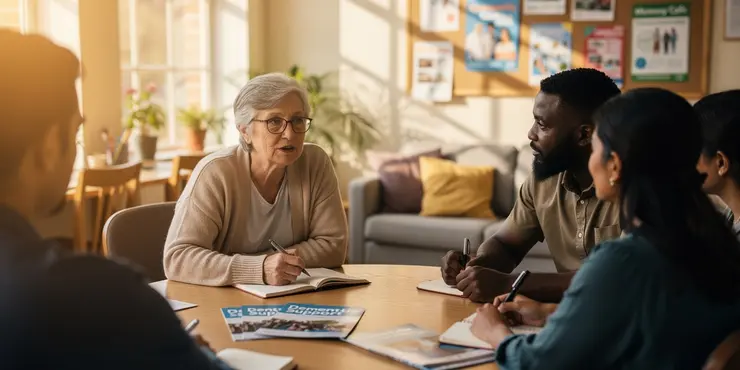
In a dementia-friendly community, shops, banks, cafés, libraries and leisure centres may train staff to recognise dementia and respond kindly. Simple actions, such as speaking clearly, being patient and offering extra time, can make a big difference.
Public spaces may also be designed to be easier to use. Clear signs, good lighting, less clutter and calm seating areas can all help people feel more confident when they are out and about.
It is not only about buildings and services. Friendly neighbours, local volunteers and community groups all play a part by being welcoming and offering practical help when needed.
The role of the wider community
A dementia-friendly community works best when everyone plays a part. Local councils, businesses, charities, health services and residents can all help create a more inclusive environment.
In the UK, many communities run awareness sessions and dementia support activities. These can help people learn more about dementia and challenge misunderstandings or stigma.
Benefits for everyone
Dementia-friendly changes often improve life for many people, not just those with dementia. Clearer signs, calmer spaces and better customer service can help older people, people with disabilities, and families with young children too.
Most importantly, dementia-friendly communities promote dignity and belonging. They send a clear message that people with dementia are still valued members of society, with the right to stay connected and involved.
Frequently Asked Questions
A dementia-friendly community is a place where people, services, and local organizations are set up to help people living with dementia remain included, respected, and safe. It works by improving awareness, reducing stigma, training staff, making environments easier to navigate, and offering support that helps people stay connected to daily life.
A dementia-friendly community is important because it can help people living with dementia keep independence, dignity, and social connection for longer. It also helps families and caregivers by making everyday errands, transportation, healthcare, and public spaces easier to use and less stressful.
A dementia-friendly community can benefit people living with dementia, family caregivers, friends, neighbors, business owners, healthcare providers, and the wider public. It creates a more supportive environment for anyone who may need clearer communication, patience, or accessible services.
A dementia-friendly community may include memory support programs, trained staff in shops and services, accessible transportation, safe public spaces, caregiver resources, social activities, and referral pathways to health and social care. The exact services vary by location, but the goal is to make daily life easier and more inclusive.
A dementia-friendly community helps reduce stigma by educating the public about dementia, encouraging respectful language, and promoting understanding of the challenges people may face. When communities learn how to respond with patience and support, people with dementia are more likely to feel accepted and included.
A dementia-friendly community often includes clear signs, simple layouts, good lighting, quiet spaces, easy-to-read information, and helpful staff. These features can reduce confusion and make it easier for people with dementia to move around independently and confidently.
Businesses can support a dementia-friendly community by training employees to communicate clearly, offering extra time and patience, using easy-to-read signs, and making customer spaces less confusing. They can also create welcoming policies that help people with dementia feel comfortable asking for assistance.
Staff in a dementia-friendly community often need training on dementia awareness, respectful communication, recognizing signs of confusion or distress, and practical ways to offer help. Training should also include how to support families and know when to call for additional assistance if needed.
Families can help build a dementia-friendly community by sharing experiences, joining local awareness efforts, educating neighbors, and advocating for better services and accessibility. Their input can help local leaders understand what support is most useful in real life.
Local governments play a major role in a dementia-friendly community by funding programs, improving public spaces, supporting transportation, encouraging staff training, and coordinating services. They can also bring together health providers, nonprofits, and businesses to create a more coordinated response.
A dementia-friendly community improves social inclusion by helping people with dementia continue participating in everyday activities such as shopping, volunteering, worship, recreation, and community events. It removes some barriers that can lead to isolation and helps maintain relationships and a sense of belonging.
Important public places in a dementia-friendly community include libraries, parks, shops, banks, clinics, community centers, transit hubs, and places of worship. These places become more accessible when they are easy to understand, welcoming, and staffed by people who know how to help.
Transportation in a dementia-friendly community can be improved by using clear route information, simple ticketing, patient drivers, well-marked stops, and assistance for people who may need help boarding or finding their destination. Reliable and understandable transport helps people stay independent and connected.
Emergency services in a dementia-friendly community should know how dementia can affect memory, communication, and reactions under stress. Training can help responders speak calmly, provide simple instructions, identify confusion quickly, and support both the person and their caregiver effectively.
A dementia-friendly community can support unpaid caregivers by offering respite options, support groups, education, flexible services, and recognition of caregiver needs. When caregivers receive support, they are better able to continue helping their loved one while also protecting their own health and well-being.
Examples of dementia-friendly communication include speaking clearly, using short sentences, asking one question at a time, allowing extra response time, and avoiding correction or argument. Friendly body language, a calm tone, and visual cues can also make communication easier and less stressful.
A school or library can contribute to a dementia-friendly community by hosting awareness events, offering intergenerational programs, training staff, and providing accessible information and quiet spaces. These organizations can also help reduce stigma by encouraging community learning and inclusion.
Common challenges in creating a dementia-friendly community include limited funding, uneven public awareness, lack of staff training, and making sure changes are practical across many settings. Success usually requires coordination, ongoing education, and commitment from multiple groups over time.
Someone can get involved in a dementia-friendly community by volunteering, joining local dementia awareness groups, attending training, supporting inclusive events, or advocating for better services and accessibility. Even small actions, like learning respectful communication, can make a meaningful difference.
A dementia-friendly community is often measured by looking at public awareness, access to services, staff training, participation in community life, caregiver satisfaction, and whether people with dementia feel included and safe. Success is strongest when people can remain active and supported in everyday community life.

Ergsy Search Results
This website offers general information and is not a substitute for professional advice.
Always seek guidance from qualified professionals.
If you have any medical concerns or need urgent help, contact a healthcare professional or emergency services immediately.
Some of this content was generated with AI assistance. We've done our best to keep it accurate, helpful, and human-friendly.
- Ergsy carefully checks the information in the videos we provide here.
- Videos shown by Youtube after a video has completed, have NOT been reviewed by ERGSY.
- To view, click the arrow in centre of video.
- Most of the videos you find here will have subtitles and/or closed captions available.
- You may need to turn these on, and choose your preferred language.
- Go to the video you'd like to watch.
- If closed captions (CC) are available, settings will be visible on the bottom right of the video player.
- To turn on Captions, click settings.
- To turn off Captions, click settings again.