
Get Answers
What is a Defibrillator?
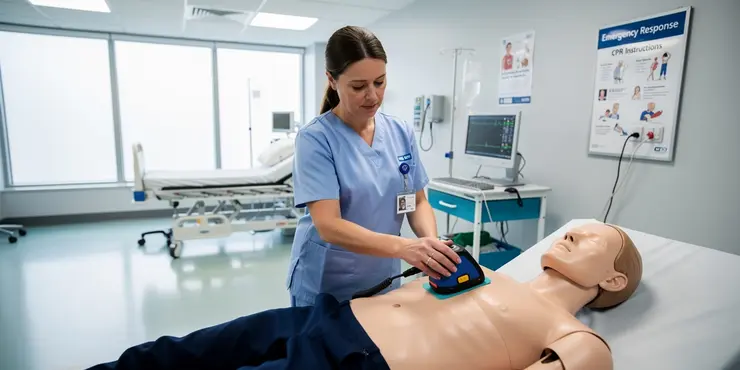
A defibrillator is a medical device designed to restore a normal heartbeat by sending an electric pulse or shock to the heart. It's used to prevent or correct an arrhythmia, which is an uneven heartbeat that is either too slow or too fast. It can also restore the heart's beating if the heart suddenly stops. Defibrillators are invaluable life-saving tools used in emergencies, especially during sudden cardiac arrest (SCA).
Types of Defibrillators
There are several types of defibrillators available, including Automated External Defibrillators (AEDs), Implantable Cardioverter Defibrillators (ICDs), and Wearable Cardioverter Defibrillators (WCDs).
Automated External Defibrillators (AEDs): AEDs are portable devices used by laypersons and emergency responders. They are designed to be simple to use, with voice prompts and visual aids to guide users. They can be found in various public spaces such as airports, shopping centres, and sports venues.
Implantable Cardioverter Defibrillators (ICDs): These are surgically placed inside the body. ICDs monitor heart rhythms and automatically correct any abnormal rhythms by delivering shocks when necessary.
Wearable Cardioverter Defibrillators (WCDs): WCDs are external devices worn by patients at risk of sudden cardiac arrest. They continuously monitor the heart's activity and deliver shocks if required.
How Does a Defibrillator Work?
Defibrillators work by delivering a dose of electric current (often called a counter-shock) to the heart. This electrical intervention can reset the heart's rhythm and allow the heart's natural pacemaker to re-establish a normal rhythm. AEDs, in particular, are designed to detect life-threatening arrhythmias and advise the user to administer a shock only when necessary. This innovation makes it possible for individuals with minimal training to assist in saving lives.
Importance of Defibrillators
Defibrillators are crucial in the event of sudden cardiac arrest, one of the leading causes of death. The chances of survival decrease by 7-10% with each minute of delay in treatment. Therefore, quick access to defibrillators is a vital component of emergency response outcomes. In the UK, initiatives to increase AED availability and public awareness campaigns aim to improve survival rates from cardiac arrests outside hospitals.
Using a Defibrillator
Using an AED is relatively straightforward. The device usually provides voice instructions to guide the user through the process of applying electrode pads to the patient's chest and delivering a shock if needed. It’s important to remember that even though AEDs are designed for layperson use, proper training in CPR and AED usage can significantly improve the confidence and effectiveness of responders.
Conclusion
Defibrillators represent an essential component of life-saving measures in cardiac emergencies. They are designed to be accessible and easy to use, allowing even untrained individuals to provide critical assistance in the event of sudden cardiac arrest. Continuous efforts to place AEDs in public areas and educate the community about their use are vital for enhancing public health and safety in the UK.
What is a Defibrillator?
A defibrillator is a machine that helps the heart beat normally. It does this by sending an electric shock to the heart. It helps when the heart beats too slowly or too quickly, or if the heart stops beating. This machine is very important in emergencies, like when someone has a sudden heart problem.
Types of Defibrillators
There are different kinds of defibrillators: Automated External Defibrillators (AEDs), Implantable Cardioverter Defibrillators (ICDs), and Wearable Cardioverter Defibrillators (WCDs).
Automated External Defibrillators (AEDs): AEDs are small machines that are easy to use. They talk to the person using them, telling them what to do. You can find them in many public places, like airports and shopping centers.
Implantable Cardioverter Defibrillators (ICDs): ICDs are put inside a person’s body with a surgery. They check the heart’s beat and fix it if it’s not right.
Wearable Cardioverter Defibrillators (WCDs): WCDs are worn on the body, like a vest. They help people who might have a sudden heart problem by watching the heart and giving a shock if needed.
How Does a Defibrillator Work?
Defibrillators send an electric shock to the heart to help it beat correctly. AEDs can notice if the heart needs a shock and tell the person using it when to give the shock. This helps even people who are not experts to help save lives.
Importance of Defibrillators
Defibrillators are very important for saving lives when a person’s heart suddenly stops. Every minute matters, so having a defibrillator nearby can make a big difference. In the UK, there are programs to put more AEDs in public places and teach people about them to help save more lives.
Using a Defibrillator
Using an AED is fairly easy. It will tell you where to put sticky pads on the person’s chest and if you need to give a shock. Knowing how to use an AED and do CPR can help you feel more ready to help someone with a heart problem.
Conclusion
Defibrillators are important tools that help save people during heart emergencies. They are made so anyone can use them to help someone in need. It's important to keep putting AEDs in public spaces and teach people how to use them to keep everyone safe and healthy.
Frequently Asked Questions
A defibrillator is a medical device that delivers an electrical shock to the heart to restore a normal heartbeat in cases of cardiac arrest or arrhythmias.
A defibrillator works by delivering a dose of electric current (shock) to the heart. This shock can help re-establish an effective rhythm when the heart is beating chaotically or has stopped.
The main types of defibrillators include Automated External Defibrillators (AEDs), Implantable Cardioverter Defibrillators (ICDs), and Wearable Cardioverter Defibrillators (WCDs).
An AED is a portable electronic device that automatically diagnoses life-threatening cardiac arrhythmias and treats them through defibrillation.
AEDs are designed for use by laypersons with little or no training, as they provide clear instructions and some models automatically administer the shock.
An ICD is a device implanted inside the body, able to continuously monitor heart rhythm and deliver shocks to correct abnormal heartbeats.
A defibrillator is needed in situations of sudden cardiac arrest, where the heart stops beating effectively, and in certain severe arrhythmias.
Defibrillators are highly effective in treating sudden cardiac arrest, significantly increasing survival rates when used promptly.
Yes, many AEDs have pediatric settings or pads, allowing them to be used safely on children.
No, defibrillators are used in conjunction with CPR. CPR maintains blood flow until defibrillation can restore a normal heart rhythm.
Shockable rhythms are specific types of heart rhythms that can be treated with defibrillation, such as ventricular fibrillation and pulseless ventricular tachycardia.
Ventricular fibrillation (VFib) is a life-threatening heart rhythm problem that occurs when the heart beats with rapid, erratic electrical impulses.
AEDs require regular maintenance including checking the battery, pads, and self-tests to ensure they are ready for use in an emergency.
AEDs can be found in many public places, such as airports, shopping malls, gyms, schools, and community centers, where people gather.
While AEDs are designed for easy use with minimal or no training, formal CPR and AED training is recommended to increase confidence and effectiveness.
Defibrillation is the process of delivering a therapeutic dose of electrical energy to the heart during cardiac arrest, whereas cardioversion is a synchronized shock delivered during a specific part of the heart rhythm to treat arrhythmias.
When used correctly, defibrillators are safe and will not harm the patient. They are programmed to deliver shocks only when necessary.
If the AED does not advise a shock, continue performing CPR until emergency medical services arrive or the patient begins to respond.
Defibrillators are used in hospitals, but AEDs are also available in public spaces for bystanders to use in emergencies.
The actual electrical shock from a defibrillator lasts less than a second.
A defibrillator is a machine doctors use to help your heart. When your heart stops or beats wrong, it gives a small electric shock. This helps your heart beat the right way again.
A defibrillator is a machine that helps the heart. It sends a strong burst of electricity to the heart. This can help the heart beat normally if it is not beating right or has stopped.
There are different types of machines that help your heart if it stops working. They are called defibrillators. The main ones are:
1. **Automated External Defibrillators (AEDs):** This is a machine that anyone can use in an emergency to help restart a heart.
2. **Implantable Cardioverter Defibrillators (ICDs):** This is a small device doctors can put inside your body. It helps keep your heart beating well.
3. **Wearable Cardioverter Defibrillators (WCDs):** This is like a vest you can wear. It helps your heart if you have problems.
An AED is a small machine that helps when someone's heart is not working right. It can find heart problems and help fix them. It does this by giving the heart an electric shock.
AEDs are machines that help people whose hearts have stopped. They are made for everyone to use, even if you haven't learned how. The machine talks to you and tells you what to do. Some AEDs can give a heart shock without help from a person.
An ICD is a special machine that doctors put inside the body. It watches the heart to see how it beats. If the heart beats in a wrong way, the ICD can give a little shock to help it beat right again.
A defibrillator is a machine that can help when someone's heart stops beating properly or has a very bad heart rhythm.
Defibrillators can help when a person's heart stops suddenly. They can save lives if used quickly.
Yes, many AEDs can be used on children. They have special settings or pads to keep children safe.
No, defibrillators and CPR work together. CPR helps keep the blood moving until the defibrillator can help the heart beat normally again.
Shockable rhythms are certain times when the heart beats in a way that can be helped with a special machine. This machine is called a defibrillator. It can help when the heart has problems like ventricular fibrillation or pulseless ventricular tachycardia.
Ventricular fibrillation (VFib) is a serious heart problem. It happens when the heart beats very fast and unevenly.
It's important to take care of AEDs to keep them ready. You need to check the battery, pads, and make sure they do self-tests. This way, they will work in an emergency.
You can find AEDs in lots of places where people go. They are in places like airports, shopping malls, gyms, schools, and community centers.
Even though AEDs are made to be easy to use and you don't need special training, it is a good idea to learn how to use them. You can feel more sure and do a better job if you have training in CPR and how to use an AED.
Defibrillation is a way to help the heart when it stops beating. It uses an electric shock to try to make the heart start again.
Cardioversion also uses an electric shock, but it is used when the heart is not beating in a regular way. The shock is timed to help the heart get back to a normal beat.
Here are some tips to help understand this:
- Use pictures or videos to see how defibrillation and cardioversion work.
- Ask someone to explain it to you in person if you’re still unsure.
- Break the words down: Defibrillation (de-fib-ri-la-tion) and Cardioversion (car-di-o-ver-sion).
Defibrillators are safe to use. They only give a shock if it is needed. This means they do not hurt people.
If the AED says no shock is needed, keep doing CPR. Do this until the ambulance or help comes, or the person wakes up or moves.
Defibrillators help when someone's heart stops. Hospitals have them, and there are also special ones called AEDs. You can find AEDs in public places to help people in emergencies.
The jolt of electricity from a defibrillator is very quick. It lasts less than one second.

Ergsy Search Results
This website offers general information and is not a substitute for professional advice.
Always seek guidance from qualified professionals.
If you have any medical concerns or need urgent help, contact a healthcare professional or emergency services immediately.
Some of this content was generated with AI assistance. We've done our best to keep it accurate, helpful, and human-friendly.
- Ergsy carefully checks the information in the videos we provide here.
- Videos shown by Youtube after a video has completed, have NOT been reviewed by ERGSY.
- To view, click the arrow in centre of video.
- Most of the videos you find here will have subtitles and/or closed captions available.
- You may need to turn these on, and choose your preferred language.
- Go to the video you'd like to watch.
- If closed captions (CC) are available, settings will be visible on the bottom right of the video player.
- To turn on Captions, click settings.
- To turn off Captions, click settings again.