
Get Answers
Introduction to Crusted Scabies
Crusted scabies, also known as Norwegian scabies, is a highly contagious skin condition. It is caused by an infestation of the skin by the microscopic mite Sarcoptes scabiei. This condition is more severe than typical scabies due to the high number of mites present on the skin.
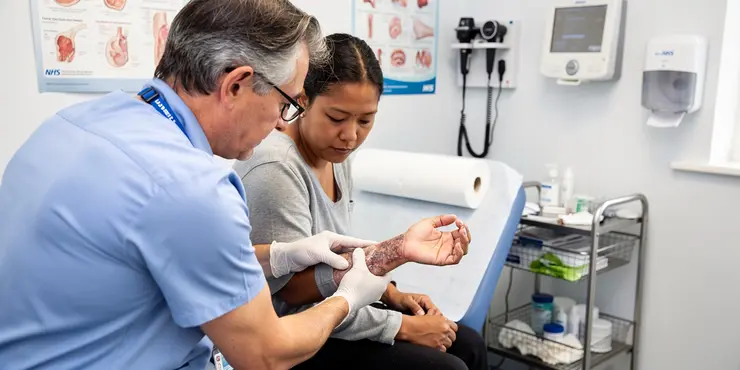
Unlike regular scabies, crusted scabies results in thick crusts on the skin. These crusts are teeming with mites and eggs, leading to a more intense infestation. The severity of crusted scabies is often linked to an individual's weakened immune system.
Symptoms and Identification
The symptoms of crusted scabies differ from common scabies. They include thick, crusty patches of skin that may be grey or yellow in colour. These patches can cover large areas of the body.
Itching is often less pronounced in crusted scabies compared to typical scabies. This can make the condition harder to identify without close examination. As a result, it may go untreated for longer periods, increasing the risk of spreading.
Causes and Risk Factors
Crusted scabies is often associated with a compromised immune system. Those at higher risk include individuals with HIV, those undergoing chemotherapy, or those with autoimmune disorders.
Older adults and those in institutional settings, such as care homes, are also more susceptible. Crusted scabies can easily spread in these environments due to close contact among individuals.
Diagnosis and Treatment
Diagnosing crusted scabies requires a healthcare professional. They will usually perform a skin scraping to identify the presence of mites or eggs. Early diagnosis is critical to prevent spreading.
Treatment typically involves topical and oral medications to eradicate the mites. It is important to treat all household members and close contacts to prevent reinfestation.
Prevention and Care
Preventing crusted scabies involves maintaining good personal hygiene. Care in institutional settings should include regular checks for skin conditions. Prompt treatment of any detected cases helps control outbreaks.
Fabrics and clothing used by affected individuals should be washed at high temperatures. This helps eliminate any lingering mites in the environment. Ensuring that living spaces are clean is also vital in preventing spread.
Conclusion
Crusted scabies is a serious and highly contagious form of scabies. It requires medical attention to avoid widespread transmission and complications. Awareness and prompt treatment can help manage and contain outbreaks effectively.
Education on the signs and preventive measures can empower individuals and caregivers. Early detection remains key to successful management of crusted scabies.
Frequently Asked Questions
Crusted scabies, also known as Norwegian scabies, is a severe form of scabies caused by a large number of mites living in the skin.
Crusted scabies involves a higher number of mites and leads to thick, crusted skin, whereas regular scabies typically involves fewer mites and less severe skin changes.
Crusted scabies is caused by the Sarcoptes scabiei mite, but occurs when the immune response is unable to control the mite population effectively.
Individuals with weakened immune systems, such as those with HIV/AIDS, the elderly, or those on immunosuppressive drugs, are at higher risk.
Symptoms include thick, crusted, and scaly skin, itching, and rashes. The skin can be particularly crusty on the elbows, knees, and other extremities.
Diagnosis is often made by a dermatologist through a skin examination, and confirmation usually involves a skin scraping to identify mites, eggs, or feces.
Yes, it is highly contagious and can be passed to others through close physical contact or sharing bedding and clothing.
Treatment typically involves a combination of topical permethrin or oral ivermectin, along with managing secondary skin infections.
With proper treatment, improvements can be seen within days, but complete recovery can take several weeks.
Yes, without proper treatment and preventive measures, crusted scabies can recur, particularly in vulnerable individuals.
Preventive measures include washing clothing and bedding in hot water, using medication as prescribed, and avoiding close contact with infested individuals.
Yes, untreated crusted scabies can lead to secondary bacterial infections and more severe immune complications.
While hygiene alone is not enough to prevent crusted scabies, maintaining clean surroundings and personal hygiene can help reduce spread.
Measures include cleaning and vacuuming living spaces thoroughly and laundering or isolating potentially contaminated items.
No, the scabies mite affecting humans does not typically infest pets, although a temporary skin reaction can occur.
Seek medical advice promptly for diagnosis and treatment to prevent spreading and complications.
Facilities should implement contact precautions, monitor for symptoms, and treat affected individuals quickly.
No, there is currently no vaccine for scabies or crusted scabies; prevention relies on treatment and hygiene measures.
Scabies can occur at any time of the year but may be more noticeable in colder months when people are indoors more often.
Early detection allows for timely treatment, which can prevent transmission and reduce the severity of the infestation.

Ergsy Search Results
This website offers general information and is not a substitute for professional advice.
Always seek guidance from qualified professionals.
If you have any medical concerns or need urgent help, contact a healthcare professional or emergency services immediately.
Some of this content was generated with AI assistance. We've done our best to keep it accurate, helpful, and human-friendly.
- Ergsy carefully checks the information in the videos we provide here.
- Videos shown by Youtube after a video has completed, have NOT been reviewed by ERGSY.
- To view, click the arrow in centre of video.
- Most of the videos you find here will have subtitles and/or closed captions available.
- You may need to turn these on, and choose your preferred language.
- Go to the video you'd like to watch.
- If closed captions (CC) are available, settings will be visible on the bottom right of the video player.
- To turn on Captions, click settings.
- To turn off Captions, click settings again.