
Get Answers
Bone-strengthening activities in weekly exercise guidance
For both adults and children, bone-strengthening activities are exercises that put healthy stress on the bones and muscles. This kind of loading helps bones stay strong and can support better bone health over time. In UK activity guidance, these exercises are included alongside other types of physical activity.
Bone-strengthening exercise is not the same as gentle movement like walking at an easy pace. It usually involves actions where the body works against gravity, impact, or resistance. The aim is to encourage bones to adapt and become stronger.
Examples for adults
Adults are usually advised to include muscle-strengthening activities on at least two days a week, and many of these can also help strengthen bones. Examples include brisk hill walking, stair climbing, dancing, and high-impact aerobics. Jogging, tennis, and other racket sports are also common bone-strengthening choices.
Resistance exercise can be helpful too. This may include lifting weights, using resistance bands, or doing bodyweight exercises such as squats, lunges, and press-ups. Activities that involve quick changes of direction or repeated jumping can also support bone health.
For some adults, everyday tasks may count if they are done at a good enough intensity. Carrying heavy shopping, digging in the garden, or moving furniture can all involve bone-strengthening effort. The key is that the activity challenges the muscles and bones rather than being purely light movement.
Examples for children and young people
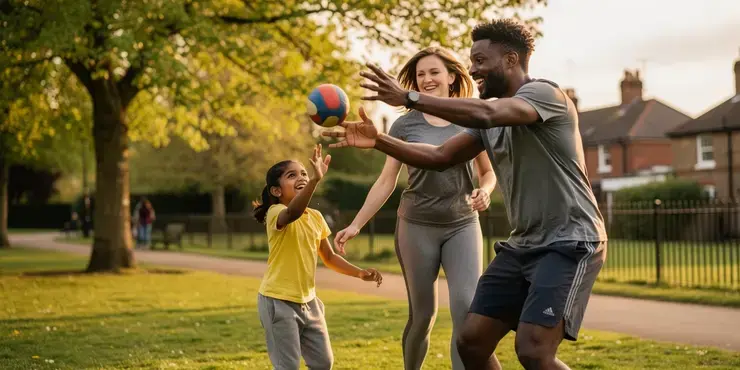
Children and young people need regular physical activity every day, and bone-strengthening exercise should be part of that pattern. In UK guidance, they are encouraged to include activities that involve running, jumping, hopping, and skipping. These movements are especially good for building strong bones during growth.
Team games such as football, basketball, netball, and hockey can also be bone-strengthening because they involve running and impact. Gymnastics, trampolining, climbing, and dance are other good examples. Sports that include sprinting or jumping are particularly useful.
As with adults, resistance-based activities can play a role for older children and teenagers. Simple bodyweight exercises, supervised strength training, and active play that includes climbing or jumping can all help. The most important point is that the activity is age-appropriate and done safely.
Making it part of the week
Bone-strengthening activities do not need to be done every day, but they should appear regularly across the week. Adults are generally encouraged to build them into their routine at least twice weekly. For children and young people, the goal is to make active play and sport part of daily life.
A balanced mix of activity is best. Bone-strengthening exercise works alongside aerobic activity and muscle-strengthening exercise to support overall health. Choosing activities that are enjoyable makes it easier to keep them going long term.
Frequently Asked Questions
Bone-strengthening activities weekly exercise recommendations adults and children are guidance for exercises that help bones adapt to impact and resistance, such as jumping, running, skipping, dancing, and sports. They matter because regular bone-loading activity helps build stronger bones in children and helps adults maintain bone density and reduce fracture risk.
Bone-strengthening activities weekly exercise recommendations adults and children are typically suggested on at least 3 days per week for children and adolescents, while adults should include bone-strengthening and muscle-strengthening activities on at least 2 days per week as part of a broader exercise routine.
For children and adolescents, the best bone-strengthening activities weekly exercise recommendations adults and children include jumping rope, hopscotch, basketball, soccer, tennis, gymnastics, dance, running, and other weight-bearing play that involves impact and movement.
For adults, the best bone-strengthening activities weekly exercise recommendations adults and children include brisk walking, stair climbing, jogging, dancing, tennis, hiking, resistance training, and exercises that challenge bones through load or impact while remaining safe and sustainable.
Bone-strengthening activities weekly exercise recommendations adults and children do not require one fixed session length, but most people benefit from spreading activity across the week in sessions of 10 to 60 minutes depending on age, fitness, and activity type. Consistency matters more than a single long workout.
Yes, bone-strengthening activities weekly exercise recommendations adults and children can include non-sports activities such as active play, walking upstairs, dancing, yard work, jumping games, and bodyweight exercises that place healthy stress on bones.
Yes, bone-strengthening activities weekly exercise recommendations adults and children may need adjustment for adults over 50 to reduce fall and injury risk. Older adults should prioritize safe weight-bearing, resistance, balance, and moderate-impact exercises based on health status and medical advice.
Bone-strengthening activities weekly exercise recommendations adults and children support children’s growth by encouraging bone formation during the years when bone mass is being built most rapidly. Active play and regular impact exercise help children develop stronger bones that can support long-term skeletal health.
Bone-strengthening activities weekly exercise recommendations adults and children help adults prevent osteoporosis by maintaining or improving bone density through regular loading of the skeleton. Weight-bearing and resistance exercises are especially important because they signal the body to preserve bone tissue.
Safety tips for bone-strengthening activities weekly exercise recommendations adults and children include using proper shoes, starting gradually, warming up, choosing age-appropriate activities, supervising young children, and avoiding high-impact moves if pain, injury, or medical conditions make them unsafe.
Yes, bone-strengthening activities weekly exercise recommendations adults and children can be done at home with activities like jumping jacks, stair climbing, dance routines, bodyweight squats, skipping, and active games that create safe impact or resistance.
No, bone-strengthening activities weekly exercise recommendations adults and children do not always require equipment. Many effective options use body weight or simple tools like a jump rope, resistance bands, or stairs, though equipment can add variety and challenge.
Bone-strengthening activities weekly exercise recommendations adults and children focus on exercises that load the skeleton through impact or resistance, while muscle-strengthening recommendations focus on building muscle force. Many activities, such as climbing or resistance training, support both bone and muscle health.
Yes, bone-strengthening activities weekly exercise recommendations adults and children are often naturally combined with aerobic exercise, such as running, dancing, hiking, and sports. This combination is beneficial because it improves heart health, fitness, coordination, and bone strength at the same time.
Beginners should know that bone-strengthening activities weekly exercise recommendations adults and children work best when started gradually. It is wise to begin with low to moderate intensity, increase volume slowly, and choose enjoyable activities that can be repeated every week.
People with osteoporosis, recent fractures, chronic pain, heart disease, balance problems, or other medical conditions should talk to a doctor before starting bone-strengthening activities weekly exercise recommendations adults and children. Children with special health needs may also need individualized guidance.
Examples of bone-strengthening activities weekly exercise recommendations adults and children for school-aged children include recess play, tag, jumping games, team sports, skipping, gymnastics, playground climbing, and running games that involve frequent changes in direction and impact.
Adults who dislike gyms can still follow bone-strengthening activities weekly exercise recommendations adults and children by walking briskly, hiking, dancing at home, taking stairs, gardening, playing recreational sports, or doing short bodyweight routines.
Families can plan bone-strengthening activities weekly exercise recommendations adults and children together by scheduling active outings, weekend hikes, dance sessions, bike rides with some impact-free days, playground visits, and sports that match each person’s age and ability.
Bone-strengthening activities weekly exercise recommendations adults and children can be made more consistent by setting a weekly schedule, choosing enjoyable activities, tracking progress, varying workouts to prevent boredom, and making movement a normal part of daily routines.

Ergsy Search Results
This website offers general information and is not a substitute for professional advice.
Always seek guidance from qualified professionals.
If you have any medical concerns or need urgent help, contact a healthcare professional or emergency services immediately.
Some of this content was generated with AI assistance. We've done our best to keep it accurate, helpful, and human-friendly.
- Ergsy carefully checks the information in the videos we provide here.
- Videos shown by Youtube after a video has completed, have NOT been reviewed by ERGSY.
- To view, click the arrow in centre of video.
- Most of the videos you find here will have subtitles and/or closed captions available.
- You may need to turn these on, and choose your preferred language.
- Go to the video you'd like to watch.
- If closed captions (CC) are available, settings will be visible on the bottom right of the video player.
- To turn on Captions, click settings.
- To turn off Captions, click settings again.