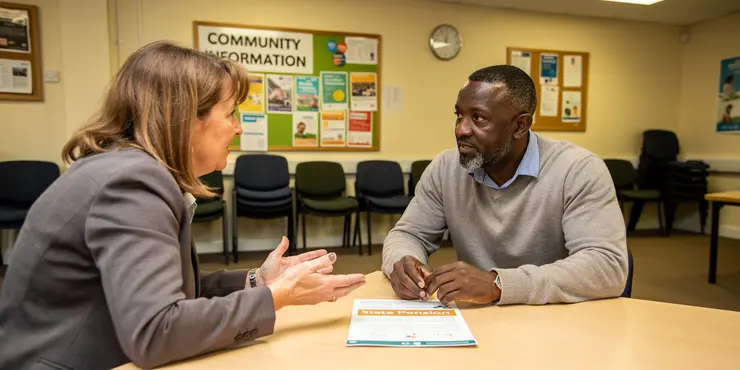

Speak To An Expert
Get clear, personalised advice for your situation.
Jot down a few questions to make the most of your conversation.
State Pension
The State Pension is a regular payment from the government that most people can claim when they reach State Pension age. The amount one receives depends on their National Insurance record. As of the latest updates, the full new State Pension is £203.85 per week, but the actual amount varies based on qualifying years of National Insurance contributions. If one reaches State Pension age before 6 April 2016, they may receive the basic State Pension
Pension Credit
Pension Credit is an income-related benefit aimed at boosting the incomes of older people. There are two parts to Pension Credit: Guarantee Credit and Savings Credit. Guarantee Credit tops up weekly income to a guaranteed minimum amount, while Savings Credit is an additional payment for those who have saved some money towards their retirement. Not everyone qualifies for Savings Credit, but Guarantee Credit ensures that no one over State Pension age lives on less than the minimum income.
Winter Fuel Payment
The Winter Fuel Payment provides financial support to help older people meet the costs of heating during the winter months. Depending on eligibility, individuals can receive between £250 and £600. This payment is usually awarded to those born on or before 25 September 1957 and has been living in the UK throughout the qualifying week. Additional supplements, known as the Pensioner Cost of Living Payment, are available for those affected by inflation in energy costs.
Free or Reduced Travel
Across the UK, older people benefit from free or reduced public transport fares. People over the age of 60 can apply for a senior bus pass, enabling them to travel by bus for free in their local area. In London, residents aged 60 or above can obtain a 60+ Oyster card, offering free travel on various public transport systems. National Rail offers a Senior Railcard, reducing train travel costs by a third for those aged 60 and over.
Health Benefits
Once retired, individuals in the UK also benefit from various health entitlements. Prescriptions and eye tests become free for those aged 60 and above. Many may also receive dental treatment for free or at a reduced cost, depending on their circumstances. Additionally, older people have access to flu vaccinations at no cost, generally offered each winter.
Attendance Allowance
Attendance Allowance is provided to people over State Pension age who need help with personal care due to a physical or mental disability. It is a non-means tested benefit, meaning it doesn’t take into account one’s income or savings. The allowance ranges from £68.10 to £101.75 per week, depending on the level of care needed. This financial support helps recipients maintain a certain level of independence.
State Pension
The State Pension is money you get from the government when you are older. You can get it when you reach a certain age, called the State Pension age. How much you get depends on your National Insurance record. The full State Pension is £203.85 each week, but it can be less if you haven't paid enough National Insurance. If you became the right age before 6 April 2016, you might get a different, basic pension.
Pension Credit
Pension Credit is extra money for older people who need it. There are two types: Guarantee Credit and Savings Credit. Guarantee Credit makes sure you have a minimum amount of money each week. Savings Credit gives extra money if you have saved some money for later life. Not everyone can get Savings Credit, but Guarantee Credit helps make sure no one has too little money when they are older.
Winter Fuel Payment
Winter Fuel Payment is money to help older people pay for heat in the winter. You can get between £250 and £600, depending on your situation. You usually get this money if you were born on or before 25 September 1957 and have lived in the UK during a certain week. There is extra money, called the Pensioner Cost of Living Payment, for people affected by rising energy costs.
Free or Reduced Travel
In the UK, older people get help with travel costs. If you are over 60, you can get a bus pass to travel for free. In London, if you are over 60, you can get a 60+ Oyster card to travel for free on public transport. If you use trains, a Senior Railcard can save you a third on ticket costs if you are over 60.
Health Benefits
When people retire in the UK, they get health benefits. If you are over 60, you do not have to pay for prescriptions and eye tests. You might also get free or cheaper dental care. People over 60 can get free flu shots every winter to help stay healthy.
Attendance Allowance
Attendance Allowance is money for people over State Pension age who need help with daily activities because of a disability. It does not matter how much money you have; you can still get it. The amount you get ranges from £68.10 to £101.75 each week, depending on how much help you need. This money helps you stay independent.
Frequently Asked Questions
Social Security is a government program that provides retirement, disability, and survivors benefits. Seniors who have paid into the system during their working years can receive monthly payments to help with living expenses.
Medicare is a federal health insurance program for people aged 65 and older. It covers hospital stays, medical services, and, for some, prescription drugs through its different parts: A, B, C, and D.
Yes, programs like the Supplemental Nutrition Assistance Program (SNAP) provide eligible seniors with funds to purchase food. Additionally, Meals on Wheels delivers meals to seniors who are homebound.
Seniors may qualify for housing assistance through programs like Section 202 Supportive Housing for the Elderly, which provides affordable apartments with supportive services.
Yes, the Low Income Home Energy Assistance Program (LIHEAP) helps low-income households, including seniors, with their heating and cooling energy costs.
Many communities offer free or low-cost legal assistance to seniors on issues like estate planning, healthcare, and housing through local legal aid organizations.
Yes, there are several transportation services available for seniors, including public transit discounts, paratransit services, and volunteer driver programs.
The Older Americans Act funds programs that provide services such as meal delivery, caregiver support, and other community-based services to help seniors live independently.
Yes, seniors may qualify for various tax benefits such as higher standard deductions or tax credits for the elderly or disabled.
Long-term care support for seniors can be accessed through Medicaid, private insurance plans, and elder care programs that provide in-home services, assisted living, or nursing home care.
Seniors can access mental health resources through Medicare-covered services, community mental health centers, and senior centers that offer counseling and support groups.
Senior discount programs offer reduced prices for goods and services to individuals typically aged 55 or 65 and older, available at many retailers, restaurants, and travel services.
Area Agencies on Aging coordinate and provide a range of services that help seniors and their caregivers, including meal programs, transportation, and assistance with healthcare and benefits.
Seniors qualify for SSI if they have limited income and resources and are aged 65 or older. The program provides monthly payments to help with basic needs.
Community centers offer various activities and services for seniors, such as fitness classes, health screenings, social events, and educational workshops, fostering social engagement and well-being.
Seniors can get help with prescription drug costs through Medicare Part D plans, state pharmaceutical assistance programs, and manufacturer's discount programs.
Senior caregiving resources include in-home care services, adult day care, respite care, and caregiver support groups, which help manage the care and well-being of elderly individuals.
Yes, many colleges and universities offer reduced or free tuition for seniors, along with lifelong learning programs and online courses that cater to older adults.
Senior employment programs, like the Senior Community Service Employment Program (SCSEP), help older adults gain work experience and job training to re-enter the workforce.
Safety programs for seniors include fall prevention classes, personal emergency response systems, and local safety check programs to ensure their well-being and independence.
Social Security is a program run by the government. It helps people when they stop working, if they can't work because they are sick, or if someone in their family dies.
Older people who worked and paid money into Social Security while they had jobs can get money every month. This money helps them pay for things they need to live.
If you or someone you know has trouble with reading, there are tools that can read text out loud, like text-to-speech software. You can also ask someone for help to explain difficult parts. Picture dictionaries can help understand new words with images.
Medicare is a health insurance program from the government. It is for people who are 65 years old and older. Medicare helps pay for hospital stays, medical care, and medicine. There are four parts of Medicare: A, B, C, and D.
To make reading easier, try using a ruler or your finger to follow along with the words. This can help you keep your place. You can also try reading out loud or using audiobooks to listen to the information.
Yes, there are programs that help seniors get food. One is called SNAP. It gives money to seniors who qualify so they can buy food. There is also another program called Meals on Wheels. It brings food to seniors who cannot leave their homes.
Older people can get help with housing. There are programs like Section 202. This program helps older people find cheap apartments. It also offers extra help they might need.
Yes, the Low Income Home Energy Assistance Program (LIHEAP) helps people who do not have a lot of money. It helps them pay for heating and cooling their homes. This program helps seniors too.
Many places have people who help older adults with legal problems. This help is free or costs very little. They can help with things like planning what happens with your things when you die, healthcare, and where you live. You can find this help from local legal aid groups.
Yes, there are ways for older people to get around. They can pay less to ride the bus or train. There are special ride services for those who need extra help. People can also volunteer to drive them where they need to go.
The Older Americans Act gives money for programs that help older people. These programs can bring meals to their homes, give help to people who take care of them, and offer other services in the community. These services help older people live on their own.
Yes, older people can get some tax help. They might pay less tax because they can have bigger standard deductions or get special tax credits if they are old or have a disability.
Seniors can get help with care for a long time from different places. They can use Medicaid, private insurance, or special programs for older people. These programs can help them at home, in places where people live with help, or in nursing homes.
Older people can get help for their mental health from different places. They can use services covered by Medicare, visit community mental health centers, or go to senior centers. These places offer counseling and support groups.
Senior discount programs give people who are 55 or 65 and older a chance to pay less for things. You can find these discounts at many stores, places to eat, and when traveling.
Agencies for Aging help older people and their carers. They give services like meals, transport, and help with healthcare and benefits.
If you are 65 or older and don't have much money or things, you can get SSI. SSI is money you get every month to help pay for things you need.
Community centers have lots of fun and helpful things for older people to do. They have exercise classes to keep fit, health check-ups to stay healthy, fun events to make friends, and classes to learn new things. All of these help older people feel happy and part of a group.
Older people can get help to pay for medicine in a few ways. They can use Medicare Part D plans. States also have programs that help pay for medicine. Some companies that make the medicine give discounts too.
There are different ways to help take care of older people. These include care at home, day centers, short breaks for caregivers, and support groups for caregivers. These help look after the health and happiness of older people.
Yes, many colleges and universities have cheap or free classes for older people. They also have special programs and online courses just for seniors.
Programs for older people, like the Senior Community Service Employment Program (SCSEP), help them learn new skills and find jobs. These programs help older adults get back to work.
There are programs to help older people stay safe. These programs teach how to not fall, give special button systems to call for help, and have local people check on them. This helps older people stay safe and do things on their own.

Ergsy Search Results
This website offers general information and is not a substitute for professional advice.
Always seek guidance from qualified professionals.
If you have any medical concerns or need urgent help, contact a healthcare professional or emergency services immediately.
Some of this content was generated with AI assistance. We've done our best to keep it accurate, helpful, and human-friendly.
- Ergsy carefully checks the information in the videos we provide here.
- Videos shown by Youtube after a video has completed, have NOT been reviewed by ERGSY.
- To view, click the arrow in centre of video.
- Most of the videos you find here will have subtitles and/or closed captions available.
- You may need to turn these on, and choose your preferred language.
- Go to the video you'd like to watch.
- If closed captions (CC) are available, settings will be visible on the bottom right of the video player.
- To turn on Captions, click settings.
- To turn off Captions, click settings again.